When President Donald Trump stood on the White House lawn on November 16, 2026, and told reporters he "would certainly not mind" seeing Jensen Huang return as Nvidia CEO, Wall Street barely knew how to react. Just days earlier, Huang had stepped down after news broke of his extramarital affairs—most notably one with Alice Huang, a former executive at Singapore-based Megaspeed whom U.S. authorities suspected of being a Chinese intelligence asset. Nvidia's market capitalization had plunged from $4.5 trillion to $3.76 trillion. Conventional corporate governance said Huang was finished.
They were wrong. By November 23, Nvidia's board unanimously reinstated him after consulting with the White House.
Most commentary treats this saga like a standard Silicon Valley soap opera or a routine political favor. That misses the real story. Watching how this played out in real time—from Trump's offhand remarks before boarding Air Force One for Asia to his eventual phone call to CNBC taking credit for the deal—reveals a massive shift in how American tech giants, national security, and the presidency now collide.
Why Trump's Casual Endorsement Changed Everything
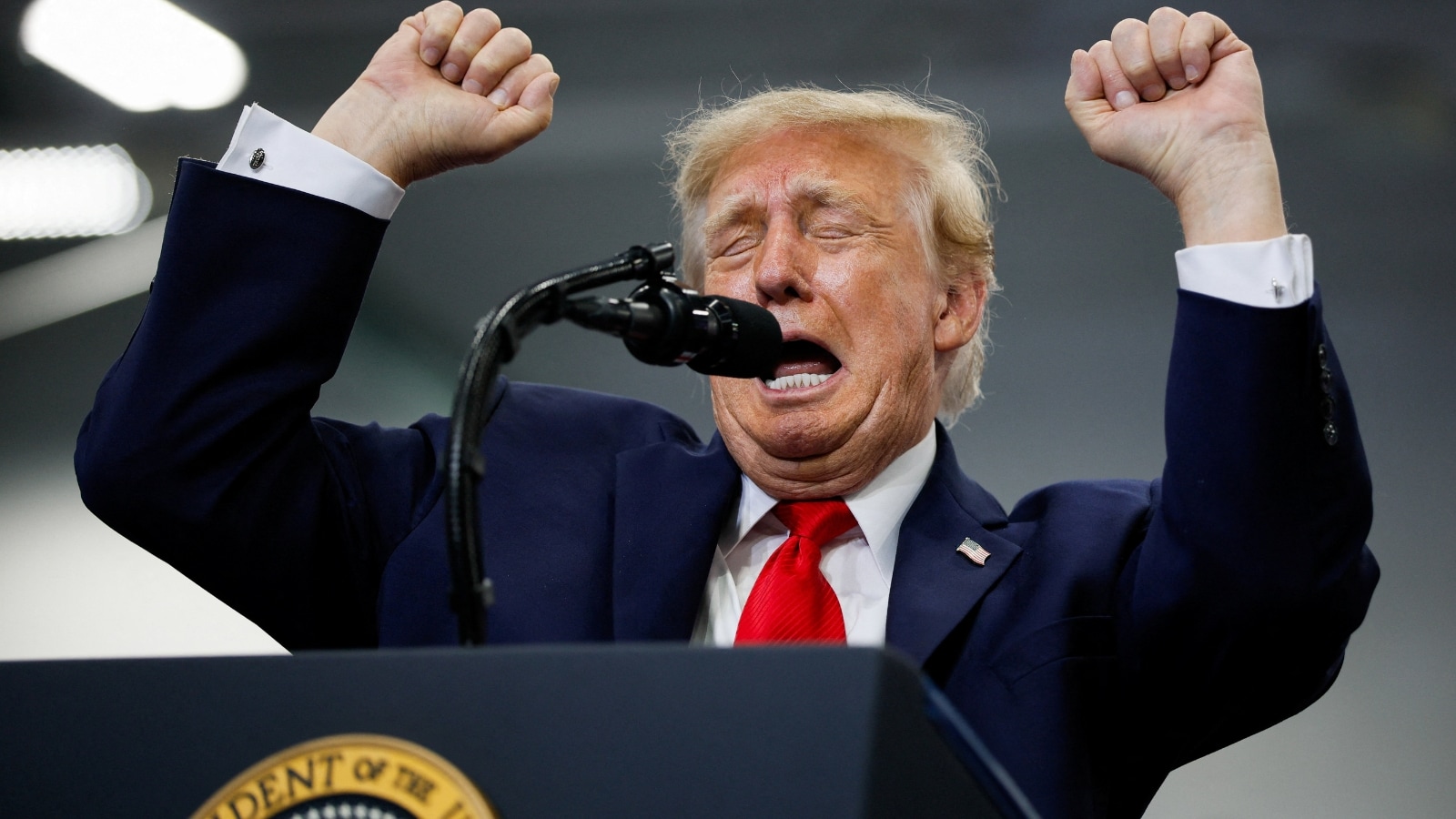
Trump didn't issue a formal policy directive when he first weighed in on November 16. He didn't need to. Speaking to reporters as he departed for Asia, he framed Huang's scandal as a personal slip-up rather than a national security breach. "I think he learned a big lesson," Trump said, adding that a lot of people wanted Huang back and that returning "certainly isn't a bad idea".
That single soundbite broke the dam. Up until that moment, Nvidia's board was treating Huang's exit as permanent, publicly floating CFO Colette Kress or an external hire as the only viable path forward. When the president publicly minimized the espionage angle—even casting doubt on whether Alice Huang was a spy at all by remarking that people call "any woman coming to the country that's a beautiful woman that comes from China" a spy—the political pressure on Nvidia's directors evaporated overnight.
Here's what actually drove the reversal behind closed doors:
- Silicon Valley closed ranks fast. Before Trump even spoke, an open letter demanding Huang's reinstatement gathered over 158,000 signatures, backed by heavyweights like Elon Musk and an Uber co-founder. Tech investors realized that without its co-founder, Nvidia risked losing its edge in the AI hardware race.
- Trump worried about losing Huang to Beijing. Days after his initial comment, Trump told reporters that Huang was "one of the truly most brilliant minds in the world" and asked, "where is he going to go?" He later told CNBC that Huang "could take the next plane to China, and I guarantee you they would give him whatever he wanted". In Trump's mind, keeping Huang inside an American company outweighed the optics of his personal scandal.
- The Department of Justice cleared the runway. Trump stated that U.S. Attorney General Todd Blanche found no evidence that Huang engaged in unlawful conduct, giving Nvidia's board the legal cover it needed to reverse course.
The National Security Tension Nobody Wants to Own
If you look closely at the timeline, the sharpest friction wasn't between Nvidia and the public. It was inside the White House itself.
Alice Huang wasn't just a random romantic partner. She was a former executive at Megaspeed, a Singapore-based firm that U.S. investigators suspected of illegally channeling restricted Nvidia AI chips into China. In fact, around the same time Nvidia welcomed Jensen Huang back, the U.S. government added Megaspeed to its trade blacklist.
Think about that contradiction for a second. On one hand, the administration blacklisted the exact company tied to the scandal over chip smuggling. On the other hand, Trump assured Nvidia's board that Jensen Huang posed zero national security risk and dismissed reports that Secretary of State Marco Rubio had flagged intelligence about Alice Huang's alleged espionage.
Even inside Trump's cabinet, officials were split on how aggressively to police Nvidia's China business. Commerce Secretary Howard Lutnick and Treasury Secretary Scott Bessent reportedly held clashing views on balancing trade relations with Beijing against strict export controls. Trump himself acknowledged the divide, noting that one side didn't want to insult China while the other wanted to "go down and dirty".
By stepping in to rescue Huang, Trump effectively sided with commercial pragmatism over strict intelligence caution. He argued that prohibiting Nvidia from selling its top-tier chips to China was enough, and that letting Huang stay at the helm to sell older-generation hardware was "a good thing, not a bad thing".
What Happened to Corporate Governance at Nvidia
Let's be honest about how bizarre Nvidia's board looked during those eleven days in November.
On November 12, Huang resigned amid revelations of multiple workplace affairs—including one with a direct report at Nvidia—and the Megaspeed connection. Market analysts immediately declared that his comeback odds were zero. Yet on November 17, Huang posted on X thanking supporters and offering to return. Six days later, the board folded completely and handed him back the keys.
In traditional corporate America, a CEO who violates company policy by having a relationship with a direct report while entangled in a federal national security probe doesn't get a do-over. Boards exist specifically to protect shareholders from executive recklessness.
Nvidia's directors faced an impossible trap. Nvidia isn't a normal company where you can swap out the chief executive and keep running the playbook. Huang built the company from a graphics card maker into a $4 trillion AI empire. When he left, roughly $740 billion in market value vanished in days. Once the U.S. president publicly endorsed Huang's return and personally assured directors there was no security threat, refusing to reinstate him would have looked like willful value destruction.
Still, bringing him back didn't erase the underlying risks:
- Congressional scrutiny is just starting. Democratic lawmakers, including Representative Robert Garcia, blasted the administration for brushing aside intelligence questions. Even Republican Senator Pete Ricketts warned that reinstating Huang "doesn't absolve Nvidia of answering for national security concerns and unaccounted-for chips".
- Internal investigations remain unresolved. Both federal agencies and Nvidia itself still have open questions regarding workplace conduct and export compliance. Being reinstated isn't the same thing as being exonerated.
- Executive succession is now visibly broken. Nvidia's board proved it has no real bench strength capable of replacing Huang, leaving the stock permanently tied to one man's survival.
How Investors and Tech Leaders Should Read This Moment
If you hold tech stocks or follow AI policy, don't treat Huang's reinstatement as a return to normal. It's a warning sign about how concentrated power has become.
When a single executive becomes "too strategic to fail," normal rules stop applying. Corporate boards lose their teeth. Regulatory hurdles bend around presidential phone calls. Even the lines between personal political wins and market movements get blurry—critics quickly pointed out that Trump himself stood to gain millions on his own Nvidia stock holdings following the rebound triggered by Huang's return.
For investors watching Nvidia and the broader semiconductor sector, focus on three concrete signals over the coming months:
- Watch the Commerce Department's enforcement actions, not White House soundbites. While Trump downplayed the scandal, the blacklisting of Megaspeed proves that U.S. export agencies are still actively hunting down illegal chip diversions to China. Any new restrictions on Nvidia's middle-tier chips will hit revenue harder than executive drama ever could.
- Track Congressional subpoena activity. If House or Senate committees demand testimony from Nvidia's board or Attorney General Todd Blanche regarding the intelligence surrounding Alice Huang, expect fresh volatility in Nvidia's share price.
- Price in key-person risk. Nvidia's brief dip below $3.8 trillion showed exactly how fragile the stock is without Huang. Factor that vulnerability into your position sizing instead of assuming the board has a succession plan ready.
Watch Trump Says He Wouldn't Mind Huang Returning to Nvidia to hear the exact tone and phrasing Trump used when he first opened the door to Huang's comeback.