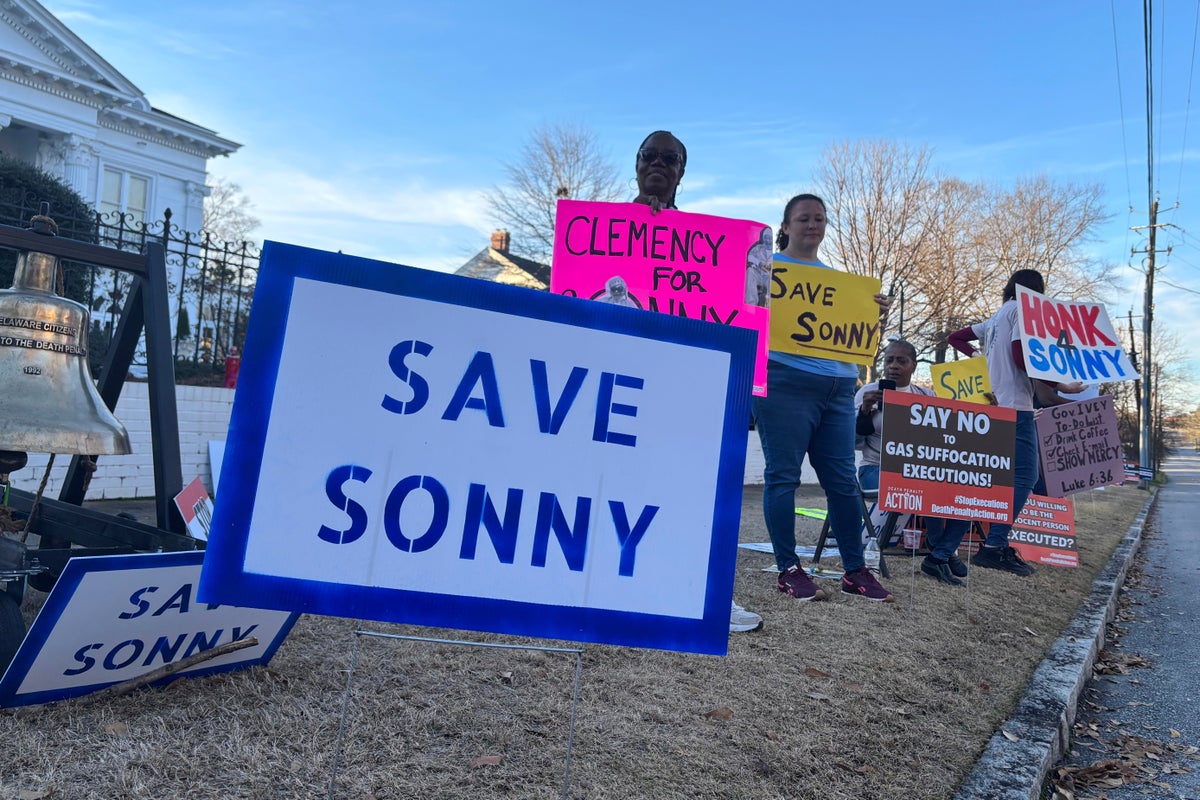
Governors across the country are increasingly pulling back from the machinery of death. While the surface-level narrative often focuses on DNA evidence or procedural errors, the recent surge in high-profile commutations reveals a deeper, more calculated shift in how executive power is wielded at the edge of the grave. When a governor halts an execution hours before the needle is inserted, it is rarely a sudden epiphany of conscience. It is the result of a grueling collision between legal failure, political survival, and a growing discomfort with the reliability of state-sponsored killing.
The reality of modern clemency is messy. It is not a graceful exit from a difficult situation; it is a desperate intervention in a system that has become increasingly prone to visible, undeniable errors. For decades, the death penalty was a "third rail" of American politics—to touch it with mercy was to invite labels of being soft on crime. That math has changed. Today, the greater political risk often lies in allowing an execution to proceed when the underlying conviction is riddled with doubt.
The Myth of the Perfect Trial
We are taught to believe that the judicial process is a rigorous filter, catching every mistake before a case reaches the governor’s desk. That is a lie. The appellate process is designed to check for legal procedural correctness, not necessarily for factual innocence. If a trial was technically "fair" according to the rules, a defendant can still be executed even if new evidence suggests they didn't do it.
This creates a "clemency trap" for state executives. By the time a case reaches the final stage, the courts have usually washed their hands of it. The governor becomes the literal last stop, tasked with acting as a one-person supreme court of equity. They aren't just looking at law; they are looking at the moral weight of the state’s certainty. When that certainty wavers, the political cost of an irreversible mistake becomes higher than the cost of a life sentence without parole.
Consider the logistics of a halted execution. The inmate is already in the holding cell. The witnesses have arrived. The media is staged. To stop the process at this point requires more than a passing concern; it requires a total breakdown in the state's confidence. This isn't just about one inmate. It is about the mounting pile of exonerations that have slowly eroded the public's trust in the finality of the verdict.
Behind the Curtain of Executive Mercy
What actually happens in the hours leading up to a commutation? It is a period of intense, often hidden, lobbying and data review. While activists protest outside, the real work happens in wood-panneled offices where legal counsel briefs the governor on the "risk profile" of the execution.
The risk isn't just moral; it's logistical. We have seen a decade of "botched" executions where states have struggled to obtain reliable lethal injection drugs. When a state tries to use experimental drug cocktails or fails to find a vein for two hours, it turns a quiet procedure into a televised horror show. Governors are acutely aware that a botched execution stays in the headlines for years, while a commutation to life without parole usually fades from the news cycle in forty-eight hours.
The Shift in Public Sentiment
The numbers don't lie. Support for the death penalty has hit historic lows. This shift provides the "political cover" necessary for governors to act. In the 1990s, a governor who granted clemency could expect a primary challenge and a career-ending wave of attack ads. Now, they are more likely to receive praise for "bravery" and "moral leadership."
- Jury Skepticism: Prosecutors are finding it harder to seat juries that will actually return a death sentence.
- Cost Realities: It is significantly more expensive to execute an inmate than to house them for life, largely due to the mandatory, decades-long appeals process.
- Conservative Reappraisal: A growing movement of fiscal conservatives and libertarians has begun to view the death penalty as an overreach of big government—a state power that is both expensive and fallible.
The Geographic Lottery of Death
Where a crime is committed matters more than the crime itself. This is the most uncomfortable truth in the industry of criminal justice. One governor might see a "procedural flaw" as a reason to stay an execution, while a governor in a neighboring state might see the same flaw as a "harmless error" that shouldn't stand in the way of a jury's will.
This inconsistency turns the death penalty into a geographic lottery. When a governor intervenes, they are often implicitly acknowledging that the system is broken in their specific state. They are admitting that the "gold standard" of justice they promise their constituents is, in fact, subject to the whims of local prosecutors and the quality of court-appointed defense attorneys.
The Role of International Pressure
While domestic politics drive the initial decision, international scrutiny plays a supporting role. Large corporations and foreign investors increasingly look at a state's human rights record when deciding where to build headquarters or manufacturing plants. While no governor will admit they commuted a sentence to please a European tech company, the broader economic "brand" of a state is always in the back of their minds. A state that looks like a relic of the 19th century is a harder sell to the modern global market.
The Agony of the Victims’ Families
We cannot ignore the human wreckage left in the wake of a halted execution. For the families of victims, a commutation can feel like a secondary betrayal. They have spent fifteen, twenty, or thirty years waiting for a specific type of closure that the state promised them. When that promise is revoked at the last second, the psychological toll is immense.
Governors have to balance this raw pain against the structural integrity of the legal system. It is a zero-sum game. If the execution goes forward and the person is later proven innocent, the state has committed an unfixable crime. If the execution is halted, the family is denied the "finality" they were told was their right. Most modern governors are choosing the path of least permanent damage—keeping the prisoner alive so that if a mistake is discovered later, the state hasn't already crossed the point of no return.
The Mechanics of the Commutation Order
A clemency order is a precise legal instrument. It doesn't just say "stop." It carefully redefines the prisoner’s status to ensure they can never be released, often using the phrase "life without the possibility of parole." This is the compromise. It satisfies the need for public safety while removing the moral burden of the execution.
It also serves as a rebuke to the lower courts. Every time a governor uses their executive power to stop an execution, they are signaling that the judicial system failed to do its job. They are stepping into a gap that shouldn't exist in a perfect democracy. The frequency of these interventions suggests that the gap is widening.
The Future of the Final Move
The trend toward clemency is not a temporary phase. It is the beginning of the end for the death penalty in its current form. We are moving toward a reality where the "death row" designation is a legal fiction—a sentence that is handed down by juries but rarely, if ever, carried out by the executive branch.
This creates a strange, liminal space for the legal system. We have hundreds of people living under a sentence of death that the state has no intention of fulfilling. It is a slow-motion abolition, carried out not through legislation or court rulings, but through the individual, agonizing decisions of governors who refuse to be the last link in a shaky chain.
The next time a headline announces a last-minute stay of execution, don't look for a miracle. Look for the cracks in the state's case, the shift in the local polls, and the governor's desire to avoid being the one who signed off on a permanent mistake. The "why" is never as simple as mercy; it is as complex as the machinery of power itself.
Demand a full audit of your state's capital clemency protocols to see exactly how these life-or-death decisions are being brokered behind closed doors.