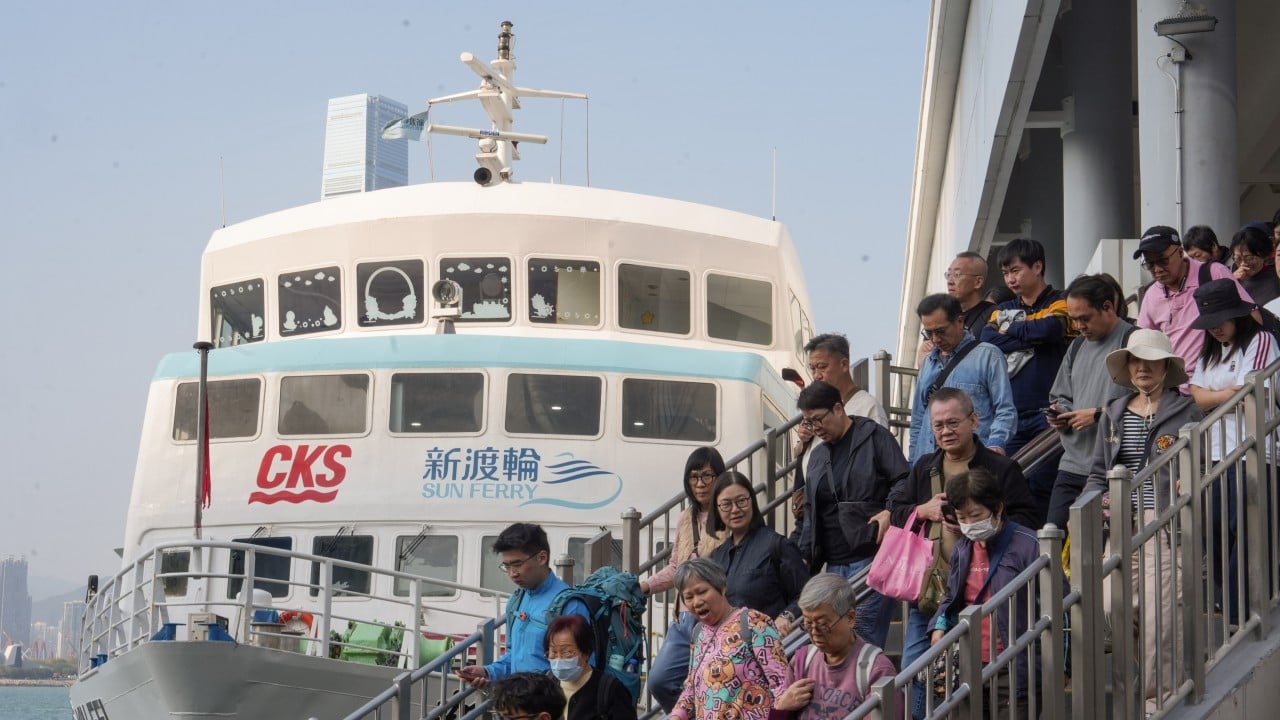
The steel ramp of the Man Wah pier hits the concrete with a bone-shaking clang, a sound that serves as the unofficial heartbeat of Central’s waterfront. For those who live in the skyscraper forest of Hong Kong Island, this is a sound of departure—a weekend escape to the seafood stalls of Lamma or the hiking trails of Lantau. But for the thousands of people standing in the humid queue at 7:00 AM on a Tuesday, that clang is the sound of a ticking clock.
It is the sound of a commute that has no alternative. You might also find this related article interesting: The $2 Billion Pause and the High Stakes of Silence.
To live on Hong Kong’s outlying islands is to enter into a silent contract with the sea. You trade the convenience of the MTR for the smell of salt spray and the rhythmic thrum of diesel engines. You trade the claustrophobia of the inner city for a view of the horizon. In return, you accept that your life is governed by a printed timetable and a single, narrow umbilical cord of transport.
Now, that cord is tightening. As reported in detailed articles by NBC News, the implications are notable.
Recent proposals to hike ferry fares across major routes—including those serving Mui Wo, Peng Chau, and the Islands District—have sent a tremor through these maritime communities. While the numbers on the ledger might look like a standard inflationary adjustment to a bureaucrat in an air-conditioned office, to the family in a village house in Silvermine Bay, they represent a fundamental shift in the cost of existing.
The Arithmetic of Isolation
Consider a hypothetical resident named Mr. Cheung. He is not a tycoon or a digital nomad; he is a technician who lives in Mui Wo because it was the only place he could afford a home large enough for his parents and his daughter. Every morning, he walks to the pier. Every evening, he returns under the stars.
If ferry fares rise by the proposed double-digit percentages, Mr. Cheung’s monthly expenses don't just "nudge upward." They spike. Unlike a resident in Sham Shui Po who can choose between the red minibus, the bus, or the subway, Mr. Cheung has one choice. The ferry. If the price of the ferry goes up, the price of his groceries—which arrive on that same water—goes up. The cost of his daughter’s after-school activities in the city goes up. The very act of going to work becomes a tax on his location.
During a recent meeting of the Islands District Council, the atmosphere was thick with this specific brand of anxiety. Councillors didn't just bring spreadsheets; they brought the voices of people who feel trapped by their geography. The argument from the ferry operators is familiar: fuel costs are volatile, labor is scarce, and maintenance on aging vessels is an endless money pit. These are facts. They are grounded in the reality of a global economy where energy prices refuse to stabilize.
But the counter-argument is human.
The councillors argued that these routes are not "leisure services." They are essential public infrastructure, no different from a bridge or a tunnel. If the government subsidizes the construction of multi-billion dollar highways in the New Territories, why should the "blue highways" of the South China Sea be left to the mercy of a profit-and-loss statement?
The Weight of the Water
There is a specific kind of fatigue that comes with island living. It is the fatigue of the "last boat." Missing the midnight ferry isn't a minor inconvenience; it is a stranded night in a 24-hour McDonald’s or an exorbitant taxi ride to a remote pier followed by a desperate hope for a sampan.
When fares rise, that fatigue turns into resentment.
The proposed increases come at a time when Hong Kong is still recalibrating its soul. The city is trying to entice people back, to prove that its pulse is as strong as ever. Yet, for the "islanders," there is a growing sense that they are being priced out of their own tranquility.
One councillor pointed out a glaring disparity: the fare increases often hit the slow ferries and the fast ferries differently, but for many, the "slow" boat is the only one that allows for the transport of bicycles, pets, or bulky goods. By raising these fares, the operators aren't just charging for a seat; they are charging for the ability to maintain a lifestyle that is separate from the frenetic energy of the city center.
Economics is often described as a cold science, but in the Islands District, it is a visceral one. When you live on Peng Chau, your world is defined by the three-mile stretch of water between you and the lights of Central. That water is a barrier, a playground, and a workplace. When the cost of crossing it rises, the barrier grows taller.
The Subsidy Solution and the Hidden Cost
The government has historically stepped in with the Special Help Scheme to keep these routes afloat. It’s a delicate dance of public funds and private operation. But the current outcry suggests the music has stopped. Councillors are calling for a more "holistic" approach—a word that usually feels like corporate fluff, but here means something simple: look at the whole person, not just the ticket price.
If the fares become untenable, the demographic of the islands will change. The vibrant, multi-generational villages will hollow out. They will become enclaves for the wealthy who don't mind a twenty-percent jump in travel costs, or they will become ghost towns where only those too poor to move remain, sinking further into the struggle.
Islands are the lungs of Hong Kong. They provide the literal and metaphorical breathing room for a city that often feels like it is bursting at the seams. To punish those who choose to live there is to slowly suffocate the very diversity that makes the territory more than just a financial hub.
The Invisible Stakes
We often talk about "connectivity" in terms of 5G speeds and fiber-optic cables. We forget that the most important connectivity is the physical ability of a person to get from point A to point B without breaking their bank account.
At the pier, the gates open. The crowd surges forward, a sea of white shirts and backpacks. There is a man carrying a box of fresh produce. There is a woman in a business suit checking her watch. There is a student finishing their homework against the railing.
They are all tethered to the movement of the tide and the decisions made in a boardroom miles away.
The councillors are standing their ground because they know that once a fare goes up, it rarely comes down. They know that "temporary adjustments" have a habit of becoming permanent burdens. They aren't just fighting for cents and dollars; they are fighting for the right of a fisherman’s son to work in a skyscraper, and for a teacher to live where they can hear the waves at night.
As the ferry pulls away from the dock, the gap between the boat and the land grows. For a moment, you are suspended between two worlds. It is a beautiful, precarious place to be. But that suspension shouldn't come with a price tag that forces you to choose between the city that feeds you and the island that keeps you whole.
The water remains indifferent. It rises and falls regardless of the politics on the shore. But for those on the deck, looking back at the receding skyline, the cost of the journey is starting to outweigh the beauty of the destination. If the horizon becomes a luxury, Hong Kong loses a piece of its identity that no amount of steel and glass can ever replace.
The next time you hear the clang of that ramp, listen closely. It isn't just a signal to board. It’s a reminder that for some, the ferry isn't a choice. It's a lifeline. And you don't charge a drowning man for the rope.
The debate will continue in the chambers of the city, with charts and projections and talk of fiscal responsibility. But out here, where the salt air bites and the engines roar, the reality is much simpler.
People just want to go home.