The lights went out across Havana last week, not because of a storm, but because of a math problem. Cuba requires roughly 125,000 barrels of oil per day to keep its antiquated Soviet-era grid humming. Since January 2026, the United States has systematically deleted the variables that allowed that oil to arrive. By ousting Nicolás Maduro in Venezuela and threatening massive tariffs on any nation—including Mexico—that dares to dock a tanker in Matanzas, the Trump administration has achieved what sixty years of embargo could not. It has induced a total systemic collapse.
When President Trump mused on Monday that he expects the "honor of taking Cuba," the comment was widely interpreted as a threat of boots on the ground. However, the reality of the situation is far more clinical and arguably more devastating. This is not 1898, and there is no Rough Rider charge in the works. Instead, the administration is executing a "kinetic-adjacent" strategy designed to force a surrender through energy starvation and digital isolation.
The Donroe Doctrine in Practice
The strategy rests on a 2026 corollary to the Monroe Doctrine, colloquially known within the State Department as the Donroe Doctrine. It asserts that the United States has the unilateral right to intervene in any Western Hemisphere nation that hosts "malign" foreign assets. For Cuba, this means the Russian signals intelligence facility at Lourdes and the growing Chinese presence on the island.
The administration is not looking for a traditional war. They are looking for a "friendly takeover," a term used to describe a transition where the Cuban military (FAR) removes President Miguel Díaz-Canel in exchange for the lifting of the oil blockade. By cutting off the fuel, the U.S. has turned the Cuban government’s most reliable tool for control—the ability to provide basic services—into its greatest liability.
The Mechanics of the Oil Blockade
The current crisis was triggered by Executive Order 14380, signed on January 29, 2026. This order did not just target Cuba; it targeted the global supply chain. It authorized the Secretary of Commerce to impose steep ad valorem duties on any country that "directly or indirectly" provides oil to the island.
- Mexico's Retreat: Under pressure, President Claudia Sheinbaum halted Pemex shipments in late January, citing "sovereign decisions," though the timing coincided exactly with U.S. tariff threats.
- The Venezuelan Vacuum: Following the removal of Maduro, the 35,000 barrels of subsidized oil that once flowed daily from Caracas have vanished.
- The Grid Failure: On March 16, the national grid collapsed completely. Without fuel for the Antonio Guiteras Power Plant, millions have been left in the dark.
Beyond the Rhetoric of Invasion
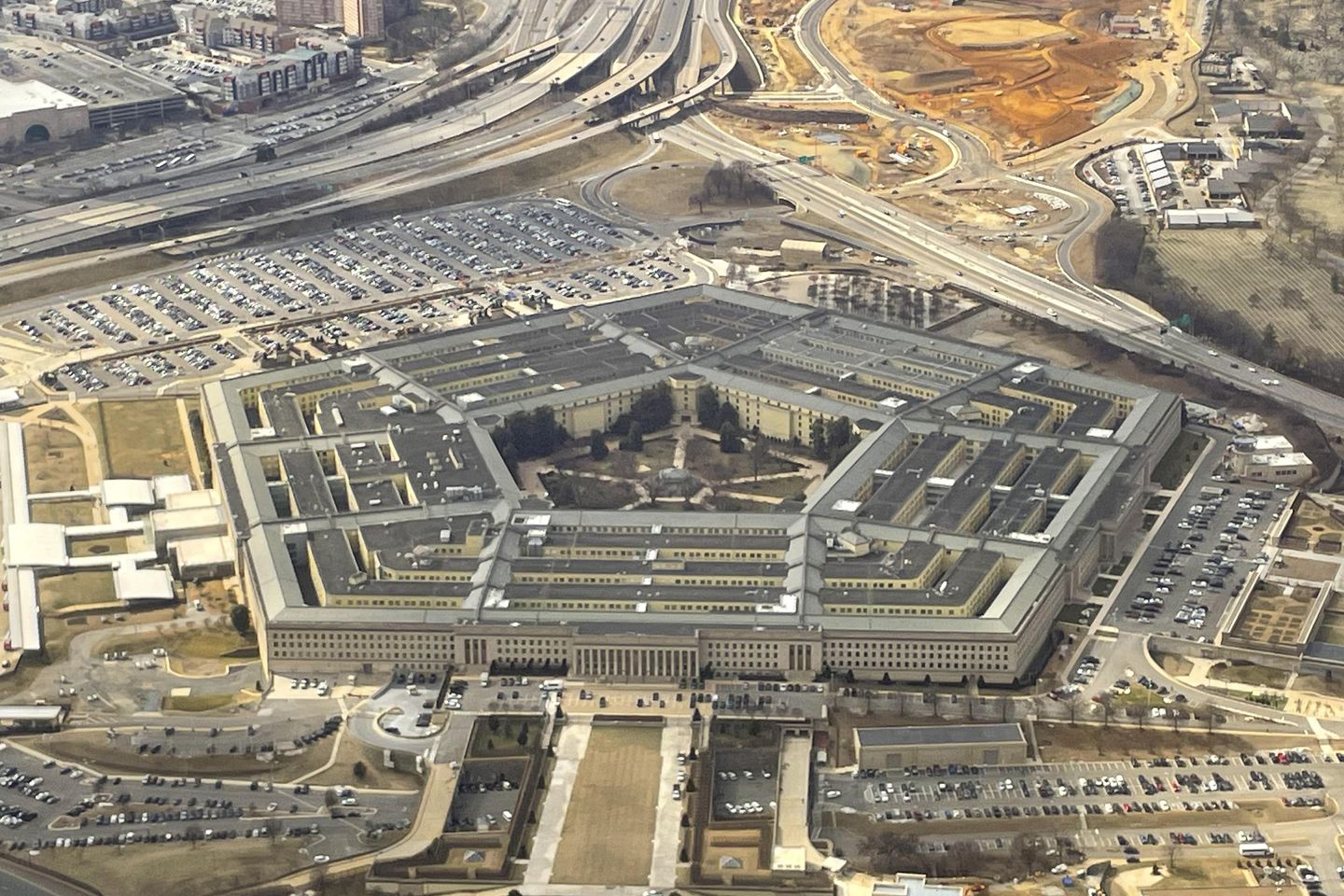
Despite the President's talk of "taking" the island, the Pentagon is not currently moving carrier groups into the Florida Straits. General Paul E. Funk, overseeing U.S. forces in the region, recently told lawmakers that the military is not rehearsing for an invasion. The goal is not to govern 11 million people; the goal is to bankrupt the system until it reorganizes itself into a pro-U.S. posture.
The real "taking" is happening in the private sector. On February 25, the U.S. Treasury issued a specific license allowing for the sale of Venezuelan oil—now under U.S. influence—directly to the Cuban private sector (MSMEs). This creates a bizarre, bifurcated reality where the Communist state is starved of fuel while private businesses are given a lifeline. It is an intentional attempt to decouple the Cuban people from their government.
The Digital and Intelligence Front
While the world watches the tankers, a quieter war is being waged over the island’s infrastructure. The administration has identified Cuba’s role as a "hosting hub" for Russian and Chinese intelligence as the primary justification for the "national emergency" declaration.
The U.S. has intensified its monitoring of the ALBA-1 undersea fiber-optic cable, which connects Cuba to Venezuela. Intelligence officials argue that as long as Cuba provides a "safe haven" for signals intelligence that targets the U.S. mainland, the island remains a legitimate target for "non-kinetic" neutralizing actions. This includes the potential for localized cyber operations to further disrupt the regime's communication during periods of unrest.
The Human Cost of Strategic Starvation
The logic of the "friendly takeover" ignores the immediate humanitarian fallout. Garbage is piling up in Havana because there is no fuel for collection trucks. Hospitals are struggling to maintain cold chains for vaccines.
"We are seeing a potential humanitarian collapse that the UN has warned could be unprecedented for the region," notes a recent report from WOLA.
The administration’s gamble is that the Cuban people will blame Díaz-Canel for the misery rather than the blockade. History suggests this is a dangerous assumption. During the "Special Period" in the 1990s, the regime proved remarkably resilient in the face of extreme scarcity. However, the 2026 version of the Cuban populace is more connected and less patient, as evidenced by the July 2021 protests.
The Negotiating Table at Gunpoint
Talks are currently underway between Havana and Washington. Cuban Deputy Foreign Minister Carlos Fernández de Cossío has stated that regime change is "absolutely" off the table, yet the presence of Alejandro Castro Espín—son of Raúl Castro—in the shadow negotiations suggests the regime is looking for a way out.
The U.S. demands are binary:
- Removal of Foreign Intelligence Assets: The immediate shuttering of Russian and Chinese facilities.
- Democratic Concessions: The release of political prisoners and a roadmap for multi-party elections.
The President's rhetoric about the "honor" of taking the island serves as the "bad cop" in these negotiations. While Secretary of State Marco Rubio handles the diplomatic squeeze, the threat of more direct action remains the primary leverage. It is a game of high-stakes chicken where the fuel gauge is rapidly approaching zero.
Whether the U.S. eventually "takes" Cuba through a negotiated surrender or a managed collapse, the map of the Caribbean is being redrawn in real-time. The era of the Cold War holdout is ending, replaced by a new, more aggressive era of regional dominance that prioritizes the removal of rival superpowers from the American backyard at any cost.
Would you like me to analyze the specific economic impact of the 2026 oil blockade on the Cuban private sector versus the state-run industries?