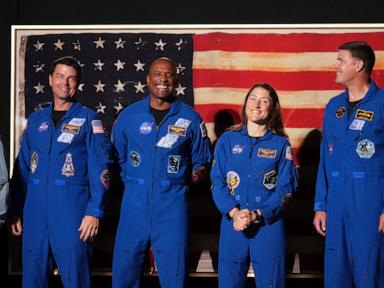
When the Artemis II crew reunited with their spacecraft three months after completing their historic lunar flyby, media coverage centered on celebration and reunion. The four astronauts stood beside the battered Orion capsule, posing for photographs and recounting their journey around the far side of the moon. Beyond the photo opportunities, however, lies an aggressive timeline driven by strict hardware post-mortems and engineering audits. NASA engineers must dismantle, inspect, and analyze every square inch of the vehicle to determine if deep-space crew transport can truly shift from risky experimental missions to a reliable routine.
Reentering the earth's atmosphere at nearly 25,000 miles per hour subjects a spacecraft to thermal energy that rivals the surface of the sun. While Orion survived the ordeal, engineers do not rely on surface appearance. Post-flight processing requires stripping down the exterior thermal protection systems to assess heat shield erosion. Minor variations in material degradation can reveal hidden aerodynamic stresses or manufacturing inconsistencies.
The Thermal Shield Vulnerability
The primary challenge facing deep-space return vehicles is heat dissipation. During atmospheric entry, friction converts kinetic energy into intense heat, creating a envelope of ionized gas around the capsule. Orion relies on an ablative heat shield designed to burn away gradually, absorbing and shedding thermal energy in the process.
During early uncrewed tests, inspection teams noted uneven charred material loss—a phenomenon where chunks of the ablative material cracked and detached differently than computer simulations had predicted. While the Artemis II crew returned safely, post-flight disassembly focuses heavily on whether the shield performed within acceptable safety margins or if structural flaking recurred. If the ablation rate proves too erratic, future deep-space missions will require costly redesigns or operational constraints.
Life Support and Systems Endurance
Atmospheric entry is only the final barrier. The crew life support systems face continuous strain during deep-space operations. Unlike low-Earth orbit missions, where a emergency deorbit takes hours, a lunar trajectory leaves astronauts days away from assistance.
- Environmental Control: Reclaiming and filtering water and oxygen in deep space requires mechanical reliability without direct supply lines from Earth.
- Radiation Shielding: Solar particle events present severe hazards outside the protective magnetosphere. Engineers analyze passive shielding placement based on crew radiation exposure data collected during the voyage.
- Avionics Stability: Radiation-induced bit flips can disrupt primary flight computers, requiring automated redundancy loops to recover without operator intervention.
Examining hardware after flight reveals how these internal systems handle the harsh radiation environment of deep space. Microscopic inspections of circuit boards and plumbing junctions help spot latent failures before they can endanger the next crew.
The Industrial Bottleneck
The transition from a single successful flight to a repeatable lunar architecture exposes supply chain vulnerabilities. Building a deep-space capsule is not an automated assembly process. It relies on specialized defense contractors, custom fabrication techniques, and scarce raw materials.
Component lead times for critical flight systems often stretch past eighteen months. A delay in a single sub-tier supplier can cascade through the entire assembly sequence. When engineers discover a defect during post-flight inspections, replacing or modifying that part across future vehicles stalls the entire program schedule.
Human spaceflight requires balancing safety protocols against operational deadlines. Inspecting the Artemis II capsule provides the empirical ground truth needed to refine numerical models, proving that computer simulations cannot substitute for physical hardware teardowns. Every bolt removed, wire tested, and thermal tile measured brings space agencies closer to understanding the actual operational boundaries of deep-space survival.