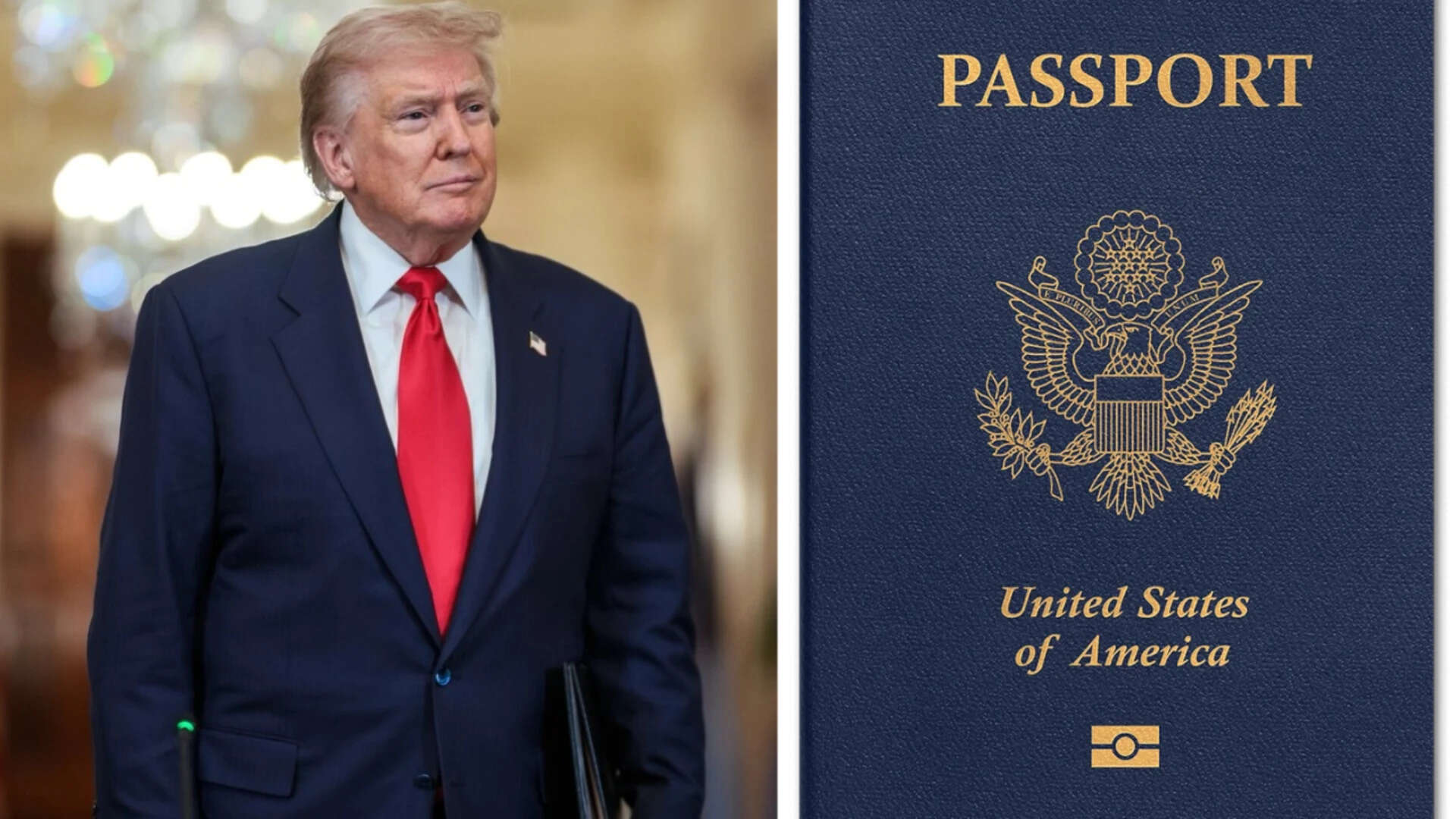
The National Council of Resistance of Iran (NCRI) is currently maneuvering through a geopolitical minefield. With the return of a Trump-led foreign policy framework, the group is positioning itself as the only viable alternative to the current clerical rule in Tehran. Their message is blunt. Any "peace deal" negotiated with the current Iranian administration is a temporary bandage on a gangrenous wound. The NCRI argues that stability in the Middle East cannot be bought through concessions to a regime that relies on regional instability for its domestic survival.
For decades, the NCRI—the political arm of the People's Mojahedin Organization of Iran (MEK)—has operated from the fringes of international diplomacy, often oscillating between being labeled a terrorist organization and being hailed as freedom fighters. Today, they are betting everything on a "Maximum Pressure 2.0" strategy. They aren't just looking for sanctions. They are looking for a total diplomatic eclipse of the Islamic Republic.
The Mirage of Moderation in Tehran
Washington has a long history of chasing the ghost of the "Iranian moderate." Since 1979, successive administrations have hoped to find a pragmatic faction within the Iranian leadership that is willing to trade revolutionary zeal for economic integration. This hope fueled the 2015 JCPOA and various back-channel negotiations during the first Trump term.
The NCRI contends this is a fundamental misunderstanding of the Iranian state. The Supreme Leader and the Islamic Revolutionary Guard Corps (IRGC) are not separate from the state; they are the state. When the West offers economic incentives, the funds do not trickle down to the impoverished streets of Tabriz or Isfahan. Instead, the money flows directly into the IRGC’s shadow economy, funding proxy networks in Yemen, Iraq, and Lebanon.
The resistance movement points to the 2022-2023 "Woman, Life, Freedom" protests as proof that the Iranian public has moved past the desire for incremental reform. People were not shouting for a better nuclear deal. They were shouting for the end of the system. By negotiating with the current regime, Western powers risk alienating the very population that could eventually bring about a secular, democratic Iran.
Rebranding the Resistance for a New Era
The NCRI is no longer just a group of exiles holding rallies in Paris. They have built a sophisticated global lobbying machine that has successfully courted high-ranking former officials from both sides of the American political aisle. Their Ten-Point Plan, authored by Maryam Rajavi, is designed to appeal specifically to Western democratic sensibilities. It calls for a secular government, gender equality, and a non-nuclear Iran.
Critics, however, often point to the group's insular nature and its controversial past. The NCRI’s challenge is to prove it can be a representative body rather than just a disciplined opposition force. They are countering this by highlighting their "Resistance Units" inside Iran. These small, clandestine groups are responsible for anti-regime graffiti, hacking state-run television, and documenting human rights abuses. This internal activity is their most valuable currency. It demonstrates a reach that other exile groups lack.
The Trump Factor and the Abraham Accords
Donald Trump’s approach to the Middle East was defined by the Abraham Accords—a strategy of bypassing the traditional Palestinian-Israeli conflict to build a regional coalition against Iran. The NCRI sees this as their golden opportunity. If the Gulf States and Israel are united in their opposition to Tehran, the NCRI becomes a natural, albeit unofficial, partner in that alliance.
A "Trump peace deal" in this context wouldn't be a deal with Iran, but a deal against the Iranian regime’s interests. The NCRI is pushing for the "Blacklisting" of the IRGC across Europe, a move that would freeze billions in assets and cripple the regime’s ability to operate internationally. They argue that the only peace worth having is a "Peace of Strength" where the regime is so weakened it can no longer project power.
The Economic Asphyxiation Strategy
Sanctions are often criticized as "blunt instruments" that hurt the poor more than the powerful. The NCRI rejects this narrative. They argue that the Iranian economy is already managed by a "mafia" structure where the IRGC controls over 50% of the GDP through various front companies and foundations (Bonyads).
When the U.S. enforces oil sanctions, it isn't taking bread out of the mouths of citizens. It is taking missiles out of the hands of Hezbollah. The NCRI’s economic analysts suggest that the regime is currently more vulnerable than at any point since the 1988 massacres. Inflation is rampant, the rial is in free-fall, and the "gray market" oil sales to China are being sold at such steep discounts that the profit margins are thinning.
The Nuclear Blackmail Loop
Tehran has mastered the art of "Nuclear Blackmail." Every time international pressure mounts, they spin more centrifuges or increase uranium enrichment levels. This creates a sense of urgency in the West, leading to "emergency" negotiations where the regime trades temporary pauses for permanent sanctions relief.
The NCRI insists this cycle must be broken. Their intelligence network was the first to expose the Natanz enrichment site in 2002, and they continue to provide dossiers on hidden sites today. Their stance is uncompromising. There is no such thing as a "civilian" nuclear program under a regime that views a nuclear deterrent as the ultimate insurance policy for its survival.
The Social Powder Keg
Inside Iran, the atmosphere is electric with resentment. The gap between the ruling elite and the common citizen has become a canyon. While the children of the "Aghazadeh" (the privileged sons and daughters of the mullahs) post photos of Ferraris and luxury vacations in Dubai, the average worker can barely afford eggs.
The NCRI leverages this resentment. They aren't just talking about high-level politics; they are talking about water shortages, pension fund collapses, and the environmental mismanagement of the Urmia Lake. By connecting these everyday grievances to the regime's systemic corruption, they are building a broad-based case for "Regime Change by Iranians."
Navigating the Geopolitical Realities
The biggest obstacle for the NCRI remains the skepticism of the international community. Many European capitals still fear that a collapse of the Iranian state would lead to a Syrian-style vacuum, sparking a massive refugee crisis and global oil price shocks. This "Fear of the Unknown" is the regime’s strongest shield.
To counter this, the NCRI is focusing on "Continuity of State." They are trying to convince the world that they have the administrative capacity to manage a transition without a total breakdown of order. This involves detailed plans for a provisional government that would hold free elections within six months of a transition. It is an ambitious, perhaps idealistic, vision. But in a region where the status quo is increasingly violent and unpredictable, the NCRI’s "Plan B" is gaining more listeners than ever before.
The current geopolitical alignment suggests that the era of "strategic patience" with Tehran is over. Whether through the NCRI or another mechanism, the pressure is mounting to a breaking point. The NCRI isn't just waiting for a seat at the table. They are trying to build a new table entirely.
Western policymakers must decide if they will continue to negotiate with the arsonist or start providing more resources to the fire department. The NCRI has made its position clear. There is no middle ground. You either support the people’s right to overthrow their oppressors or you are complicit in the longevity of the oppression. Every dollar that reaches the IRGC coffers is a vote for continued conflict in the Middle East.