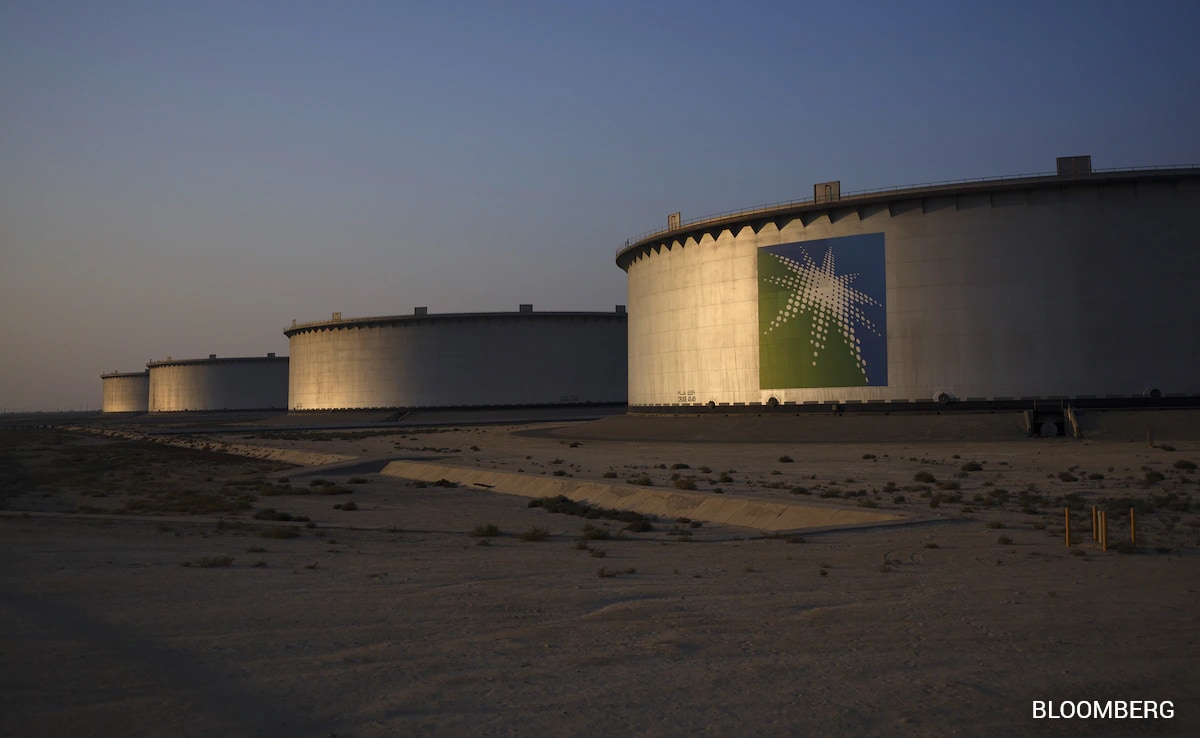
The headlines are screaming about a "forced retreat." They want you to believe that Saudi Arabia is cowering because the Strait of Hormuz is closed. They see rising inventories and slowing pumps as a sign of weakness—a kingdom backed into a corner by geography and geopolitics.
They are wrong.
This isn’t a retreat. It’s a masterclass in inventory management and price floor hardening. Most analysts are staring at the closure of a shipping lane; they should be looking at the global refining balance. When the "lazy consensus" sees a supply chain bottleneck, they assume the producer is the victim. In reality, the producer with the largest storage capacity and the lowest lifting costs is the only one who can afford to wait.
The Myth of the Trapped Barrel
The common narrative suggests that because oil can’t move through Hormuz, Saudi Arabia is "filling up" and must shut down to avoid a catastrophic overflow. This assumes the Kingdom is a passive observer of its own logistics.
I’ve watched traders lose billions betting against Riyadh’s ability to pivot. Saudi Aramco doesn’t just own wells; it owns a global network of "downstream" sinks. They have massive storage plays in Okinawa, Rotterdam, and Sidi Kerir. A closure at Hormuz is a localized tactical headache, but it isn’t a systemic heart attack for a country that has spent decades building Red Sea exit points like the East-West Pipeline.
The East-West Pipeline (Petroline) has a nameplate capacity of roughly 5 million barrels per day. While it cannot replace the 20% of global liquid consumption that usually flows through Hormuz, it allows the Kingdom to cherry-pick which customers stay fueled. By "reducing production," they aren’t just stopping the flow; they are tightening the noose on the spot market while fulfilling high-margin term contracts via the Red Sea.
Storage is a Weapon Not a Warehouse
Most market commentary treats storage as a "buffer of last resort." If you can’t sell it, you store it. If the tank is full, you stop. This is elementary school economics.
In the big leagues, storage is a strategic weapon used to manipulate the forward curve. By allowing inventories to rise to a specific threshold before throttling production, Saudi Arabia creates a "supply overhang" narrative that keeps short-sellers active. Then, the moment they announce a production cut, those shorts get incinerated.
We are seeing a deliberate tightening of the medium-sour crude market. This specific grade is what the world’s complex refineries—especially those in Asia—are designed to eat. By pulling back now, the Kingdom isn’t reacting to a full tank; they are ensuring that when the Strait eventually opens, the world isn't just hungry for oil; it’s starving.
The Contango Trap
If you’re looking at the current price and wondering why it isn’t $150 yet, you’re ignoring the structure of the market. We are flirting with a "contango" trap, where the future price is higher than the spot price.
- Lazy Logic: "Prices are low because demand is dead."
- The Reality: Prices are suppressed because the market is pricing in the risk of a sudden dump of stored oil.
Saudi Arabia knows this. By cutting production aggressively now, they are fighting to shift the market back into backwardation—where immediate delivery commands a premium. They are willing to lose volume today to ensure every barrel they sell tomorrow is worth 20% more.
Dismantling the "Demand Destruction" Scare
You’ll hear "experts" on cable news claim that high prices or supply instability will lead to permanent demand destruction. They point to electric vehicles or efficiency gains in the West.
I’ve sat in rooms with energy ministers where the data tells a different story. The "Global South" doesn’t care about your ESG targets when their grid is failing. Demand for reliable, energy-dense liquid fuels is growing in sectors that can't be "disrupted" by a battery.
- Aviation: Sustainable Aviation Fuel (SAF) is a rounding error.
- Petrochemicals: Your phone, your clothes, and your medical supplies are made of oil.
- Heavy Shipping: Hydrogen is decades away from being viable at scale.
The Kingdom isn't worried about the world moving on. They are worried about the world moving on without them. By controlling the taps during a crisis, they remind every major economy that "energy security" is a phrase that starts and ends in Riyadh.
Why the Market is Wrong About "Spare Capacity"
The biggest misunderstanding in energy today is the definition of "spare capacity." People think it’s a light switch. You flip it, and the oil appears.
In reality, maintaining spare capacity is an expensive, grueling engineering feat. It requires constant investment in pressure maintenance and water injection. When the Kingdom "reduces production," they aren't just idling rigs. They are performing essential reservoir management.
By taking barrels off the market now, they are preserving the long-term health of the Ghawar and Safaniyah fields. It’s a tactical pause that extends the life of their most valuable assets. A competitor article would call this a "slump." An insider calls it "capital discipline."
The Pivot to the Red Sea
While everyone is obsessed with the Persian Gulf, the real action is on the other side of the peninsula. The expansion of the Muajjiz terminal and the Yanbu industrial hub isn't a coincidence. Saudi Arabia is decoupling its economic future from the volatility of the Iranian shoreline.
If you think this production cut is a sign of panic, you’ve missed the last ten years of Saudi infrastructure spend. They are moving the center of gravity. A closed Hormuz is an existential threat to Qatar, Kuwait, and the UAE. For Saudi Arabia, it’s a catalyst to accelerate their Western-facing export strategy.
The Cost of Being Wrong
If you trade on the "Hormuz is closed, sell Saudi" thesis, you are the liquidity for the professionals. The downside to this contrarian view? It requires patience. The market can stay irrational longer than you can stay solvent. But the physics of oil production don't lie. You cannot run a global economy on "hope" and "strategic reserves" for more than a few months.
The Strategic Petroleum Reserve (SPR) in the US is at historic lows. China’s commercial stocks are opaque but likely stretched. The world has no margin for error. Saudi Arabia is the only entity with a margin, and they are currently using it to squeeze the life out of anyone who thinks they can dictate terms to the world’s central bank of oil.
Stop Asking if the Oil is "Stuck"
The question isn't whether the oil can get out. The question is who can survive the longest while it stays in the ground.
Most oil-producing nations are "price takers." They have to sell every drop just to keep the lights on and the social contracts signed. Saudi Arabia is a "price maker." They have the sovereign wealth and the internal stability to play the long game.
This production cut is a stress test for the rest of the world. It’s a reminder that while the US can frack and Norway can pump, only one player can decide to stop—and in doing so, make the entire world stop with them.
The storage isn't "filling up" because they have nowhere to go. It’s filling up because they are choosing who gets to buy the last available drop. If you aren't on that list, the "Hormuz closure" is the least of your problems.
Buy the dip, or get out of the way. The Kingdom isn't losing; they're just reloading.