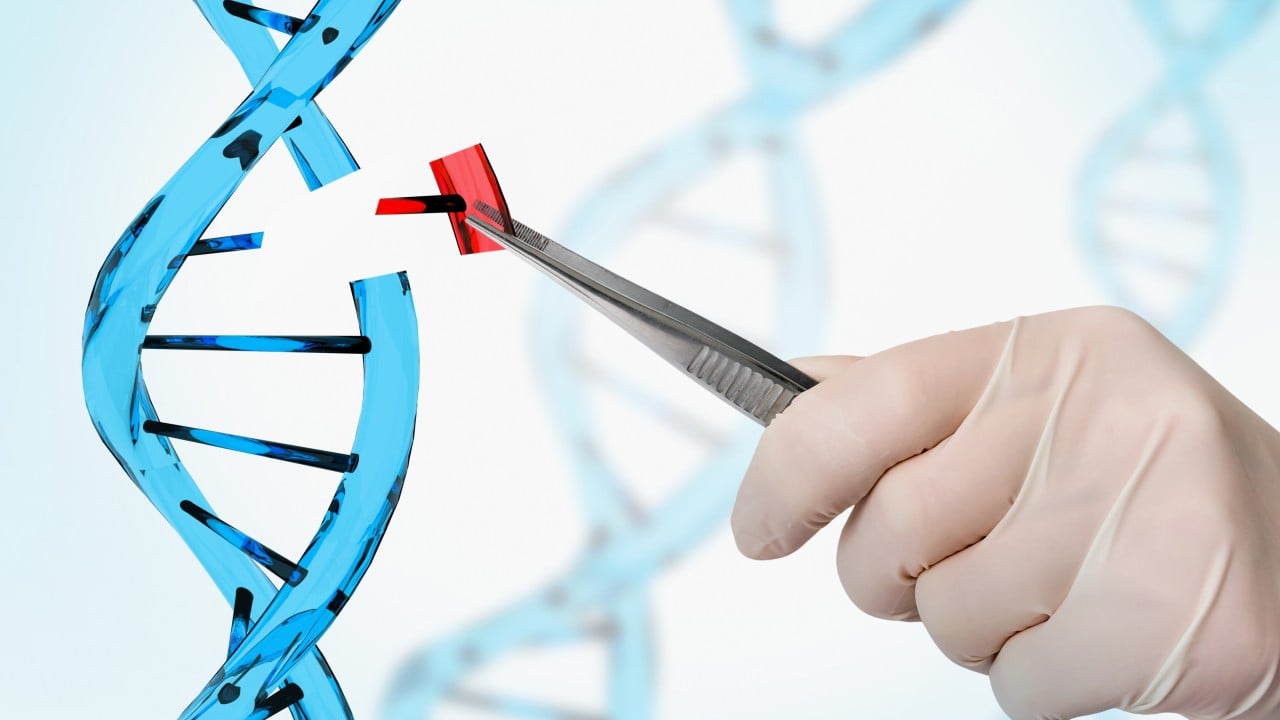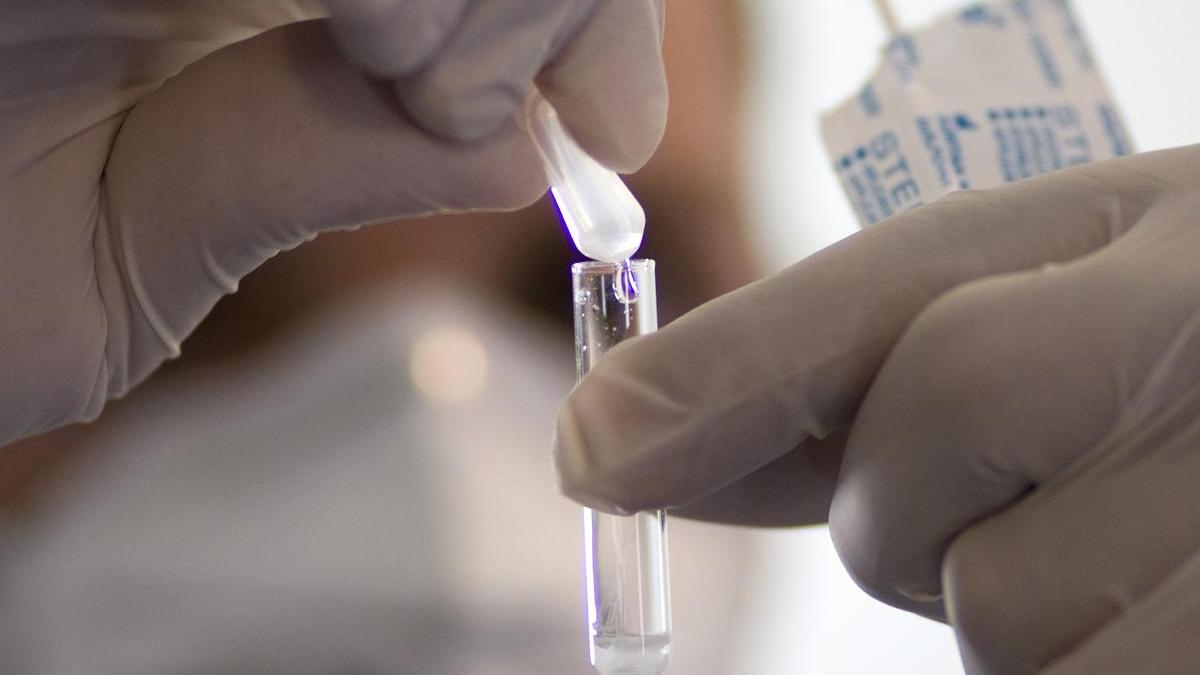
In a quiet laboratory in northern Spain, a technician stares at a sequence of genetic code that shouldn't exist in a human being. It is a mosaic of influenza. A fragment of bird, a slice of pig, a dash of human seasonal flu. This is not a scene from a blockbuster movie. It is a Tuesday morning. It is the reality of our shared biology with the creatures we raise for food.
The World Health Organization recently received a notification from Spanish health authorities regarding a case of A(H1N1)v—a variant of swine flu. On paper, it looks like a clerical error. A stray letter here, a "v" for variant there. In reality, it represents a biological bridge being crossed.
A 30-year-old worker at a pig farm in the Lleida region of Catalonia started feeling the familiar weight of the flu. Fever. Cough. Body aches. In any other year, he might have stayed home, drank some broth, and slept it off. But the world has changed. Our vigilance has sharpened. When his samples were sequenced, the results sent a ripple through the global health community: this wasn't the seasonal flu circulating in the local schools. It was something that belonged in the stables.
The Great Biological Blender
To understand why a single farmworker in Spain matters to a person in a high-rise in New York or a market in Tokyo, you have to understand the pig.
Biologists often refer to pigs as "mixing vessels." It is a vivid, slightly unsettling metaphor. Pigs possess receptors in their respiratory tracts that are compatible with both avian influenza viruses and human influenza viruses. When a pig is exposed to both at once, the viruses don't just sit side-by-side. They dance. They swap parts. They engage in a process called reassortment.
Imagine two different decks of cards being shuffled together and then dealt out into new, hybrid hands. This is how a "variant" is born. The virus that infected the worker in Spain was an H1N1 variant. It carries the signature of viruses that have been circulating in European swine populations for years. Usually, these stay with the livestock. But occasionally, a virus learns a new trick. It learns how to jump.
The Invisible Stakes of a Single Jump
The Spanish case is what scientists call a "spillover event." Most of the time, these are dead ends. A human catches a virus from an animal, gets sick, and the virus dies with the host’s recovery because it hasn't yet mastered the art of human-to-human transmission. It's a clumsy traveler in a foreign land.
But the WHO alert carried a specific, chilling detail: this case was suspected to involve human-to-human transmission.
If the virus has learned to jump from a pig to a person, that’s one thing. If it has learned to jump from that person to their spouse, their nurse, or the person sitting next to them on a bus, the math changes instantly. We move from an isolated incident to a potential outbreak.
We have been here before. In 2009, an H1N1 strain emerged that contained a similar genetic cocktail. It swept across the globe, reminding us that the boundaries we draw between "human health" and "animal health" are entirely imaginary. We live in a single, interconnected web of breath and contact.
The Detective Work of Public Health
When the notification hit the WHO, the machinery of global surveillance groaned into life. This isn't just about counting cases; it’s about forensic biology.
Health officials in Catalonia didn't just treat the patient. They began a hunt. They traced contacts. They tested coworkers. They looked for the "hidden" cases—the people who might have had a mild scratchy throat and thought nothing of it.
Every time a virus passes through a new human host, it gets a fresh opportunity to refine its "keys." Viruses use surface proteins—the Hemagglutinin (H) and Neuraminidase (N)—to unlock our cells. A virus fresh from a pig might have a key that's a bit rusty, a bit hard to turn. But with every person-to-person transmission, the virus undergoes a high-speed trial-and-error process. It mutates. It polishes the key. It becomes more efficient.
The goal of the Spanish health authorities is to break the chain before the key is perfected.
The Cost of Proximity
There is a human toll to this surveillance that rarely makes the headlines. It is the anxiety of the farmworker, whose livelihood depends on the very animals that made him sick. It is the pressure on local doctors to distinguish between a common cold and a global threat.
Spain is one of Europe’s largest pork producers. The Lleida region is the heart of that industry. Here, the relationship between humans and animals is not a metaphor; it is an economy. Thousands of people spend their days in close quarters with livestock. This proximity is the engine of our food system, but it is also a permanent laboratory for the next pandemic.
We often think of "emerging diseases" as something that happens in distant jungles or crowded "wet markets" in other hemispheres. Spain’s alert is a stark reminder that the frontier is everywhere. It is in the industrial heartlands of Europe. It is in the hog barns of Iowa. It is wherever the boundary between species is thinned by commerce and necessity.
The Silence of the Virus
The most haunting aspect of the Spanish case is how ordinary it seemed. The patient recovered. No other cases have been confirmed since the initial report. To the casual observer, it looks like a "false alarm."
But in the world of virology, there is no such thing as a false alarm. There are only warnings.
Every spillover event is a data point. It tells us which viruses are "probing" our defenses. It tells us that the H1N1v strains in European pigs are becoming increasingly adept at finding human hosts. The virus isn't thinking, of course. It has no master plan. It is simply a blind, genetic force seeking a way to persist.
The WHO’s role is to be the world's ears. By alerting the globe to a single case in Spain, they are essentially saying: The bridge is being tested. Look at your own borders. Look at your own farms.
Why We Should Listen
It is easy to feel "outbreak fatigue." After the years we have endured, the mention of a new virus variant can feel like a burden we aren't ready to carry. We want to look away. We want to believe that the "v" in A(H1N1)v stands for "vanished."
But the risk of ignoring these signals is the highest price we can pay. The Spanish case wasn't a catastrophe, but it was a rehearsal. It tested the speed of the labs, the transparency of the government, and the sensitivity of global monitoring.
The invisible stakes are the lives of people who will never hear of Lleida or see the inside of a Spanish pig farm. The stakes are the stability of our healthcare systems and the openness of our borders. We are currently in a race between the virus’s ability to mutate and our ability to see it coming.
For now, the situation in Spain is under control. The patient is well. The farm continues to operate. The genetic sequence has been uploaded to global databases for scientists to pore over.
Somewhere, however, another virus is being shuffled. In a barn, in a market, or in a forest, a new hand is being dealt. The cards are flying through the air, avian and swine and human, all mixing in the warm breath of a living creature. We are not separate from the world of animals. We are their neighbors, their caretakers, and, occasionally, their unintended hosts.
The next time a worker feels the familiar ache of a fever, the world will be watching the digital tickers of the WHO, waiting to see if the bridge has finally held or if the traveler has found a permanent home.
Nature does not announce its intentions with a trumpet blast. It whispers in the code of a minor flu. It speaks in the silence of a laboratory in Spain, where a single, stray "v" reminds us exactly how fragile the peace between species truly is.
Would you like me to research the current status of the Spanish H1N1v surveillance or provide a breakdown of how different countries are modernizing their livestock-to-human monitoring systems?