The arrest of a United States Marine for the alleged murder of a local woman in Okinawa has once again torn open a decades-old wound, laying bare the volatile friction between a host nation and an occupying military force. Within hours of the announcement, public squares in Naha filled with demonstrators, their chants echoing a familiar, exhausting grief. This is not an isolated incident. It is a recurring flashpoint in a strained security alliance where the cost of strategic projection is too often borne by civilians living in the shadow of foreign bases.
The Status of Forces Agreement and the Anatomy of Frustration
At the core of the public fury lies the Status of Forces Agreement, known commonly as the SOFA. Signed in 1960 alongside the Treaty of Mutual Cooperation and Security between the United States and Japan, the framework dictates how legal jurisdiction is handled when service members commit crimes off-base.
The mechanism heavily favors the sending state. Under the primary jurisdiction rule, Japanese authorities have the right to arrest and prosecute suspects, but the United States military retains custody of the accused until an indictment is formally handed down by Japanese prosecutors. To the average citizen in Okinawa, this clause reads as institutional protection for offenders. It creates a dangerous lag period where justice feels delayed, opaque, and ultimately out of reach.
Okinawa bears a disproportionate burden. While hosting roughly seventy percent of all exclusive U.S. military facilities in Japan, the prefecture accounts for less than one percent of the country's total land area. Every noise complaint, every traffic violation, and every violent crime compounds a deep-seated resentment. When a human life is taken, that resentment transforms into a political crisis that Tokyo and Washington ignore at their peril.
Strategic Realities Versus Local Realities
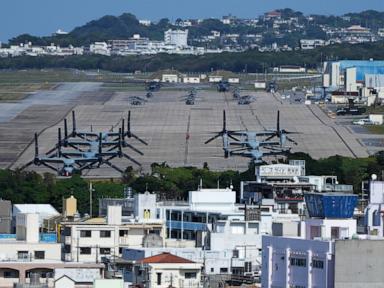
The Pentagon views Okinawa as an irreplaceable keystone in the Indo-Pacific architecture. From Kadena Air Base to Marine Corps Air Station Futenma, the installations project American deterrence across the East China Sea and the Taiwan Strait. In the calculus of grand strategy, these redoubts are viewed as absolute necessities in an era of rising regional competition.
Yet this perspective creates a profound empathy gap. Strategy rooms in Washington and diplomats in Kasumigaseki often treat civilian casualties as regrettable externalities rather than core systemic failures. Discipline and command oversight are trotted out as solutions every time a crime occurs, but internal military justice rarely satisfies a grieving community that demands transparent, civilian accountability under Japanese law from the very first minute of an investigation.
The Political Fallout and the Road Ahead
Local leadership in Okinawa has seized upon the arrest to renew demands for a fundamental overhaul of the SOFA. Governor Denny Tamaki and local municipal assemblies have repeatedly called for reductions in troop levels, the closure of urban bases, and immediate revisions to the legal framework governing foreign personnel.
Tokyo finds itself caught in an impossible squeeze. The central government relies entirely on the U.S. nuclear umbrella and military alliance to manage its security environment, forcing it to manage local outrage while minimizing friction with its primary ally. Condemnation is issued, apologies are accepted, and minor curfew restrictions are temporarily imposed on service members. Then, the news cycle shifts, the protests quiet down, and the underlying structural problem remains untouched until the next tragedy forces it back onto the front pages.
The alliance cannot survive indefinitely on a foundation of unaddressed local trauma. Until Washington and Tokyo confront the structural imbalances of the base presence and the impunity baked into the legal agreements governing it, every service member stationed on the island will remain viewed through the lens of a potential occupier rather than a welcomed defender.