The Mirage of Strategic Mediation
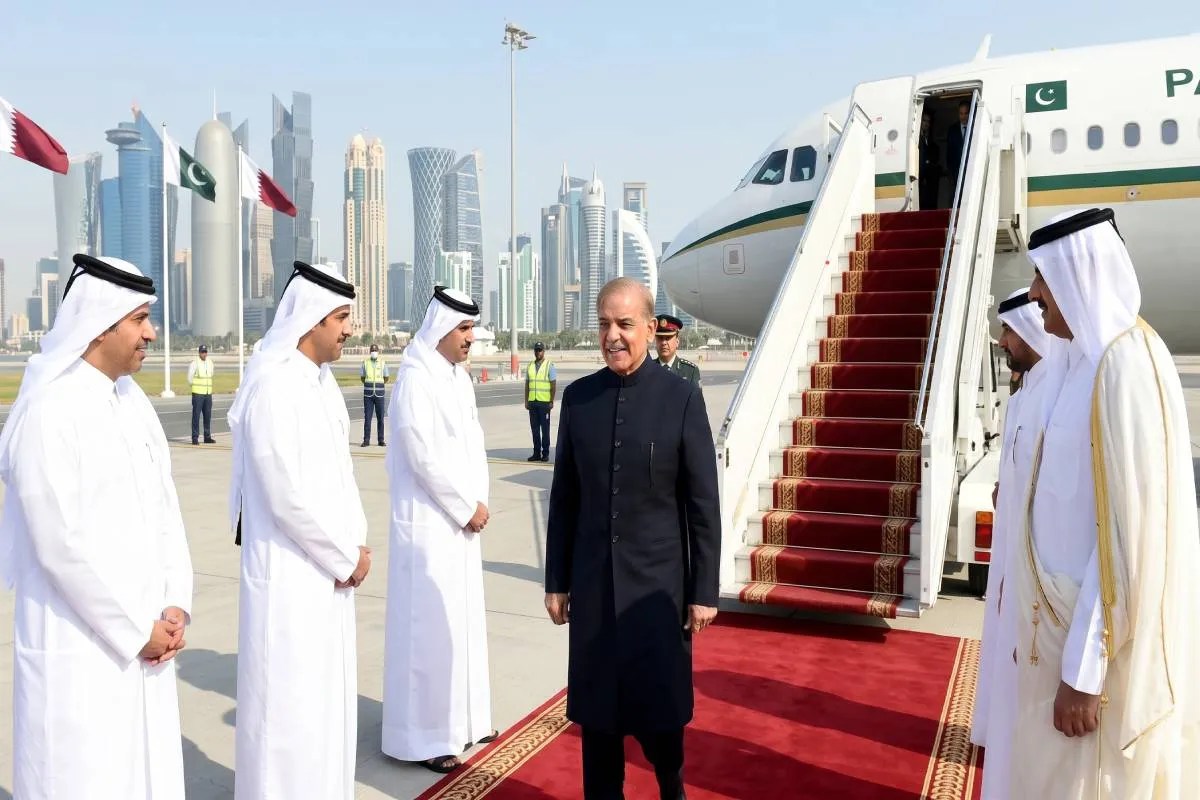
The mainstream media loves a "bridge builder" narrative. They look at Pakistan’s Prime Minister Shehbaz Sharif landing in Doha and see a sophisticated diplomat balancing the razor-sharp scales between Washington and Tehran. They speculate on whether Qatar can "moderate" Pakistan’s stance or if Sharif can act as a back-channel for the West.
Stop. You are looking at the wrong map.
This isn’t diplomacy. This is a debt collection agency meeting with its most desperate client. Pakistan isn’t in Doha to fix the Middle East; it is in Doha to keep the lights on for another sixty days. To suggest that Shehbaz Sharif has the geopolitical capital to influence the US-Iran friction is like suggesting a man drowning in the middle of the ocean is there to teach the fish how to swim.
The "lazy consensus" dictates that Pakistan’s geography makes it an eternal "pivotal" player. In reality, Pakistan’s economic insolvency has turned its geography into a liability. Every trip to the Gulf is framed as a "strategic partnership" to mask the scent of a liquidity crisis. Qatar isn't looking for a partner; it is looking for discounted assets.
The Sovereign Fire Sale
When Sharif speaks of "investment opportunities," he is talking about the Sovereign Wealth Fund. Specifically, he is talking about the Pakistan Sovereign Wealth Fund (PSWF), a vehicle designed to bypass traditional oversight and sell off stakes in state-owned enterprises like the Roosevelt Hotel or Pakistan International Airlines.
The "experts" claim this is about foreign direct investment. It isn't. It is a fire sale.
- Valuation vs. Desperation: When you negotiate from a position of near-default, you don't get market value. You get "bailout pricing."
- The Qatar Model: Doha doesn't do charity. They do infrastructure and energy. They want the Karachi Port terminals and long-term LNG contracts that lock Pakistan into specific pricing for decades.
- The IMF Shadow: The IMF demands "external financing gaps" be closed before they release tranches. Qatar is essentially the IMF’s co-signer.
I have watched nations burn through their crown jewels to satisfy short-term debt cycles. It never ends with "growth." It ends with the country owning less of itself every year. If you think Sharif is there to talk about Gaza or the Iranian nuclear program, you’re falling for the press release. He is there to pawn the family silver.
The Myth of the Iran-US Neutrality
The competitor articles obsess over whether Pakistan can manage the "balancing act" between Iran and the United States. This assumes Pakistan has a choice.
Pakistan is currently trapped in a $US2 billion$ penalty loop regarding the Iran-Pakistan (IP) gas pipeline. The US opposes the project via sanctions; Iran demands the project move forward or pay the fine. This isn't a "strategic balance." It’s a vice.
Sharif’s visit to Qatar—a massive LNG exporter—is a silent admission that the Iran pipeline is dead. Doha is the alternative. By deepening energy ties with Qatar, Pakistan effectively chooses the US-aligned energy corridor over the Iranian one, all while pretending to remain neutral.
The Math of Dependence
Consider the current energy debt. Pakistan’s circular debt in the power sector sits at approximately 2.6 trillion PKR.
To fix this, the government doesn't need "diplomacy." It needs a total restructuring of its energy mix. Instead, it signs more long-term contracts with Qatar. While this provides immediate supply, it tethers the Pakistani economy to dollar-denominated energy costs. When the rupee devalues—as it inevitably does under this much debt—the cost of Qatari gas becomes a national cardiac arrest.
Why the "Bridge Builder" Narrative is Dangerous
Promoting the idea that Pakistan can mediate between Iran and the US provides a false sense of security to the Pakistani public. It creates an illusion of agency.
When a country's debt-to-GDP ratio hovers around 75%, and its interest payments consume more than half of its total revenue, that country does not have a foreign policy. It has a survival strategy.
The Iranian "threat" and the US "partnership" are merely variables in a mathematical equation where the result must always be: How do we get $2 billion by Tuesday? Qatar knows this. The US knows this. The only people who don't seem to know this are the analysts writing about "regional stability" and "strategic depths."
The Actionable Truth for the Private Sector
If you are an investor watching these high-level meetings, stop looking at the handshakes. Look at the Special Investment Facilitation Council (SIFC).
The SIFC is the real power center in Pakistan right now. It is a civil-military hybrid designed to cut through the red tape that usually kills foreign deals. However, it also creates a two-tiered economy:
- The Protected Tier: Projects backed by Gulf money (Qatar, UAE, KSA) that get sovereign guarantees and military-backed security.
- The General Tier: Everyone else, left to rot in a high-tax, high-inflation environment.
The contrarian take? This "success" in Qatar actually hurts the domestic Pakistani businessman. It prioritizes foreign "rent-seeking" over local industrialization. It’s easier to sell a port to Doha than it is to fix the tax code for a textile mill in Faisalabad.
The Cost of the "Brotherly" Discount
Pakistanis are taught that the Gulf nations are "brotherly countries." In the world of high finance, there are no brothers, only creditors.
Qatar’s $3 billion$ investment pledge isn't a gift. It’s a swap. It’s an equity play. In exchange for the cash, Qatar wants a piece of the Reko Diq mine or a slice of the telecom sector.
The downside to this approach is the loss of sovereignty. When your major ports, your airports, and your energy supply are owned by a foreign sovereign wealth fund, your ability to make independent foreign policy decisions vanishes. You don't mediate between the US and Iran because you want to; you do it because your landlord told you to keep the peace.
The Broken Premise of "People Also Ask"
People often ask: "Will Qatar's investment save Pakistan’s economy?"
The question is flawed. Investment cannot save a broken system; it can only delay the collapse. Until Pakistan addresses its elite capture—where a tiny fraction of the population controls the vast majority of resources and pays almost no tax—no amount of Qatari riyals will change the trajectory.
Another common query: "Is Shehbaz Sharif a better negotiator than Imran Khan?"
It doesn't matter. The person sitting in the chair is irrelevant when the chair is on fire. The institutional framework of Pakistan is geared toward "beggar-thy-neighbor" diplomacy. They aren't negotiating for growth; they are negotiating for a stay of execution.
Stop Calling it Diplomacy
Let’s be brutally honest.
Diplomacy is what a country does when it has options. Pakistan has requirements.
Shehbaz Sharif’s trip to Doha is a success only if you define success as "not going bankrupt this month." If you define success as building a sustainable, sovereign, and self-sufficient state, then every handshake in Doha is a funeral for Pakistani independence.
The Western media focuses on the "security implications" because that’s what sells papers in DC. But the real story is the cannibalization of the Pakistani state. One airport at a time. One hotel at a time. One "brotherly" loan at a time.
Pakistan isn't playing the Great Game. It’s being played.
The next time you see a headline about a "landmark deal" between Islamabad and Doha, don't look at the number of zeros. Look at what was handed over to get them. Diplomacy is a luxury for the solvent. For everyone else, it’s just a liquidation sale.