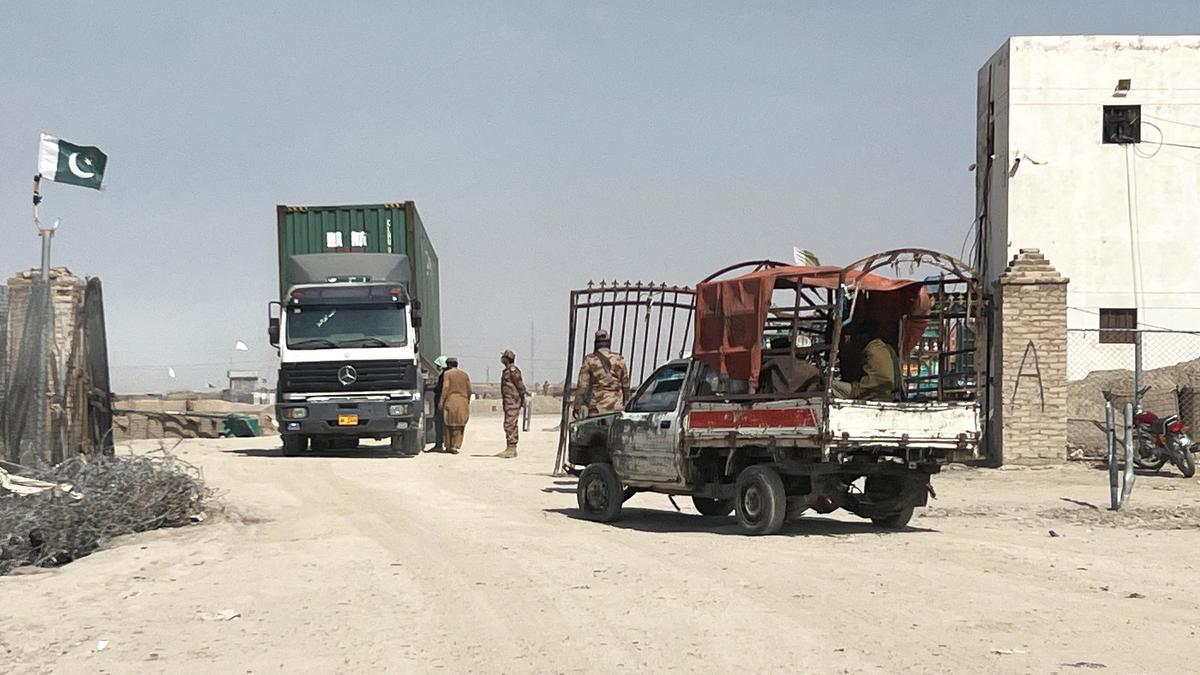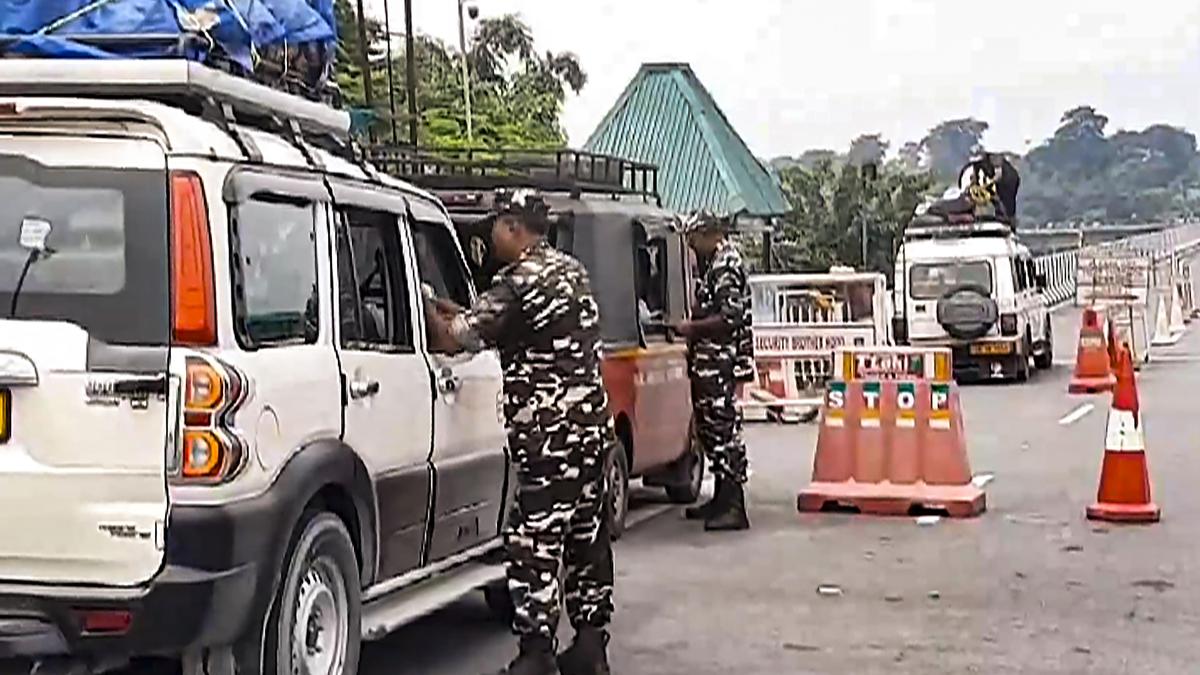
The dust on the road to the Mechi River bridge usually doesn't have time to settle. It is a restless, swirling thing, kicked up by the tires of overloaded trucks, the frantic pedaling of rickshaws, and the thousands of feet that blur the line between India and Nepal every single day. For those who live in the border towns of Panitanki or Kakarbhitta, the frontier isn't a wall. It is a lung. It breathes people in and out, sustaining the commerce, the families, and the very rhythm of life in the shadow of the Himalayas.
But at midnight on March 2, that lung stops breathing. If you found value in this post, you might want to check out: this related article.
The iron gates will swing shut. The shouting of the vendors will fade into an eerie, unnatural quiet. For 72 hours, an invisible line drawn on a map will suddenly become a physical, impenetrable reality. This isn't a response to a conflict or a sudden diplomatic falling out. It is the ritualistic freezing of movement that precedes the democratic process. Nepal is going to the polls, and to ensure the sanctity of the vote, the world’s most porous border must become a fortress.
The Human Cost of a Closed Gate
Consider a man named Rajesh. He lives in a small village on the Indian side, but his livelihood—a modest stall selling spare motorcycle parts—sits just across the line in Nepal. To him, the "International Border" is merely a commute. On March 2, Rajesh’s world shrinks. His income vanishes for three days. His customers, who rely on him to keep their transport running, are suddenly stranded on the other side of a locked gate. For another look on this development, refer to the latest update from Al Jazeera.
Then there is the matter of the "No Man's Land." It is a strip of earth where national identity is supposed to pause, but for the families whose homes sit dangerously close to the markers, it is a source of profound anxiety. When the border closes, the social fabric of these twin-towns doesn't just fray; it tears. Weddings are postponed. Funerals are missed. The grandmother who needs her specific blood pressure medication from the chemist three kilometers away—who happens to be in a different country—is suddenly a victim of geography.
The official reason for the shutdown is security. Authorities fear that the "open" nature of the border could allow for the movement of anti-social elements, illegal arms, or "voter-tourists" who might attempt to influence the outcome of the local or national elections. It is a preventative strike against chaos. By sealing the 1,850-kilometer boundary, security forces on both sides—the Sashastra Seema Bal (SSB) in India and the Armed Police Force in Nepal—can focus their eyes inward, ensuring that the only people casting ballots are those who truly belong to the land.
The Mechanics of the Freeze
The closure is absolute, but not without its grim exceptions. Emergency services, such as ambulances carrying patients in critical condition, are technically allowed through, though the bureaucracy of a closed border often makes "speed" a relative term. For everyone else, the clock starts ticking at midnight.
- Trade Stagnation: Hundreds of trucks carrying perishable goods—tomatoes, onions, milk—will be lined up for miles. The heat of the March sun will begin to cook the produce in the trailers. The economic loss isn't just a statistic in a government ledger; it is the difference between a profit and a debt for the independent driver who owns his rig.
- The Migrant Limbo: Thousands of Nepali citizens work in India, and Indian laborers work in Nepal. Many try to rush home before the midnight deadline to vote or to be with family. Those who miss the cutoff by minutes find themselves sleeping on pieces of cardboard in the dirt, staring at a gate that won't open until the final ballot is cast and the sun sets on the third day.
- Security Saturation: Patrolling increases. The quiet trails through forests and tea gardens, usually used by locals to bypass the main checkpoints for a quick trip to the market, are suddenly swarming with uniforms.
The silence that descends is heavy. It is the silence of a heartbeat skipped.
Why the 72-Hour Window Matters
You might wonder why three days are necessary. Why not just the day of the election? The answer lies in the logistics of influence. The 48 hours leading up to a vote are often referred to as the "silence period," a time when campaigning must stop so voters can reflect. However, in the borderlands, this is the time when "muscle and money" traditionally try to move.
By closing the border 48 hours before the polls open and keeping it closed until they shut, the government creates a controlled environment. They are trying to build a vacuum where only the will of the local people exists. It is a logistical nightmare designed to protect a democratic dream.
But for the person whose life is bifurcated by the border, the politics feel distant. They are caught in a grand design that treats their daily existence as a secondary concern. The "Invisible Stakes" here aren't about which party wins or loses. The stakes are the fundamental rights of movement and the precarious nature of living in a place where your citizenship is defined by which side of a bridge you happen to be standing on when the clock strikes twelve.
The sheer scale of the Indo-Nepal border makes this shutdown a Herculean task. Unlike the heavily militarized borders India shares with other neighbors, this one is defined by "Roti-Beti" (Bread and Daughter)—the historical and cultural practice of intermarriage and shared trade. When you close this border, you aren't just stopping foreigners; you are stopping cousins, business partners, and lifelong friends.
The Ghost Towns of the Frontier
By midday on March 3, the border towns will look like movie sets after the crew has left. The vibrant, chaotic energy that defines South Asian trade hubs will be replaced by a singular, focused tension. On the Nepali side, the queues will form at polling stations. On the Indian side, people will sit on plastic chairs in front of tea stalls, looking across the Mechi or the Mahakali river, watching a country participate in its future while they are barred from the view.
The air will be clear of the usual diesel fumes. The birds in the trees along the No Man's Land will be the only things crossing freely.
This 72-hour hiatus is a reminder of the fragility of the "open" status. We take for granted the ability to walk from one nation to another until a padlock appears on the chain-link fence. It forces a realization: the border is never truly open; it is merely on a long-term loan to the people, one that the state can reclaim at any moment for the sake of its own security.
As the sun dips below the horizon on the final day of the polls, the tension will peak. The counting begins. The results start to trickle in via radio and mobile data. And then, as the clock nears the end of the mandated closure, the engines will start.
The drivers who have been sleeping in their cabs will shake off the lethargy. The vendors will begin to uncover their carts. The guards will check their watches, hands resting on the heavy iron bolts of the gates.
When the gates finally groan open, the rush will be a literal tide of humanity. It won't be a gradual resumption of activity; it will be an explosion. The dust will rise again, thicker than before, as thousands of lives attempt to make up for 72 hours of lost time. The lung will take a deep, ragged breath.
The bridge will stop being a barrier and go back to being a road. But for those three days, the silence will have said more about the power of the state and the vulnerability of the individual than any campaign speech ever could.
The gates remain a reminder that even the strongest bonds are subject to the turn of a key.