The air in Tehran has always been thick with more than just smog. It carries the weight of forty years of whispers. On the morning the news finally broke—the news that the Supreme Leader was dead—the city didn't scream. It exhaled. It was a sound like a collective intake of breath held since 1979, a jagged, uncertain pause in the machinery of a nation that has forgotten how to move without a shadow hanging over it.
Ali is not a real person, but he is every young man I saw standing on the street corners of Valiasr Street during the Green Movement and the protests that followed the death of Mahsa Amini. In our story, Ali is twenty-four, a freelance graphic designer with a degree that earns him nothing and a VPN that gives him everything. He heard the news not from the state-run television blaring in his mother’s kitchen, but from a Telegram notification that bypassed the government’s digital censors.
He looked at his mother. She was weeping. Her tears weren't necessarily for the man who had died, but for the stability she feared was dying with him. To her generation, the Supreme Leader was the floor beneath their feet—hard, cold, and uneven, but present. To Ali, he was the ceiling. A low, concrete slab that kept the light out.
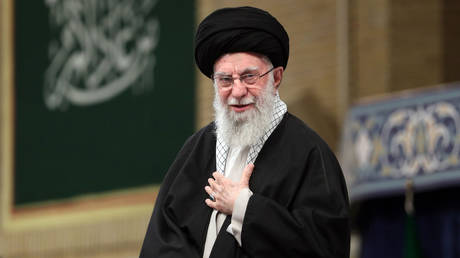
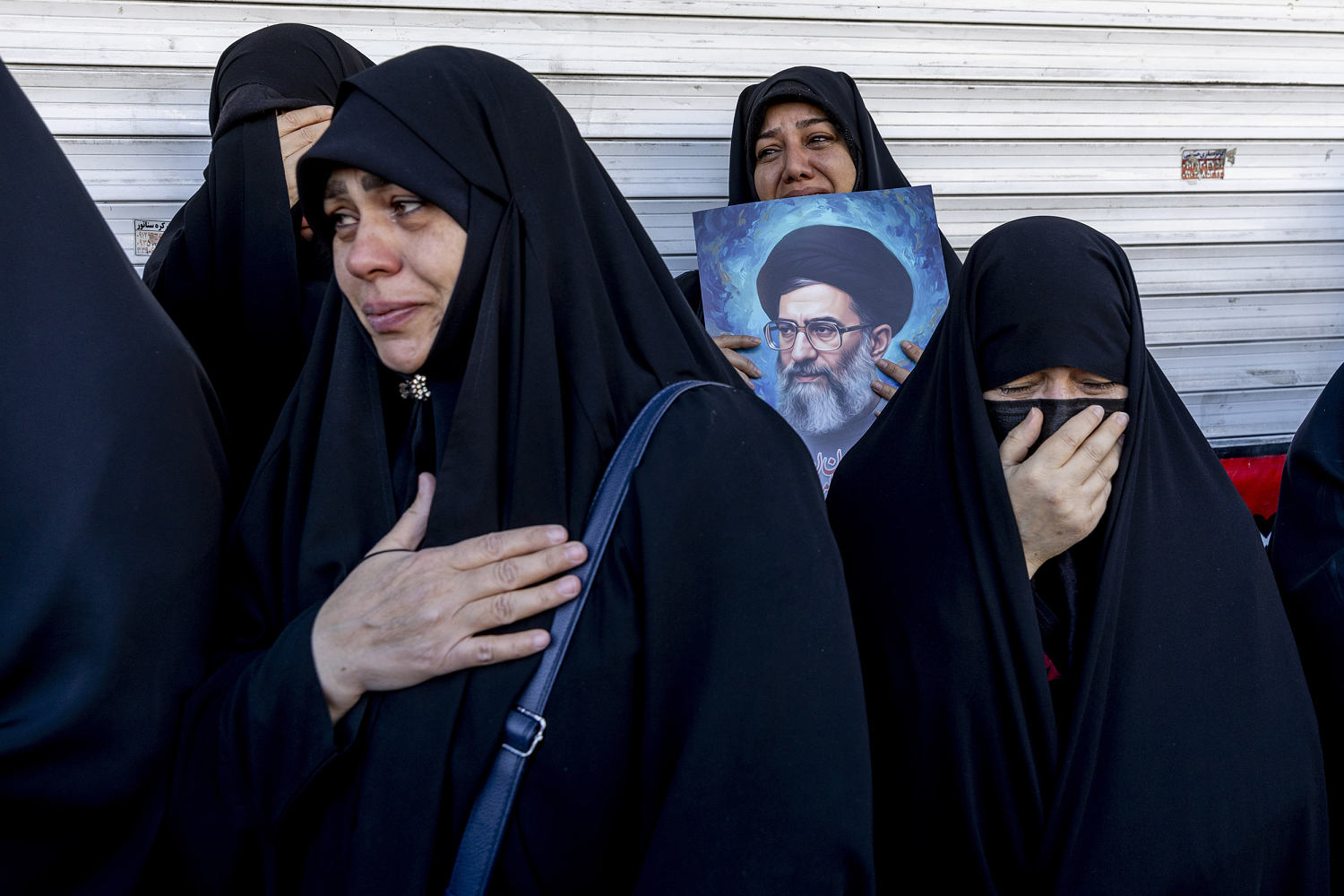
The state media began its choreographed mourning immediately. Black banners unfurled across the digital screens of the capital. Turbaned men with practiced grief lined up to kiss the casket. To the outside world, this is the face of Iran: a sea of black cloth and rhythmic chanting. It is a powerful image, one the regime has spent billions to maintain. It suggests a monolith, a singular will of a people united in sorrow.
But if you look past the cameras, into the side streets of Shiraz or the quiet apartments of Isfahan, the reality is fractured.
While the official mourners marched, Ali noticed something else. The price of sweets had spiked. In Iran, when something happens that the authorities forbid you from celebrating, you buy pastries. You hand them out to strangers. You don't say why. You don't have to. The sugar on the tongue is the secret handshake of the disillusioned.
The Architecture of the Void
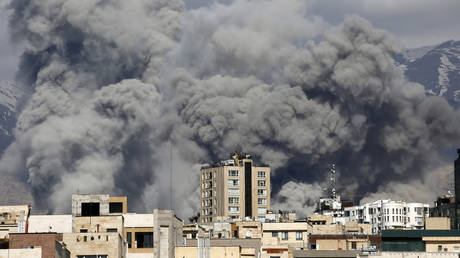
The death of a Supreme Leader creates a specific kind of vacuum. In a democracy, a leader’s exit is a change of clothes. In an autocracy built on the concept of Velayat-e Faqih—the guardianship of the Islamic jurist—it is a structural failure. The entire system is wired into the pulse of one man. When that heart stops, the electricity flickers across every institution, from the Revolutionary Guard to the morality police patrolling the parks.
The struggle for what comes next is not happening in the streets. Not yet. It is happening in carpeted rooms where men with gray beards and long memories are calculating their survival. They are looking at the Assembly of Experts, the body tasked with choosing a successor, and they are wondering who among them has the stomach to hold the whip.
The stakes are invisible but absolute. If the regime picks a hardliner, a mirror image of the man they just buried, they risk a total internal combustion. The youth, who make up the vast majority of the population, are no longer afraid of the dark. They have seen too much blood on the pavement to be scared of a ghost. If the regime picks a "reformer"—a term that has lost almost all its meaning in the Iranian context—they risk appearing weak, and in a system held together by the perception of strength, weakness is a terminal illness.
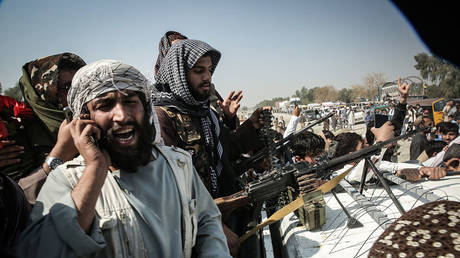
Consider the Revolutionary Guard (IRGC). They aren't just a military; they are a conglomerate. They own the construction companies, the telecommunications, the airports. To them, the transition isn't about theology. It’s about the balance sheet. They need a leader who will keep the sanctions-busting oil routes open and the dissenters quiet. If the new leader cannot guarantee the flow of capital, the Guard’s loyalty may start to fray.
The Two Irans
There is a profound disconnect between the Iran that prays and the Iran that posts.
The mourning we see on BBC or CNN is real for a segment of the population. There are those who truly believe that without the Supreme Leader, the country will fall prey to Western vultures or regional chaos. Their fear is the regime's greatest weapon. They see the ruins of Syria and the instability of Iraq, and they choose the devil they know. Their grief is salted with the terror of the unknown.
Then there is the other Iran. The Iran that dances in private basements to forbidden techno. The Iran that writes poetry on the walls of Evin Prison. For them, the death of the leader is not a tragedy; it is an expiration date.
Ali’s sister, Sara, doesn't wear her headscarf when she’s in the car. She is part of the generation that has decided the law is a suggestion they no longer wish to follow. When she heard the news, she didn't cry. She went to the mirror and cut a lock of her hair. It was a quiet, private echo of the protests that shook the world a few years ago.
"Everyone is waiting," she told Ali. "But nobody knows what for."
That is the danger of this moment. Silence is not peace. It is tension.
The opposition—the fractured, exhausted, brilliant, and scattered groups both inside and outside the country—is currently a choir without a conductor. They have been waiting for this "opening" for decades. Yet, as the state mourns, the opposition is paralyzed by its own divisions. Should they strike now? Should they wait for the regime to trip over its own succession?
History tells us that revolutions don't happen when things are at their worst. They happen when things start to change and then stop. The death of a dictator is the ultimate "start." If the transition is botched, if the new leader lacks the grim charisma of his predecessor, the gap between the two Irans will become a canyon that no amount of riot police can bridge.
The Weight of the Crown
The successor will inherit a house on fire.
The rial, the national currency, is a ghost of its former self. People carry bags of money to buy a week’s worth of groceries. The lakes are drying up due to decades of mismanagement, leaving farmers with dust where there used to be crops. The "quiet celebrations" reported by some are not just about the death of a man, but the hope that the system he built might finally be mortal too.
But hope is a volatile fuel.
In the tea houses of South Tehran, the talk isn't about democracy. It’s about bread. It’s about whether the new guy will make a deal with the Americans to lift the sanctions. It’s about whether the sons of the elite will keep driving Lamborghinis through the streets while the veterans of the Iran-Iraq war beg for medicine.
The regime knows this. They are masters of the "calculated pressure release." Expect them to offer small, cosmetic concessions in the coming weeks. Perhaps the morality police will be less visible. Perhaps a few political prisoners will be released as an act of "mercy" for the mourning period. These are not signs of change; they are tactical retreats.
The real test comes when the mourning ends.
When the black banners come down, the questions will remain. Does the new leader have the authority to command the regional proxies—the Hezbollahs and the Houthis? Does he have the respect of the clerics in Qom who have grown weary of the militarization of the faith?
Most importantly, can he look Ali and Sara in the eye and give them a reason to believe in a future that doesn't involve leaving their home?
The Last Prayer
As the sun set over the Alborz mountains on the third day after the announcement, Ali sat on his balcony. Below him, the traffic of Tehran crawled along like a wounded animal. He could hear the chanting from a nearby mosque, a rhythmic, mournful thrum.
He thought about his grandfather, who had marched in 1979 to bring this system into being, believing it would bring justice. He thought about his father, who had fought in the trenches of the 1980s, believing it would bring security. And he thought about himself, standing in the middle of a history that felt like a circle.
The man in the casket was gone. The shadow he cast, however, was long and cold.
Ali took a small piece of baklava, the sweet syrup sticky on his fingers. He ate it slowly. It was delicious. It was the taste of a secret. He wondered if, in the apartments all around him, thousands of others were tasting the same thing at the exact same time.
The regime wants us to believe that the story of Iran is written in the ink of the state. But the real story is written in the sugar of the pastries, the snip of the scissors, and the silence of a generation that has learned how to wait.
The king is dead. The kingdom is a question mark.
Ali looked out at the lights of the city. For the first time in his life, the skyline didn't look like a cage. It looked like a fuse.
The sun went down, and for a moment, the city was perfectly dark. Then, one by one, the lights flickered back on, powered by a grid that was older and more fragile than anyone dared to admit.
Would you like me to analyze the specific economic indicators that might trigger the next wave of civil unrest in Tehran?