The morning in Milan usually follows a rhythmic, predictable script. It starts with the hiss of espresso machines and the high-pitched chirp of turnstiles. Then comes the deepest sound of all: the heavy, melodic rumble of the orange and yellow trams. These cars are the city’s moving veins. They have carried generations through the humid summers and the gray, foggy winters of Lombardy. We trust them. We step onto them without looking up from our phones, leaning our weight into the familiar sway of a machine that feels as permanent as the Duomo.
But on a Tuesday that began like any other, that trust snapped.
It happened at a busy junction, the kind of place where the city’s history meets its frantic modern pulse. There was no cinematic explosion. There was only the sudden, sickening screech of metal failing. For the passengers inside, the world didn't just stop; it tilted. A tram is supposed to stay on its rails. It is a fundamental law of the city. When those tons of steel jump their tracks and plow into the pavement, the sound is something you feel in your teeth.
The Physics of a Moment
To understand why this matters beyond a simple traffic delay, you have to look at the sheer violence of a derailment. A tram car is not a light vehicle. It is a massive kinetic force tethered to a very specific path. When it leaves that path, it becomes an intruder on the asphalt.
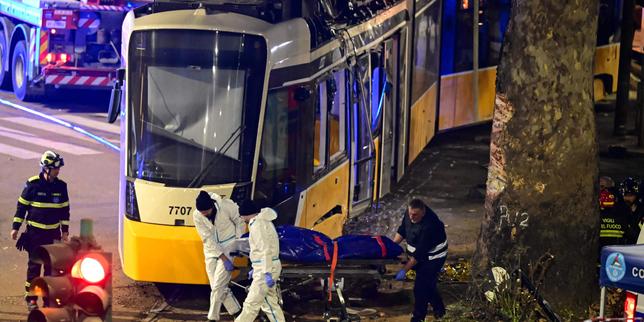
Witnesses described the sight of the lead car slewing sideways, its nose digging into the ground like a plow. Dust rose. People on the sidewalk froze, their morning routines shattered by the sight of a familiar giant losing its footing. Inside the car, the human cost was immediate. Gravity shifted. A woman heading to work was thrown from her seat; an elderly man gripped a pole that was no longer upright. In that handful of seconds, the "dry facts" of a technical malfunction became a chaotic scramble for balance.
Emergency sirens soon cut through the stunned silence of the neighborhood. The white and red of the Vigili del Fuoco—the fire brigade—and the orange vests of the paramedics filled the frame. They weren't just there to move a vehicle. They were there to extract people from a metal box that had suddenly become a trap.
The Invisible Stakes of Infrastructure
When we read a headline about a derailment, our brains often categorize it as a "transit issue." We think about delays. We think about our commute. We rarely think about the invisible war between aging infrastructure and the relentless demands of a 21st-century city.
Milan’s tram network is one of the most extensive and beautiful in the world. It is a living museum. But a museum that moves thousands of people an hour requires a level of precision that most of us ignore until it fails. Think of the rails as a promise. The city promises that the switches will slide perfectly into place, that the curves are ground to the correct millimeter, and that the wheels are checked for the tiniest fractures.
When a tram derails, that promise is broken.
The investigation into this specific accident began before the dust even settled. Experts in reflective gear knelt on the tracks, measuring the gauge of the rails and peering into the undercarriage of the car. Was it a "human error"—a driver taking a turn a fraction too fast? Or was it "material fatigue"—a piece of steel that simply couldn't take one more day of pressure? These questions are the backbone of urban safety. If it can happen at one junction, it can happen at any of them.
The Faces in the Glass
Consider a hypothetical passenger named Giulia. She takes this line every day. She knows the driver’s face, though they’ve never spoken. She has a favorite seat. For Giulia, the tram isn't "public transport." It’s a ten-minute sanctuary between her apartment and her office where she can read her book and watch the city go by.
When the car jumped the tracks, Giulia wasn't thinking about "infrastructure investment" or "mechanical failure." She was thinking about the sudden, terrifying realization that her sanctuary was fragile. She saw the pavement rushing toward the window. She felt the impact of the person next to her being thrown into her shoulder.
This is the emotional core that a standard news report misses. A derailment is a psychological event. It changes how a thousand people look at their city the next day. It makes you hesitate for a split second before you step over the gap between the platform and the floor. It turns a mundane habit into an act of faith.
The Weight of the Aftermath
Clearing a derailed tram is a feat of heavy engineering performed in a space designed for pedestrians. Huge cranes have to be brought in, their stabilizers digging into the cobblestones. The city holds its breath. The streets are blocked, traffic is diverted, and the "normal" flow of life is rerouted through narrow side streets.
But the physical clearing is the easy part. The real work happens in the offices of ATM, Milan’s transport authority. They have to reconcile the images of the wreckage with their safety records. They have to explain to a nervous public why a routine journey turned into a hospital visit for several passengers.
We often treat our cities like machines that just work. We expect the lights to turn on, the water to flow, and the trams to stay on the tracks. We only notice the complexity of these systems when they scream. The images from this derailment—the twisted metal, the shattered glass, the heavy chains lifting the car back onto the steel—are a reminder of the raw power we interact with every single day.
The injured were taken to local hospitals, most with bruises and the kind of shock that takes weeks to fade. The tram car was eventually towed away to a depot, looking small and defeated behind a heavy truck. By nightfall, the tracks were empty. The sirens were gone. The only thing left was a series of deep, ugly gouges in the pavement where the wheels had tried to find a path that didn't exist.
The next morning, the first tram of the day approached that same junction. The driver slowed down. The passengers looked out the windows at the scars on the ground. They felt the familiar sway, the familiar rumble, and the quiet, unspoken hope that the steel would hold this time.
The city moves on because it has to, but it carries the memory of the screech in its bones.