The headlines are vibrating with the same tired alarmism: Iran says non-hostile ships can cross the Strait of Hormuz "on its terms." The media treats this like a new threat, a sudden pivot in geopolitical tension, or a desperate power grab by a sanctioned regime.
They are wrong.
The "lazy consensus" among Western analysts is that the Strait of Hormuz is a binary switch—either it’s open and the world breathes, or it’s closed and the global economy collapses. This view is pedestrian. It ignores the reality that the Strait has been "closed" for years in every way that actually matters to a balance sheet. Iran isn't threatening to seize control of the waterway; they are simply dropping the facade that they don't already own the thermostat of the global energy market.
If you are waiting for a hot war to start before you hedge your positions, you’ve already lost.
The Myth of International Waters
Geopolitics is often taught as a series of lines on a map. In reality, it is a series of costs. The legal distinction of "international waters" or "transit passage" under the UN Convention on the Law of the Sea (UNCLOS) is a comfort blanket for maritime lawyers, not a reality for ship captains or insurance underwriters.
Iran never ratified UNCLOS. From their perspective, the Strait isn't a highway; it's their front porch. When Tehran mentions "non-hostile" ships, they aren't making a legal claim. They are setting a price.
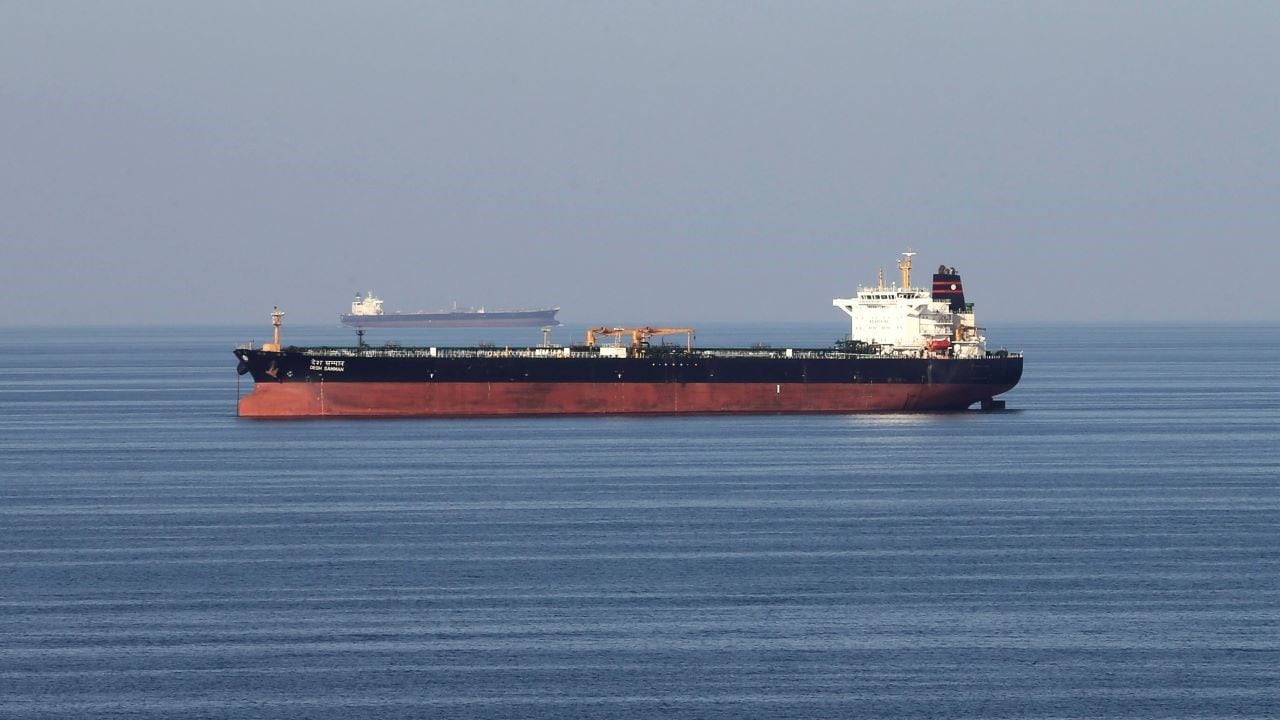
Every time a tanker moves through those 21 miles of navigable water, it is paying an invisible tax. That tax is reflected in soaring Hull and Machinery (H&M) insurance premiums and War Risk surcharges. I have sat in rooms with commodities traders who pretend these costs are seasonal fluctuations. They aren't. They are the "Iran Sovereignty Tax." By vocalizing "terms" for passage, Iran is merely formalizing a shadow economy they have curated since the late 1980s.
Why a Physical Blockade is a Rookie Mistake
The most common question asked in briefing rooms is: "Will Iran actually sink a tanker to close the Strait?"
It is the wrong question.
Actually sinking a ship and creating a physical barrier of wreckage is a low-IQ move. It invites an immediate, overwhelming kinetic response from the U.S. Fifth Fleet. It ruins the water for everyone, including Iran’s own exports to China.
Iran’s strategy is far more elegant. It’s Psychological Friction.
By intermittently seizing vessels like the Stena Impero or the Advantage Sweet, Iran creates a permanent state of "High Probability/High Impact" risk. This creates a feedback loop:
- Tehran makes a statement about "terms" of passage.
- Insurance underwriters in London panic.
- Shipping rates (Worldscale) spike.
- Energy futures climb.
Iran gains the economic benefits of a higher oil price without ever having to spend a single torpedo. They aren't trying to stop the flow of oil; they are trying to manage the anxiety of the flow. The "terms" they speak of are a diplomatic dog-whistle for "Recognize our regional hegemony or watch your CPI melt."
The "Non-Hostile" Trap
The term "non-hostile" is the ultimate gaslighting tool in modern diplomacy. Who defines hostility? In a world of hybrid warfare, "hostile" can mean anything from a destroyer escort to a merchant vessel owned by a shell company with distant ties to an adversary.
By using this language, Iran creates a perpetual legal gray zone. They aren't closing the Strait; they are "inspecting" it. They aren't seizing ships; they are "enforcing maritime safety."
This is the same playbook used in the South China Sea, but with a more volatile commodity. The mistake the West makes is trying to solve this with more naval patrols. You cannot shoot a legal definition. You cannot depth-charge a nuance. Every time a Western navy sends more steel to the region, it confirms Iran's narrative that the area is a "war zone," which—ironically—drives the insurance costs even higher. Iran wins by the mere presence of their enemies.
The Math of a Chokepoint
Let’s look at the numbers the "consensus" articles won't give you. Approximately 21 million barrels of oil pass through the Strait daily. That is roughly 20% of global petroleum liquid consumption.
But here is the data point that actually matters: Zero viable alternatives exist.
- The East-West Pipeline (Saudi Arabia): Max capacity is around 5 million barrels per day.
- The Abu Dhabi Crude Oil Pipeline: Maxes out at 1.5 million.
- The Kirkuk-Ceyhan Pipeline: Politically unstable and often offline.
Even if every bypass pipeline ran at 110% capacity, more than 13 million barrels a day would still be trapped. That is a supply shock that makes the 1973 embargo look like a minor inventory hiccup.
Iran knows this math better than the EIA. They know that the global economy is a "Just-in-Time" machine with no buffer. Their "terms" for passage are effectively a demand for a seat at the head of the global economic table. They aren't a rogue state playing with matches; they are the landlord of the world’s most important hallway, and they just announced the rent is going up.
The Failure of the "Freedom of Navigation" Narrative
The U.S. and its allies rely on the "Freedom of Navigation" (FON) narrative to justify their presence. It sounds noble. It’s also increasingly irrelevant.
In the 1940s, naval supremacy meant control. In 2026, naval supremacy is a liability. A billion-dollar destroyer is a target for a $20,000 loitering munition. Iran’s "terms" are backed by a swarm of fast-attack craft and anti-ship cruise missiles (ASCMs) tucked into the jagged coastline of the Musandam Peninsula.
I’ve spoken with former naval commanders who admit privately that "keeping the Strait open" is a logistical nightmare that they can only win in a total war scenario. Short of total war, the advantage sits with the actor who is willing to be more "annoying." Iran has mastered the art of being strategically annoying.
Stop Asking "Will They?" and Start Asking "How Much?"
If you want to understand the Strait of Hormuz, stop reading military blogs and start reading the fine print on maritime insurance contracts.
The status quo isn't "Peace." The status quo is "Managed Volatility."
Iran’s latest statement isn't a threat to the global order—it is a description of the global order as it currently exists. They are telling you that the "freedom" of the seas is a polite fiction. Every barrel of oil that moves through that water does so because Tehran allows it, or because the cost of stopping it is temporarily higher than the benefit of letting it pass.
The nuance the "competitor" articles miss is that Iran doesn't want to close the Strait. They want to own the fear of it closing. Closure is a one-time card you can only play once. The threat of closure is a dividend that pays out every single day in the form of geopolitical leverage.
The Hard Truth for Energy Markets
Everything you’ve been told about "energy independence" is a lie as long as the Strait of Hormuz is under the thumb of a single regional power. Even if the U.S. produced 50 million barrels a day domestically, oil is a fungible global commodity. If the Strait catches a cold, the price in Texas gets a fever.
Iran isn't a disruptor. They are the ultimate insiders. They have figured out that in a hyper-connected global economy, the person who controls the chokepoint doesn't need to be the strongest; they just need to be the most willing to break the glass.
The "terms" Iran is proposing aren't up for negotiation. You are already living by them. You are paying for them at the pump, in your shipping costs, and in the bloated defense budgets designed to counter a threat that has already successfully integrated itself into the cost of doing business.
Quit looking for a "solution" to the Hormuz problem. There isn't one. There is only the price of admission.
Pay the tax or get out of the water.