The silence is the loudest thing in Beirut. It isn't a natural silence. It’s the kind of quiet that feels like a held breath, the sort of stillness that precedes a scream or a sigh of relief, though no one quite knows which one is coming. For months, the sky has been a source of terror. Now, suddenly, Donald Trump says the sky belongs to the birds again. At least for ten days.
Ten days. For another perspective, check out: this related article.
In the grand arc of history, ten days is a heartbeat. It’s a vacation. It’s the time it takes for a bad cold to run its course. But for a mother in a basement in Southern Lebanon or a family in Northern Israel living out of a reinforced safe room, ten days is an eternity of possibility. It is enough time to sleep without one ear pressed to the floor. It is enough time to buy bread without calculating the quickest route back to cover.
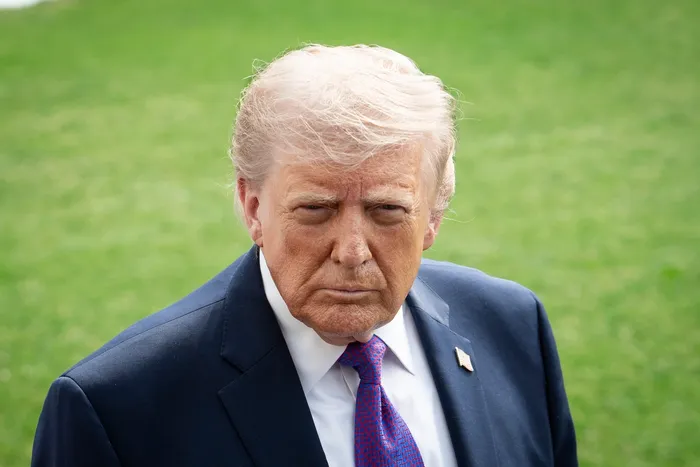
President Donald Trump announced the agreement with the kind of blunt certainty that has become his trademark. He stepped into the chaotic fray of the Middle East and drew a line in the sand—not a permanent border, but a temporal one. Ten days of ceasefire between Israel and Lebanon. He framed it as a victory of will, a cooling-off period meant to de-escalate a region that has spent the last year simmering on the edge of total collapse. Related analysis on this matter has been published by TIME.
The mechanics of the deal are lean. The guns are supposed to go cold. The missiles stay in their tubes. The drones, those buzzing mechanical mosquitoes that have come to define modern warfare, are meant to grounded.
But peace is never just about mechanics.
Consider a woman we will call Farah. She lives in a small village where the hills smell of thyme and scorched earth. For Farah, the news of a ten-day ceasefire doesn’t trigger a celebration. It triggers a frantic, practical assessment. Can she go back to the house? Is the roof still there? If she goes now, will she be trapped if the clock runs out and the clockwork of war starts ticking again? To the diplomats in air-conditioned rooms in Washington or Tel Aviv, ten days is a "diplomatic window." To Farah, it is a gamble with her life.
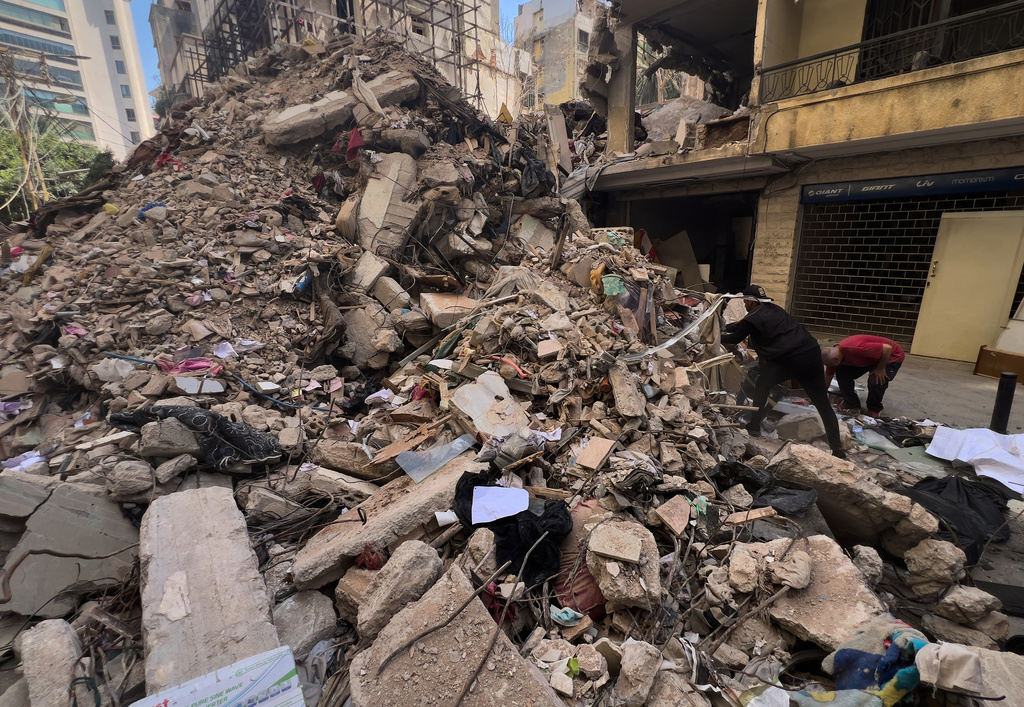
The world often views these conflicts through the lens of geopolitics—arrows on a map, casualty counts, and technical specifications of defense systems. We talk about the Iron Dome and Hezbollah’s rocket inventory as if we are discussing pieces on a chessboard. But the reality is much more visceral. It is the smell of pulverized concrete. It is the specific, jarring pitch of an air-raid siren that vibrates in your molars.
By brokering this ten-day pause, Trump is betting on the psychology of the break. The theory is simple: once people stop killing each other, they might find they prefer the quiet. It’s an attempt to break the muscle memory of violence. When a heart is in tachycardia, sometimes you need a sharp, controlled shock to reset the rhythm.
Critics argue that ten days is a joke. They say it’s a band-aid on a gunshot wound, a cynical ploy for headlines that offers no long-term roadmap for the complex, jagged grievances that define the Israel-Lebanon border. They worry that both sides will simply use the 240 hours to reload, reposition, and refine their target lists.
They might be right.
History is littered with "pauses" that were merely pit stops on the way to a larger massacre. Yet, there is a counter-argument rooted in the messy reality of human exhaustion. War is tiring. It is a grueling, expensive, soul-crushing endeavor. Sometimes, all it takes to prevent a total conflagration is a moment for the smoke to clear so the combatants can see how close they are to the cliff’s edge.
The stakes are invisible but massive. We aren't just talking about a border dispute; we are talking about the stability of the global energy market, the shipping lanes of the Mediterranean, and the sanity of millions of people. If this ten-day experiment holds, it proves that the cycle can be interrupted. It suggests that the "inevitable" escalation is actually a choice.
Donald Trump's involvement adds a layer of unpredictable gravity to the situation. He doesn't operate like a traditional statesman. He doesn't favor the slow, grinding process of mid-level bureaucratic negotiation. He prefers the big swing. The "Deal of the Century" mindset. By putting his name on a ten-day ceasefire, he is staking his reputation on a very short fuse.
If it fails on day three, the fallout will be immediate and loud. If it holds until day eleven, the pressure to extend it will be immense.
Imagine the border now. It is a scar across the earth. On one side, Israeli communities have been hollowed out, their residents displaced to hotels and temporary housing, living out of suitcases for a year. On the other side, Lebanese villages are ghost towns, the infrastructure of daily life shattered.
The "People Also Ask" sections of our search engines want to know: Will the ceasefire hold? Who broke the deal? Is this the start of a permanent peace? The honest answer is that no one knows. Uncertainty is the only thing we have in abundance. But there is a difference between the uncertainty of war and the uncertainty of a ceasefire. The uncertainty of war is the question of when you will lose everything. The uncertainty of a ceasefire is the question of how you might start to get it back.
The logic of the ten-day window is a test of restraint. It asks Israel if it can achieve its security goals without another sortie. It asks Lebanon if it can exert control over the non-state actors within its borders. Most importantly, it asks the world if we still believe that words can stop bullets.
There is a specific kind of light in that part of the world at dusk. It turns the limestone buildings a soft, honey gold. For the next ten days, the people living under that light won't have to look at it through the smoke of an interceptor missile. They can just look at the sunset.
Ten days isn't long enough to rebuild a house. It isn't long enough to heal the trauma of a generation. It isn't long enough to solve the theological and territorial disputes that have burned since before any of the current leaders were born.
But it is long enough to remember what it feels like to be human.
It is long enough to realize that the person on the other side of the border is also checking their watch, counting the hours, and hoping that the eleventh day never brings back the noise. The ghost of peace is haunting the border now, fragile and translucent. Everyone is trying very hard not to look directly at it, for fear that it might vanish if they acknowledge it's there.
The clock is ticking. It started the moment the pens hit the paper. 240 hours. 14,400 minutes. Each one is a victory. Each one is a miracle. Each one is a reminder that even in a world governed by iron and fire, sometimes, someone just decides to stop.
Whether that stop is a comma or a period remains to be seen, but for the man in the shelter and the woman in the field, the grammar doesn't matter. Only the silence does.
Wait for the sound of the eleventh morning. It will tell us everything we need to know about the future of the world.