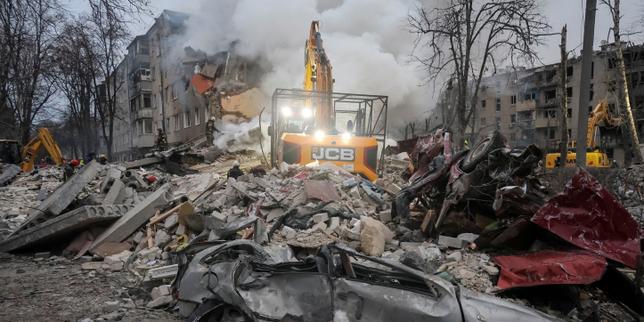
The strikes on desalination infrastructure in Bahrain and Iran represent a terrifying shift in regional warfare from tactical military targets to the direct sabotage of human survival. For decades, the shadow war in the Middle East focused on tankers, refineries, and enrichment facilities. Now, the math has changed. By targeting the plants that provide over 90% of the potable water for some Gulf populations, combatants are moving beyond kinetic displays of force and toward a strategy of enforced mass displacement.
Bahrain’s Al Hidd area and coastal facilities in Iran’s Hormozgan province have both reported significant damage to reverse osmosis units and intake pipes. While officials on both sides initially downplayed the severity to prevent public panic, the reality on the ground is stark. Water is not just a resource in the desert; it is the absolute baseline of sovereignty. When the taps run dry in a region where summer temperatures routinely exceed 40°C, a city becomes uninhabitable within forty-eight hours.
The Fragility of the Reverse Osmosis Shield
The technical vulnerability of these plants is the dirty secret of Gulf urban planning. Most modern desalination relies on Reverse Osmosis (RO), a process where seawater is pushed through semi-permeable membranes at high pressure to remove salt. These membranes are incredibly delicate. They aren't just vulnerable to missiles; they are vulnerable to the environmental runoff caused by those missiles.
If a strike hits a nearby oil terminal or a shipping vessel, the resulting slick can clog the intake filters of a desalination plant miles away. Once those membranes are fouled by hydrocarbons, the entire system must be shut down for weeks of cleaning and replacement. We are seeing a "collateral lockout" where a strike on a traditional military target effectively kills the local water supply without a single explosive touching the plant itself.
The engineers I’ve spoken with in Manama and Bandar Abbas describe a nightmare scenario of "cascading failure." Because the regional power grids are deeply integrated with water production—often through Multi-Stage Flash (MSF) distillation which uses waste heat from power plants—hitting a substation is functionally the same as hitting a reservoir. You cannot have water without power, and in the Gulf, you cannot have life without both.
Why the Current Defense Strategy Fails
Traditional missile defense systems like the Patriot or the S-400 are designed to protect high-value "point" targets like palaces or command centers. They are less effective at protecting sprawling coastal infrastructure that stretches for kilometers along a shoreline. A drone swarm doesn't need to level a building to win; it only needs to sever the massive intake pipes that sit just below the water line.
There is also the issue of the supply chain for specialized components. The high-pressure pumps and specialized membranes used in these facilities are not manufactured locally. They are sourced from a handful of firms in the United States, Japan, and Germany. With regional shipping lanes under constant threat, the lead time for replacement parts has ballooned from weeks to months.
Iran, under heavy sanctions, has developed some indigenous capacity for water tech, but it lacks the scale to replace a tier-one facility overnight. Bahrain, despite its wealth, is at the mercy of global logistics. If a major facility like Al Dur is taken offline permanently, there is no "Plan B." Bottled water reserves are a stopgap that lasts days, not months.
The Economic Calculus of Dehydration
Beyond the humanitarian crisis, there is a brutal economic logic at play. Desalination is incredibly energy-intensive. It is the single largest line item in the energy budgets of most Gulf nations. By forcing an opponent to divert massive amounts of electricity and capital toward emergency water production, an aggressor can effectively bankrupt a mid-sized economy without ever launching a full-scale invasion.
Consider the cost of a single drone versus the cost of a desalination train. A $20,000 loitering munition can cause $50 million in damage and necessitate $200 million in emergency water imports. The asymmetry is staggering. This isn't just war; it's an accounting trick written in blood.
- Fixed Assets: Massive, unmovable plants situated on predictable coastal coordinates.
- Zero Redundancy: Most cities rely on one or two "mega-plants" rather than a distributed network.
- Environmental Sensitivity: Vulnerability to red tides, oil spills, and chemical contamination.
The Intelligence Gap in Water Security
Western intelligence agencies have spent decades tracking ballistic missile silos and nuclear centrifuges. They have spent significantly less time monitoring the security protocols of civilian utility hubs. This oversight has allowed non-state actors and proxy groups to map the "soft underbelly" of the Gulf states with impunity.
Satellite imagery now shows a buildup of defensive barriers around these plants, but sandbags and concrete walls do nothing against a cyberattack. The Industrial Control Systems (ICS) that manage the chemical dosing in water treatment are often running on outdated software with known vulnerabilities. A hacker doesn't need a bomb to poison a city; they just need to change the chlorine mix ratios in the software.
We are entering an era where the definition of a "civilian" target is being blurred by necessity. If a government cannot provide water, it loses legitimacy. Therefore, the water plant is the most "political" target on the map.
Moving Toward Distributed Resilience
The only way out of this trap is a radical move away from centralized "trophy" infrastructure. Governments need to invest in smaller, modular desalination units that are truck-mounted or hidden inland with protected deep-sea intakes.
This is more expensive. It is less efficient. But it is the only way to survive in a theater where the rules of engagement have been shredded. The era of the mega-plant is over, or at least it should be, if these nations want to ensure their populations don't wake up to dry taps and a ticking clock.
Building a 100-million-gallon-per-day facility is a statement of pride. Building 100 one-million-gallon facilities is a strategy for survival. Until the regional powers stop prioritizing the optics of "world-class" infrastructure over the grit of redundant systems, they remain one well-placed explosion away from a total societal collapse.
Stop looking at the refineries. Watch the pipes.