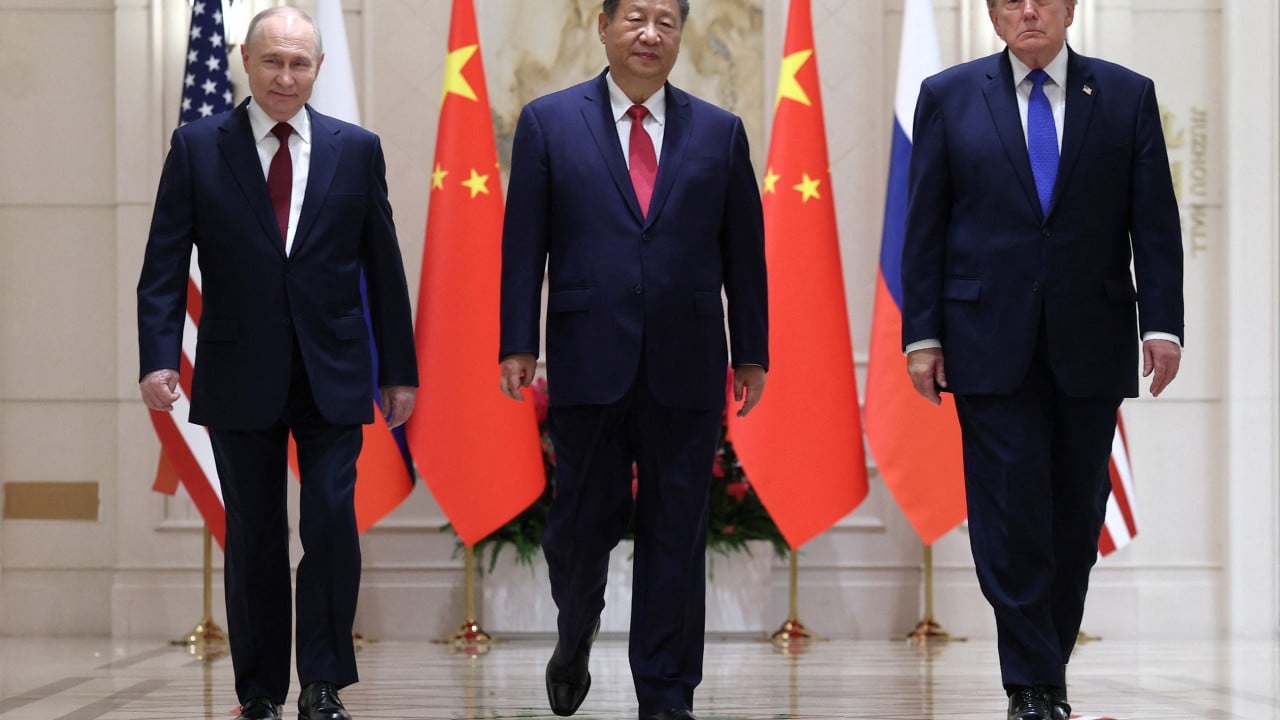
The carpet in a diplomatic convention hall is always thick enough to swallow the sound of footsteps. You notice that first when you have spent enough autumn nights pacing the corridors of Asia-Pacific Economic Cooperation summits, waiting outside frosted glass doors with a lukewarm cup of coffee and a press badge that gets you close to history, but never quite inside it.
Outside, the host city is scrubbed clean. Police boats idle in the harbor. Snipers perch on the roofs of five-star hotels. Inside, hundreds of trade ministers and economists argue over tariff schedules, supply chain resilience, and digital customs forms—the quiet, unglamorous plumbing that keeps cargo ships moving from Shenzhen to Seattle and Vladivostok to Valparaíso. Meanwhile, you can explore related stories here: Behind Enemy Lenses Why Russian Photographer Victoria Ivleva Chose Ukraine.
Then the doors swing open, and the oxygen leaves the room.
Three men walk toward the same round table. They represent the United States, China, and Russia. Between them, they command roughly ninety percent of the nuclear warheads on Earth, control the largest standing armies, and hold veto power over the global economy's nervous system. To understand the bigger picture, we recommend the recent analysis by Associated Press.
Wait.
Think about what that actually means. Not as a headline on a scrolling news ticker, and not as a dry briefing paper on geopolitical alignment, but as a physical reality. Three human beings—fallible, aging, surrounded by layers of intelligence briefings and domestic pressures—sitting within arm's reach of each other while a single miscalculation in the South China Sea, Eastern Europe, or the Taiwan Strait could turn a Tuesday afternoon into the final chapter of modern civilization.
The Myth of the Polite Handshake
Most coverage of an APEC summit treats the presence of the American, Chinese, and Russian presidents like a high-stakes sporting event. Reporters count the seconds of a handshake. Body language experts analyze the angle of a shoulder or the tightness of a smile. News anchors ask who won the optics.
That obsession with theater misses the terrifying truth of what APEC actually is.
Founded in 1989, just as the Berlin Wall was crumbling, the Asia-Pacific Economic Cooperation forum was never designed to be a security council. It was built on a hopeful, almost naive premise: that if nations trade enough goods, build enough factories together, and tangle their supply chains tightly enough, war becomes too expensive to contemplate. For three decades, that logic held. Container ships grew larger. Smartphones were designed in California, assembled in China, and sold in Moscow. Economists called it interdependence.
To understand how fragile that interdependence has become, imagine a hypothetical figure—let us call her Elena, a logistics coordinator working out of a port office in Busan, South Korea. Elena does not care about diplomatic communiqués. She cares about whether forty-foot containers filled with semiconductor components clear customs on schedule, whether marine insurance premiums double overnight because of naval drills in nearby waters, and whether the shipping lane her company relies on remains open next month.
When the leaders of the United States, China, and Russia converge at APEC, Elena’s livelihood is sitting on the table right next to the nuclear codes. Because today, trade is no longer the antidote to conflict. Trade is the weapon.
What History Actually Says About Three-Way Standoffs
When commentators talk about "historic precedents" for three nuclear powers meeting under one roof, they usually reach for the ghosts of 1945—Roosevelt, Churchill, and Stalin seated in the Livadia Palace at Yalta, dividing up a shattered world on maps spread across a mahogany table.
That comparison is comforting, and it is wrong.
At Yalta, the three leaders were allies bound together by a common enemy, sketching out a postwar order while the guns were still firing. At APEC, the three powers are not allies. They are entangled rivals locked in an asymmetric triangle where every bilateral move triggers an immediate reaction from the third corner.
Consider what happens next when Washington and Beijing sit down to stabilize their relationship. Moscow watches closely, calculating whether a thaw between the world's two largest economies will leave Russia isolated or dilute its strategic partnership with China. When Beijing and Moscow project unity on the sidelines of the summit, Washington reads it as an emerging bloc determined to rewrite the rules of global commerce and security. And when the United States rallies its Pacific allies around new trade frameworks and defense pacts, both China and Russia see encirclement.
The true historical echo is not Yalta. It is the summer of 1914, when European monarchs who were literally cousins—linked by blood, marriage, and booming industrial trade—watched a regional crisis spiral out of control because their alliance systems had become too rigid to absorb a single shock.
I admit that writing about nuclear brinkmanship and global trade architecture often feels overwhelming, even after years of watching diplomats parse every comma of a joint declaration. There is a strange dissonance in watching men in tailored dark suits discuss "inclusive growth" and "sustainable energy transitions" while their militaries shadow each other's warships a few hundred miles away. You find yourself wondering whether the people in the room are genuinely steering the ship, or merely reacting to currents too powerful for any single leader to reverse.
The Invisible Room Inside the Room
To grasp the real stakes of an APEC gathering, you have to look past the plenary sessions where twenty-one leaders pose in matching traditional shirts for the "family photo." Nobody makes history in the family photo.
History happens in the "pull-asides"—the unscripted ten-minute conversations near the coffee station, or the tightly scripted bilateral meetings held in windowless hotel suites two floors above the press center.
Here is the mechanics of how those rooms work, stripped of diplomatic jargon:
- The Guardrails Conversation: When the American and Chinese presidents meet, the immediate goal is rarely a grand bargain. Tariffs remain in place. Export controls on advanced microchips stay locked down. Instead, the real objective is restoring military-to-military hotlines—making sure that if an American reconnaissance plane and a Chinese fighter jet clip wings over international waters, an admiral in Hawaii can actually reach his counterpart in Beijing before a local commander panics.
- The Sanctions Shadow: Russia’s presence at APEC—whether represented by its president directly or through a high-level delegation when international arrest warrants or wartime logistics complicate travel—turns every economic discussion into a stress test. Western sanctions have forced Moscow to pivot its energy and commodity exports eastward, turning China into its indispensable economic lifeline while testing the neutrality of Southeast Asian nations that refuse to pick a side.
- The Middle-Power Squeeze: While the three giants command the cameras, the other eighteen APEC economies—from Japan and South Korea to Indonesia, Chile, and Australia—spend the week quietly pleading not to be forced into a binary choice. For a factory owner in Vietnam or a copper exporter in Peru, losing access to either the American consumer market or Chinese industrial supply chains is an existential threat.
Think of the global economy as a suspension bridge. For thirty years, engineers kept adding lanes of traffic—more trade, faster data, just-in-time manufacturing—assuming the main cables holding the bridge up were indestructible. Those main cables are the basic diplomatic understandings between Washington, Beijing, and Moscow. You do not see the cables when you are driving across the bridge at sixty miles an hour. You only notice them when the wind starts howling and the steel begins to groan.
Why the Absence of a Deal Is the Story
In normal business negotiations, walking away without a signed contract means failure. In three-power nuclear diplomacy, walking away without a crisis is often the only victory available.
When the summit concludes, analysts inevitably dissect the final communiqué—or notice the absence of one, as happened when deep divisions over war and trade prevented consensus. Critics dismiss the gathering as an expensive talk shop where leaders recite prepared talking points and fly home to their respective domestic audiences.
That cynicism misses the point entirely.
Diplomacy at this altitude is not about becoming friends. It is about maintaining eye contact. When the leaders of the United States, China, and Russia occupy the same physical space at APEC, they are forced to confront the human reality of their counterparts—not as abstract threats on a briefing slide, not as avatars of rival ideologies, but as mortal men presiding over nations that share the same atmosphere, the same oceans, and the same vulnerability to catastrophe.
Back in our hypothetical Busan shipping office, Elena does not expect the evening news to announce eternal peace in the Pacific. She checks the overnight wire reports, sees that the bilateral meetings ended without a walkout, notes that maritime shipping advisories remain unchanged, and signs off on the morning manifest for three container vessels bound for Long Beach.
The carpets in the convention hall are rolled up. The police boats return to their docks. Somewhere over the Pacific, three heavily guarded aircraft climb into the night sky, carrying three men back toward their capitals, leaving behind a world that is no safer than it was on Monday, yet still—by the narrowest, quietest margin—intact.