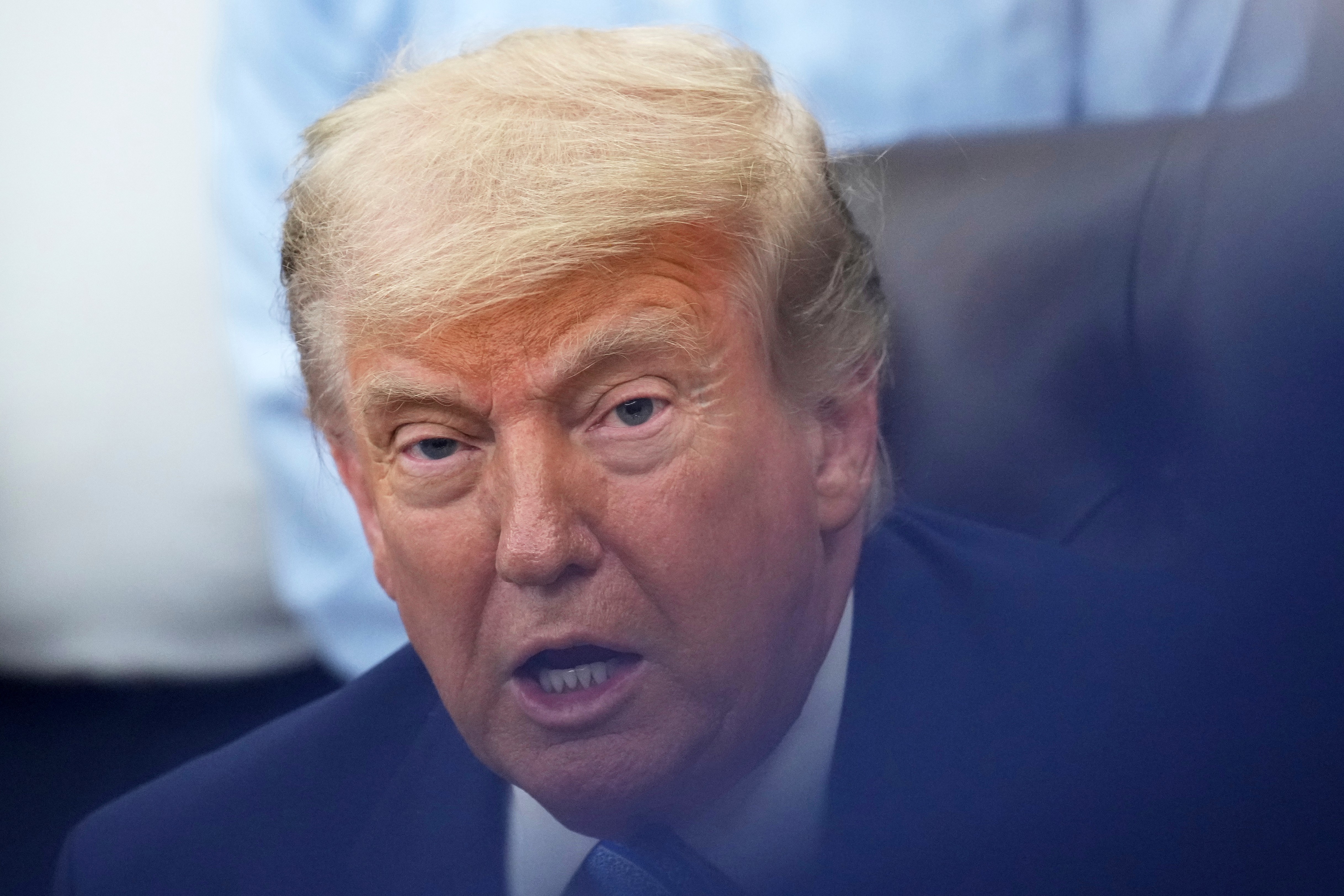
The United States is actively fundamentally resetting its relationship with NATO, driven by deep administrative frustration over Europe’s refusal to support military operations against Iran. US Secretary of State Marco Rubio confirmed that President Donald Trump’s profound disappointment with transatlantic allies will take center stage at the upcoming July summit in Ankara, Turkey. The friction is no longer just about financial burden-sharing or defense spending percentages. It has evolved into an existential disagreement over the geographic scope and operational utility of the alliance itself, forcing a significant reevaluation of American troop commitments across the European continent.
For decades, American policymakers have quietly grumbled about European free-riding. But the current war in the Middle East has pushed these tensions past a point of diplomatic politeness. The White House expected solidarity when it engaged in direct military action against Tehran. Instead, it met a wall of European resistance, neutrality, and open criticism.
The Logistics of Refusal
Washington’s anger is rooted in concrete operational friction, not just abstract geopolitical theory. During the height of recent operations against Iran, several prominent European allies denied the US military permission to use key airbases and logistical hubs located on their soil. Spain, for instance, heavily restricted American access to its installations.
To the White House, this baseline non-cooperation severed the unwritten contract of the alliance. The United States has long justified the immense financial and strategic cost of garrisoning tens of thousands of troops in Europe under the assumption that these forward deployments granted global power projection capabilities. When those very bases were locked down by host nations during an active American conflict, the foundational logic of the arrangement collapsed.
The refusal of most European members to participate in a naval coalition to reopen the blockaded Strait of Hormuz has further exacerbated the rift. While the United Kingdom and France have tentatively offered to lead a maritime security force, their proposal comes with an explicit caveat. They will only deploy once a formal ceasefire or a definitive peace treaty with Iran is firmly established.
For an administration currently dealing with an active shooting war in the Persian Gulf, a promise to help after the smoke clears is viewed less as a strategic commitment and more as a diplomatic insult.
The Whiplash of Troop Withdrawals
This resentment explains the erratic, often contradictory signals regarding American troop numbers in Europe. The Pentagon and the White House are currently locked in a messy, public feedback loop that has left European defense ministers visibly bewildered.
Earlier this month, the White House ordered the removal of 5,000 American personnel from Germany. The move was a direct retaliation after German Chancellor Friedrich Merz publicly declared that the Iranian leadership was humiliating the United States. Shortly thereafter, defense officials announced a freeze on a scheduled rotation of 4,000 troops into Poland. Then, in a characteristically sudden social media post, President Trump reversed course, declaring he would send an additional 5,000 troops to Poland to celebrate the election of the country's new conservative president, Karol Nawrocki.
This whiplash has created immense anxiety among frontline states, particularly in the Baltics and Eastern Europe, where the fear of Russian gray-zone aggression remains acute. Swedish Foreign Minister Maria Malmer Stenergard described the shifting policy mandates as confusing and exceptionally difficult to navigate.
The underlying reality is that the total American military footprint in Europe, which sat at roughly 80,000 troops at the start of the year, is on an irreversible downward trajectory.
| Country / Region | Baseline Force Level | Current Administrative Status | Strategic Vulnerability |
|---|---|---|---|
| Germany | ~35,000 | Reduced by 5,000 troops following diplomatic row over war strategy. | Major European logistical hub facing reduced capacity. |
| Poland | ~10,000 | Rotations temporarily frozen, then spiked by 5,000 via presidential decree. | Frontline deterrence vulnerable to abrupt policy shifts. |
| The Arctic | Variable | Expanded air patrol mandate tied to Greenland security trade-offs. | Increasing exposure to Russian and Chinese maritime presence. |
The administration’s defense surrogates argue that these adjustments are not purely punitive. They reflect an inescapable reality. The American military cannot indefinitely underwrite European territorial defense while simultaneously fighting a war in the Middle East, preparing for an escalation in the Indo-Pacific, and managing security concerns in the Western Hemisphere.
The High North Trade-Off
The geopolitical transactionalism driving this new era is visible in the Arctic. Earlier this year, the White House revived its controversial interest in acquiring Greenland from Denmark. The proposal was eventually dropped, but only after intense behind-the-scenes international lobbying and a strict quid pro quo.
Denmark and other Nordic allies agreed to establish an expanded, permanent Arctic air patrol mission explicitly designed to counter Russian military maneuvers in the High North. In exchange, the US paused its immediate ambitions regarding Greenlandic territory.
This transactional model is the new standard operating procedure. The US is no longer interested in maintaining a generalized umbrella of goodwill. Every deployment, every base usage, and every joint exercise must demonstrate an immediate, tangible benefit to American national security priorities.
The Mirage of Five Percent
To survive the upcoming Ankara summit, European diplomats are scrambling to assemble a massive package of defense procurement deals. There is a coordinated effort across continental capitals to prove they are listening to Washington's demands. Many are pledging to raise their national defense spending to an unprecedented five percent of their gross domestic product.
This flurry of defense spending may be too little, too late. For decades, the primary benchmark of a good NATO ally was a financial metric: the traditional two percent defense spending target. The administration has effectively moved the goalposts because the nature of the disagreement has changed.
Washington has realized that a country spending five percent of its GDP on its own domestic military infrastructure is still functionally useless to the United States if its government refuses to permit overflight rights, denies base access during a global crisis, or stays neutral during an international trade blockade. The core dispute is about strategic alignment and operational execution, not just balance sheets.
The North Atlantic Treaty Organization was built in 1949 to address a singular, clear threat: a conventional Soviet invasion across the North German Plain. It was never designed to handle a world where its primary superpower benefactor is fighting an asymmetric war in the Middle East, while its European members view that same conflict as a dangerous distraction from their own regional security.
When the 32 heads of state gather in Ankara this July, they will not be having a standard debate about budgets or committee assignments. They will be confronting the fact that the strategic interests of Western Europe and the United States have fundamentally diverged. Marco Rubio’s diplomatic mission in Sweden was an attempt to soften the blow, but the structural erosion of the alliance is out in the open. The era of unconditional American security guarantees has ended.