Search and rescue is a romanticized failure of maritime policy.
Every time a vessel disappears into the maw of a Pacific storm like Typhoon Sinlaku, the media follows a predictable script: the heroic Coast Guard, the grieving families, and the "unforeseeable" tragedy of nature. It is a narrative designed to soothe, not to solve. We treat these events like lightning strikes—random, cruel, and unavoidable.
They are none of those things.
The standard reporting on the search for six people in the Pacific ignores the uncomfortable truth that dominates the industry: these "tragedies" are almost always the result of a systemic tolerance for catastrophic risk. We are pouring millions of taxpayer dollars into the ocean to find people who, by every metric of modern meteorology and maritime engineering, chose to be there.
The Weather Is Never a Surprise
The "lost contact" trope is a lie. In 2026, you don't just "lose contact" with a vessel unless there has been a profound failure of basic redundant systems or a deliberate choice to operate outside the safety net.
Typhoon Sinlaku was not a "sneak attack." It was a tracked, modeled, and broadcasted atmospheric event. The idea that a boat can be "caught" by a typhoon in the modern age is like saying you were surprised by a freight train while standing on the tracks. You saw the tracks. You heard the whistle. You felt the vibration. You stayed anyway.
We have reached a point where the "right to be rescued" has eclipsed the "responsibility to be rational." Maritime industry insiders know the score. While the public sees a search party, professionals see a massive subsidy for negligence. We are essentially providing free insurance to operators who refuse to invest in basic satellite beacons ($EPIRBs$) or ignore hull stress limits during peak storm seasons.
The High Cost of the Rescue Theater
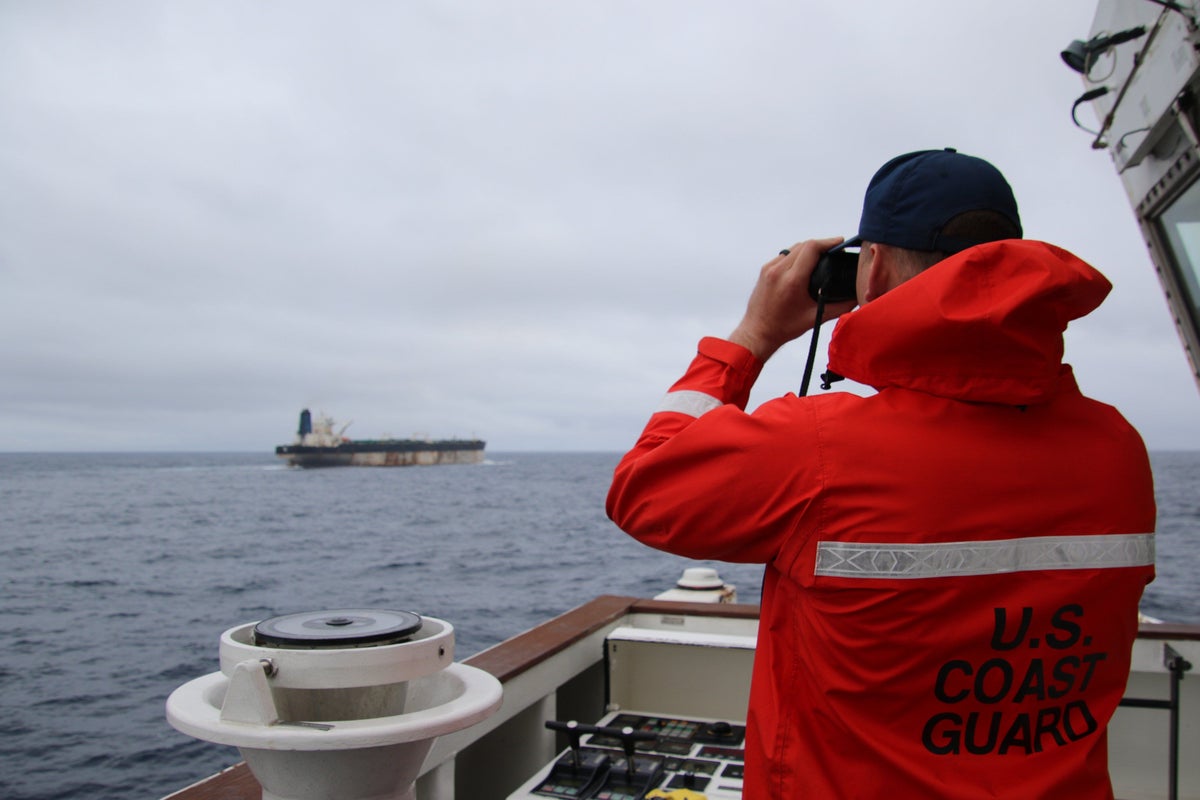
The United States Coast Guard and its international partners spend astronomical sums on these operations. A single C-130 search hour costs upwards of $15,000. Deploying a National Security Cutter can run over $250,000 a day. When we send these assets into the wake of a typhoon, we aren't just spending money; we are risking the lives of trained professionals to save people who ignored the most basic "Do Not Enter" signs written in the clouds.
The "lazy consensus" says that every life is worth any price. That sounds great on a bumper sticker. In practice, it’s a logistical nightmare that depletes the readiness of crews who should be focusing on legitimate accidents—engine failures in calm water, medical emergencies, or structural collapses in sanctioned shipping lanes.
When we treat a typhoon-defying excursion the same way we treat a genuine fluke accident, we create a moral hazard. If you know a billion-dollar military infrastructure will come looking for you for free, why bother with the $5,000 upgrade to your communication suite? Why wait three days for the storm surge to pass?
The Fallacy of the Pacific Search Grid
The public imagines a grid being methodically checked. They think it’s a matter of time and effort.
It isn't.
The Pacific is a "dark" space. Once a small vessel is swamped by 30-foot swells and 100-knot winds, the physics of survival turn into a gruesome math problem. The drift models used by SAR (Search and Rescue) software like SAROPS are brilliant, but they cannot account for the sheer entropy of a typhoon's center.
Imagine a scenario where a 40-foot boat loses power in the eyewall. The vessel doesn't just "sit" there. It becomes a projectile. It breaks apart. It is sucked into current sub-structures that don't appear on standard charts.
By the time the weather clears enough for a C-130 to fly low enough to see anything, the "six people" aren't a group anymore. They are scattered over hundreds of square miles of debris. We aren't searching; we are performing a very expensive ritual of closure.
Stop Searching and Start Fining
If we want to stop these headlines, we have to stop the coddling.
The maritime industry needs to adopt the "vortex" model of liability. If you enter a restricted weather zone against official advisories, you should be legally and financially responsible for the cost of your own rescue.
Insurance companies already do this to some extent with "named storm" exclusions, but the government remains the ultimate safety net. We need to dismantle the expectation of a free ride.
- Mandatory Black Boxes: Any vessel venturing beyond the 12-mile territorial limit must carry an integrated, tamper-proof tracking system that broadcasts to a global mesh network.
- The "Stupidity Tax": If a rescue is triggered by a failure to heed a Grade 4 or higher weather warning, the survivors or the vessel's estate should be billed for the fuel and man-hours.
- Automated Search Limits: We need to define "unsurvivable windows." If the sea state reaches a certain threshold, the search is called off immediately. No more risking 20 sailors to find two people who shouldn't have been there.
The Nuance of the "Small Boat" Argument
Critics will argue that small-scale fishers or local transport boats in the Pacific don't have the "luxury" of high-tech gear. They say these people are "forced" by economic necessity to brave the storms.
This is a patronizing myth. I’ve worked with Pacific fleets from Guam to Manila. The "economic necessity" argument is usually a cover for "we didn't want to lose three days of revenue." By validating that excuse, we are essentially saying their lives are worth less than a haul of tuna or a transit fee.
True expertise in this field isn't about how well you can search; it's about knowing when to stay in port. The most "expert" mariners I know are the ones you never hear about in the news because they aren't being searched for. They respect the ocean enough to fear it.
The tragedy of the six people lost in Typhoon Sinlaku isn't that they haven't been found yet. The tragedy is that we still live in a world where we pretend their disappearance was an accident.
The Brutal Reality of Survival
We need to talk about what actually happens in these "lost contact" scenarios.
Standard reporting likes to mention "life rafts" and "emergency flares." In a typhoon, a life raft is a plastic bag in a blender. The sheer force of the wind can flip a raft or rip the canopy off in seconds. Hypothermia sets in even in tropical waters because of the "wind chill" effect of 90-mph gusts on wet skin.
If the Coast Guard hasn't found them in 48 hours, the mission has shifted from "rescue" to "recovery." Continuing to frame it as a "search for survivors" is a disservice to the families. It builds a false hope that ignores the physiological limits of the human body.
We keep the charade going because it’s better for recruitment and better for the "hero" brand of the agencies involved. But every hour we spend looking for a ghost ship in the Pacific is an hour we aren't patrolling for illegal fishing, human trafficking, or environmental dumping—issues that actually have a chance of being solved.
The Pacific is Not Your Playground
The ocean doesn't care about your "bravery" or your "need to get home." It is a kinetic environment that follows the laws of fluid dynamics and thermodynamics.
When you lose contact during a typhoon, you aren't a victim of the weather. You are a victim of your own ego.
We need to stop praising the "valiant efforts" of the search teams and start questioning why they were forced to fly into a graveyard in the first place. Until we hold mariners accountable for the weather they choose to ignore, the Pacific will keep eating ships, and we will keep wasting our breath and our budgets on the leftovers.
The search for the Sinlaku six isn't a mission. It’s a funeral procession with an engine.
Stop looking for excuses and start looking at the barometer.