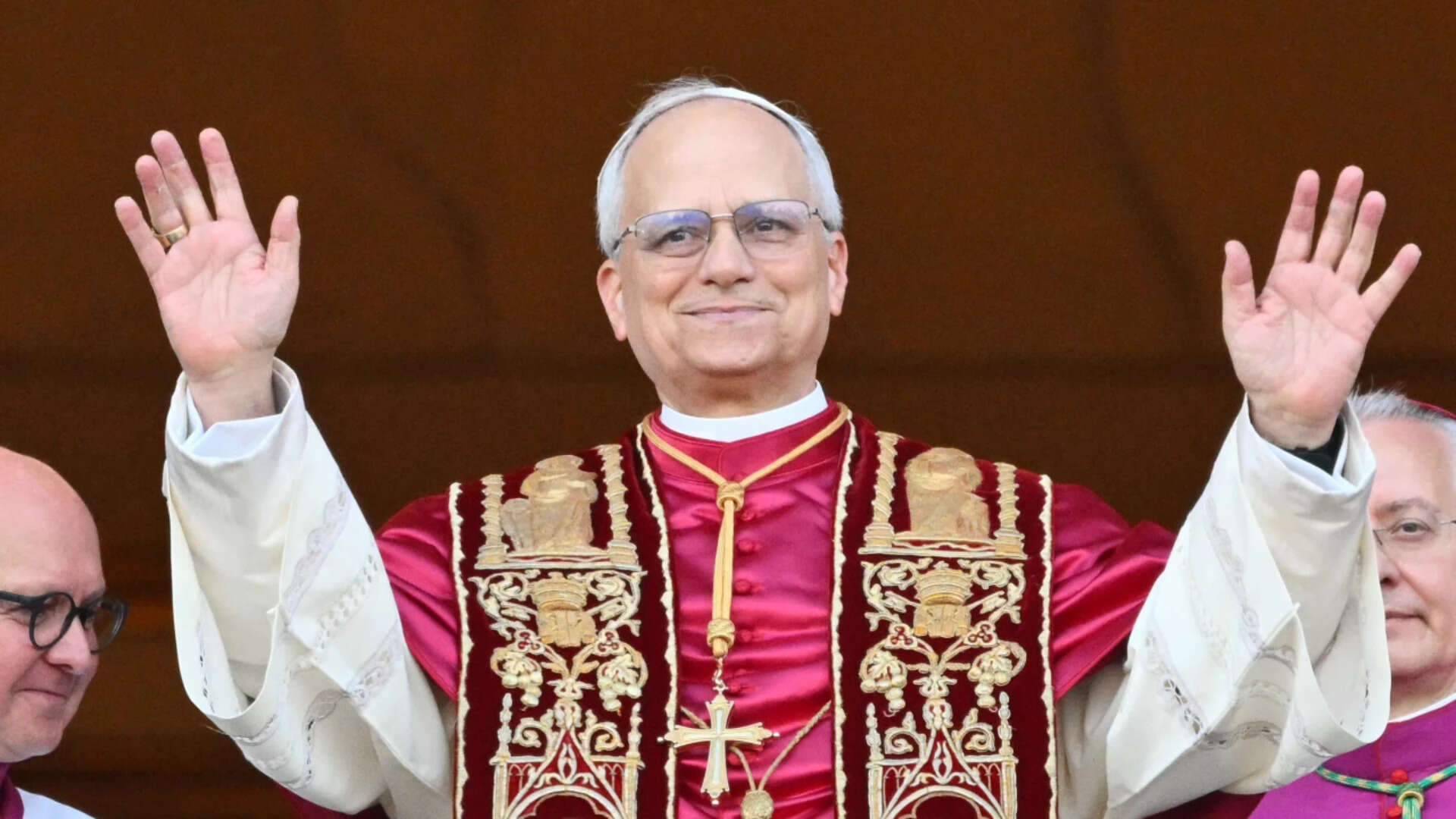
On a rain-slicked Palm Sunday in St. Peter’s Square, the traditional start of Holy Week took a sharp, jagged turn away from the expected liturgy. Pope Leo did not merely offer the usual platitudes regarding global harmony. Instead, he issued a theological ultimatum that fundamentally recalibrates the Roman Catholic Church's stance on modern warfare. By explicitly stating that God rejects the prayers of those who wage war, the Pontiff has effectively closed the door on the "just war" loopholes that have defined Western geopolitical ethics for centuries. This is not a suggestion. It is an excommunication of the soul for those holding the triggers and those signing the checks.
The statement strikes at the heart of a persistent religious paradox. For generations, leaders on both sides of any given trench have invoked the same deity, asking for the same victory, and blessing the same steel. By declaring these prayers void, Leo is attempting to strip the divine veneer from state-sanctioned violence. He is signaling that the Vatican will no longer provide the spiritual cover that political leaders crave to justify the human cost of their ambitions. Learn more on a similar subject: this related article.
The Death of the Just War Doctrine
For decades, the Church has leaned on the framework of "Just War," a concept popularized by Saint Augustine and Thomas Aquinas. It provided a checklist. If the cause was right, the authority legitimate, and the intent pure, then the violence was permissible. It was a comfortable middle ground that allowed the Church to remain relevant in a world of borders and standing armies.
Leo has effectively set fire to that checklist. Additional journalism by Associated Press explores related views on the subject.
His rhetoric suggests that in an age of indiscriminate drone strikes and hypersonic missiles, the "proportionality" required for a war to be just is a fantasy. When a prayer is "rejected," it implies a total breakdown in the contract between the believer and the divine. This isn't just about the soldiers in the mud. It targets the architects in the air-conditioned war rooms. The message is clear: you cannot petition for peace while actively financing its destruction.
Strategic Silence and the Power of Denial
The most striking element of this Palm Sunday address was not what the Pope said, but what he denied. Religion usually functions as a bridge. It offers a path to redemption regardless of the sin. By introducing the concept of a "rejected prayer," the Vatican is weaponizing the one thing it still controls in a secular world: spiritual legitimacy.
If a head of state attends a Mass to pray for their nation's success in a conflict, and the head of the Church publicly declares that prayer unheard, the political optics are disastrous. It creates a vacuum. It suggests that the moral authority of the state has been severed from its traditional religious foundations. This is a deliberate power play designed to isolate aggressors, not through economic sanctions, but through spiritual isolation.
The Geopolitical Ripple Effect
We see the immediate fallout in the diplomatic corridors of Europe and Washington. When the Vatican speaks this bluntly, it forces Catholic leaders in secular governments to choose between their party platform and their pews. This creates internal friction in coalitions that rely on a moralistic branding to sell their foreign policy.
Consider a hypothetical scenario where a major Western power, led by a practicing Catholic, authorizes a strike on civilian infrastructure. Under the old rules, the chaplain might offer a prayer for the "safety of our troops." Under Leo’s new mandate, that prayer is a hollow acoustic event. It hits the ceiling and stops. This puts military chaplains in an impossible position and forces a ground-level re-evaluation of what "service" means under a rejected heaven.
The Economic Engine of Unheard Prayers
You cannot discuss the theology of war without discussing the ledger. The global arms trade is a multi-billion dollar machine that thrives on the very conflicts Leo is condemning. A significant portion of the capital flowing through the defense industry comes from nations with deep Christian roots.
The Pope is essentially calling out the hypocrisy of the "praying manufacturer." He is addressing the boardrooms where decisions are made to increase production of artillery shells while simultaneously donating to parish renovations. By stating that God rejects these prayers, he is targeting the conscience of the donor class. He is making the argument that blood money cannot be laundered through the collection plate.
Internal Resistance and the Curia
Do not mistake this for a unified front within the walls of the Vatican. The Roman Curia is a labyrinth of tradition and cautious diplomacy. Many within the upper echelons of the Church hierarchy view Leo’s rhetoric as dangerous. They fear it restricts the Church’s ability to act as a neutral mediator.
If the Pope has already declared one side’s prayers invalid, can he still sit at the negotiating table? The hardliners argue that the Church should remain a "hospital for all," including the sinners who start wars. Leo’s shift toward a more confrontational, prophetic stance risks alienating the very people he needs to influence. Yet, the strategy seems to be that middle-of-the-road diplomacy has failed for a century, and only a radical theological break can shock the system.
The Psychology of the Pews
For the average believer, this shift creates a profound sense of cognitive dissonance. Religion is often used as a source of comfort during times of national crisis. People want to believe that God is "on our side." Leo is stripping away that comfort. He is telling the faithful that if their nation is the aggressor, their collective prayers for safety are being met with a divine dial tone.
This is a high-stakes gamble on the power of guilt. If the people believe their spiritual lives are being compromised by their government's actions, they are more likely to demand change. It is a form of grassroots pressure that bypasses traditional political lobbying. It targets the soul to move the ballot box.
A New Era of Papal Activism
We are witnessing the emergence of a Papacy that is less interested in being a global grandfather and more interested in being a global conscience. This shift away from the "Just War" framework toward a total rejection of the optics of war-time piety marks a pivot point in the 21st century.
The Vatican is no longer content to simply wash its hands of the world's blood. It is now actively identifying the hands that are stained and telling them that no amount of prayer will clean them while the violence continues. This moves the conversation from the abstract "hope for peace" to the concrete "cessation of hostilities as a prerequisite for faith."
The demand for accountability has moved from the international courts to the altar. When Leo walked off the balcony after his address, he left behind a world where the spiritual "free pass" for military action has been revoked. The question now is whether the world's leaders care more about the approval of their voters or the silence of their God.
If the prayers are truly rejected, then the rituals of state-sponsored religion become nothing more than theater. The masks are off. The pews are a battleground. The next move belongs to those who still believe that a prayer can change the world—and those who are beginning to fear that their own are being ignored.
Identify the weapons. Silence the engines. Only then does the Vatican suggest the heavens might reopen. Until that moment, the smoke from the battlefield and the incense from the altar are indistinguishable, and both are being turned away at the gate.