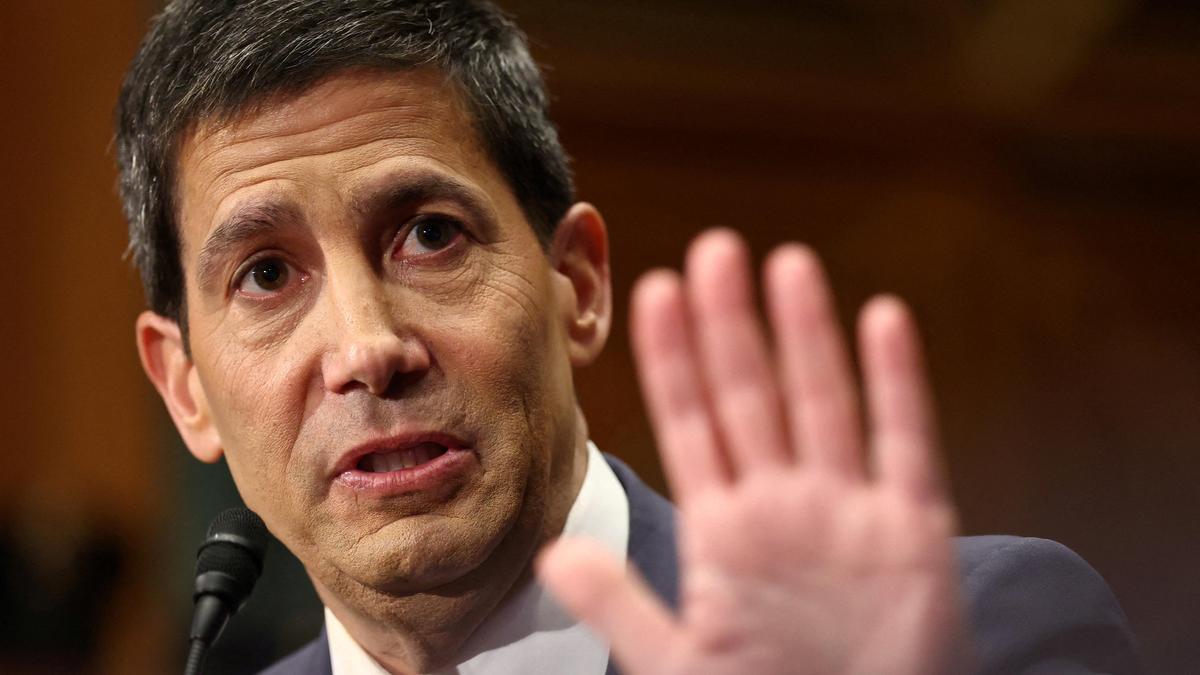
The U.S. Senate moved to fundamentally reshape the global financial order on Monday evening, clearing the final procedural roadblock for Kevin Warsh to take the helm of the Federal Reserve. In a 49-44 vote to invoke cloture, a slim majority—bolstered by two moderate Democrats—signaled that the era of Jerome Powell is over. By the end of this week, Warsh is expected to be confirmed as the 17th Chair of the Federal Reserve, just hours before Powell’s term expires on May 15. This is not a standard leadership transition; it is a hostile takeover of the world's most powerful economic engine.
While the headlines focus on the vote count, the real story lies in the radical "regime change" Warsh has promised and the unprecedented wealth he brings to the Eccles Building. Warsh is not just a former Fed Governor and Morgan Stanley dealmaker; through his marriage to Jane Lauder, he represents a level of private net worth never before seen at the top of the central bank. As he prepares to preside over his first Federal Open Market Committee (FOMC) meeting in June, the markets are grappling with a paradox. Warsh is a man who built his reputation as an inflation hawk, yet he was hand-picked by a President who has publicly demanded aggressive interest rate cuts.
The Tillis Reversal and the Pirro Factor
The path to this week's confirmation was paved by a series of high-stakes political maneuvers that would feel more at home in a legal thriller than a banking journal. For weeks, Senator Thom Tillis of North Carolina had been the lone Republican holdout, vowing to block Warsh until a Department of Justice investigation into Jerome Powell was resolved. That investigation, led by U.S. Attorney Jeanine Pirro, centered on alleged cost overruns at the Fed’s headquarters—a probe Tillis and many Democrats decried as a "politically motivated sham" designed to intimidate the sitting Chair.
The deadlock broke only when Pirro announced the investigation was "closed, for now," a phrasing that left many in Washington uneasy. Tillis immediately pivoted, taking the DOJ at its word and clearing the way for Monday’s vote. This sequence of events has left a permanent stain on the concept of Fed independence. It suggests that the price of leadership at the central bank is now a willingness to navigate—or perhaps succumb to—the legal and political pressures of the executive branch.
The Warsh Trade and the AI Inflation Theory
Markets have already begun "The Warsh Trade," but it is far from a simple bet on lower rates. Warsh represents a departure from the "data-dependent" philosophy that has defined the Fed for a decade. He has openly criticized the Fed’s traditional inflation models, which focus on wage growth and consumer spending. Instead, Warsh argues that inflation is a byproduct of excessive government spending and money-supply growth.
His most controversial stance, however, involves Artificial Intelligence. In a widely read 2025 editorial, Warsh argued that AI is driving a massive productivity boom that allows the economy to grow much faster than previously thought without sparking price increases. If he is right, the Fed can cut rates even if the economy is "running hot." If he is wrong, he risks over-stimulating an economy that is already struggling with persistent price pressures and a volatile labor market.
Liquidity and the Shrinking Balance Sheet
If there is one area where Warsh remains a traditionalist, it is the Fed’s balance sheet. He has been a vocal critic of Quantitative Easing (QE), viewing it as a crisis-era tool that has become a permanent, distorting crutch for Wall Street. Analysts expect a Warsh-led Fed to be far more aggressive in "Quantitative Tightening"—shrinking the Fed’s holdings of Treasuries and mortgage-backed securities.
This creates a "hawkish-dove" friction. While he may cut short-term interest rates to satisfy the White House and account for "AI productivity," his insistence on draining liquidity from the system could send shockwaves through the plumbing of the global financial markets. We saw a preview of this "Warsh Shock" earlier this year when his name first emerged as the frontrunner; gold prices plunged from $5,600 to $4,700 in a matter of days as investors realized the days of "easy money" and massive Fed intervention might be numbered.
The Estée Lauder Connection and Ethics
Warsh’s personal finances have become a central point of contention for Senate Democrats. A 69-page financial disclosure document filed with the Office of Government Ethics revealed a portfolio of such complexity that the agency initially certified it as "not in compliance" with the Ethics in Government Act. Warsh has pledged to divest the necessary assets to come into compliance, but the sheer scale of his family wealth—tied to the Estée Lauder fortune—raises questions about conflicts of interest that no previous Chair has faced.
Critics like Senator Elizabeth Warren argue that Warsh is the final piece in a plan to "seize control of the Fed." They point to his refusal to comment on the President’s attempts to fire other Fed governors as evidence that he will not stand as a bulwark against executive overreach. Warsh, for his part, told the Banking Committee that "independence must be earned" by delivering on price stability, a subtle jab at Powell’s failure to contain the post-pandemic inflation surge.
Beyond the Eight Meetings
Perhaps the most overlooked aspect of Warsh’s proposed "regime change" is his plan to overhaul how the Fed communicates. He has suggested moving away from the "forward guidance" that markets have relied on for years, arguing that it boxes the Fed into policy paths and reduces flexibility. He has even floated the idea of reducing the number of FOMC meetings from the current eight per year to the legal minimum of four.
This would be a radical shift toward a more opaque, discretionary form of central banking. In a world where high-frequency trading and algorithmic response dominate the markets, less frequent communication could lead to massive spikes in volatility. Warsh believes this volatility is a necessary price for "breaking the fever" of market dependency on the central bank.
The transition begins Friday. Whether Warsh can satisfy a President demanding cheap money while simultaneously dismantling the very mechanisms that have supported the American financial system for twenty years is the $30 trillion question. He is moving into the Eccles Building not as a caretaker, but as an iconoclast with the mandate and the personal capital to burn the old playbook to the ground.
Watch the yield curve. It is already starting to tell the story of a central bank that is about to become more political, more unpredictable, and far less concerned with the comfort of Wall Street than its predecessors.