Language has a habit of eating its own children.
Consider a crowded basement meeting room in Queens, winter clinging to the windowpanes like frosted glass. It is 2017. A young woman with a clipboard and a worn pair of sneakers is trying to explain rent stabilization to a room full of skeptical retirees. She uses terms fresh from the activist manuals of the era—words coined in university seminar rooms and polished on campus quads. The room goes quiet. Not the quiet of rapt attention, but the heavy, diagnostic silence of translation failure. Heads tilt. Eyebrows furrow.
The vocabulary did not cross the room. It bounced off the wall.
Years later, that same organizer, now tested by the blistering heat of federal legislative battles, looks back at those early iterations of progressive vernacular with a sharp, candid clarity. The terminology of the mid-2010s—an entire wave of ideological expression often shorthand-referenced as early progressive framing or the first wave of modern cultural politics—carried a specific kind of internal gravity. It was sharp. It was academic. It was exclusive.
And, as history frequently demonstrates, language designed to critique power structures often ends up building new walls instead of tearing them down.
The Architecture of Insiders
Every political movement builds its own dialect.
Think of how an underground subculture develops slang to protect its boundaries, keeping outsiders guessing. When political urgency scales up from campus seminars to national megaphones, that same insular dialect undergoes a strange mutation. It stops being a tool for communication and starts becoming a badge of tribal belonging.
Pronounce the shibboleth correctly, and you belong inside the circle. Stumble over the syntax, and you are cast into outer darkness.
This is where the friction begins.
Imagine a middle-aged factory worker in Ohio or a night-shift nurse in Nevada listening to a cable news segment where politicians debate concepts wrapped in dense sociological jargon. They do not feel invited. They feel auditioning. They feel tested on an exam they never studied for. The words become barricades.
Politicians who spent their formative years immersed in activist networks often assume that everyone shares the same theoretical foundation. They forget that survival leaves little room for abstract semantics. When rent is due on Friday, nobody cares about the semiotics of oppression; they care about the landlord at the door.
To understand why political language shifts, we have to look at the psychological mechanics of belonging. Humans are tribal creatures. We signal our tribal allegiance through shorthand. When social media platforms arrived as accelerators of political discourse, they supercharged this tendency. Nuance became a liability. Brevity became currency. Purity became a weapon. In that digital pressure cooker, political terms were stripped of their historical context and turned into instant-approval badges.
If you used the right combination of syllables, you received digital applause. If you missed a beat, you faced digital excommunication.
This environment created a strange political schizophrenia. On one hand, the energy was electric. Millions of people who had previously felt politically invisible suddenly found a community of fellow travelers. They discovered that their private frustrations—low wages, crushing debt, inadequate healthcare—were not personal failures, but systemic outcomes. That realization was liberating. It gave people a voice.
Yet, that same voice quickly learned to speak in a dialect that only other insiders could decipher.
The Friction of the Front Porch
Step away from the glowing screens and walk down Main Street in any small town across America.
Here, the abstract theories of the lecture hall collide with the gritty reality of daily existence. A local shopkeeper is worried about property taxes and supply chain costs. A single mother is calculating whether she can afford both groceries and car insurance this month. When a national political figure speaks to these people using hyper-specialized academic constructs, the message shatters upon impact.
It is not that the underlying problems are wrong. Economic inequality is real. Healthcare access is a crisis. Corporate consolidation stifles communities. The diagnoses are accurate. But the prescription is delivered in a foreign language.
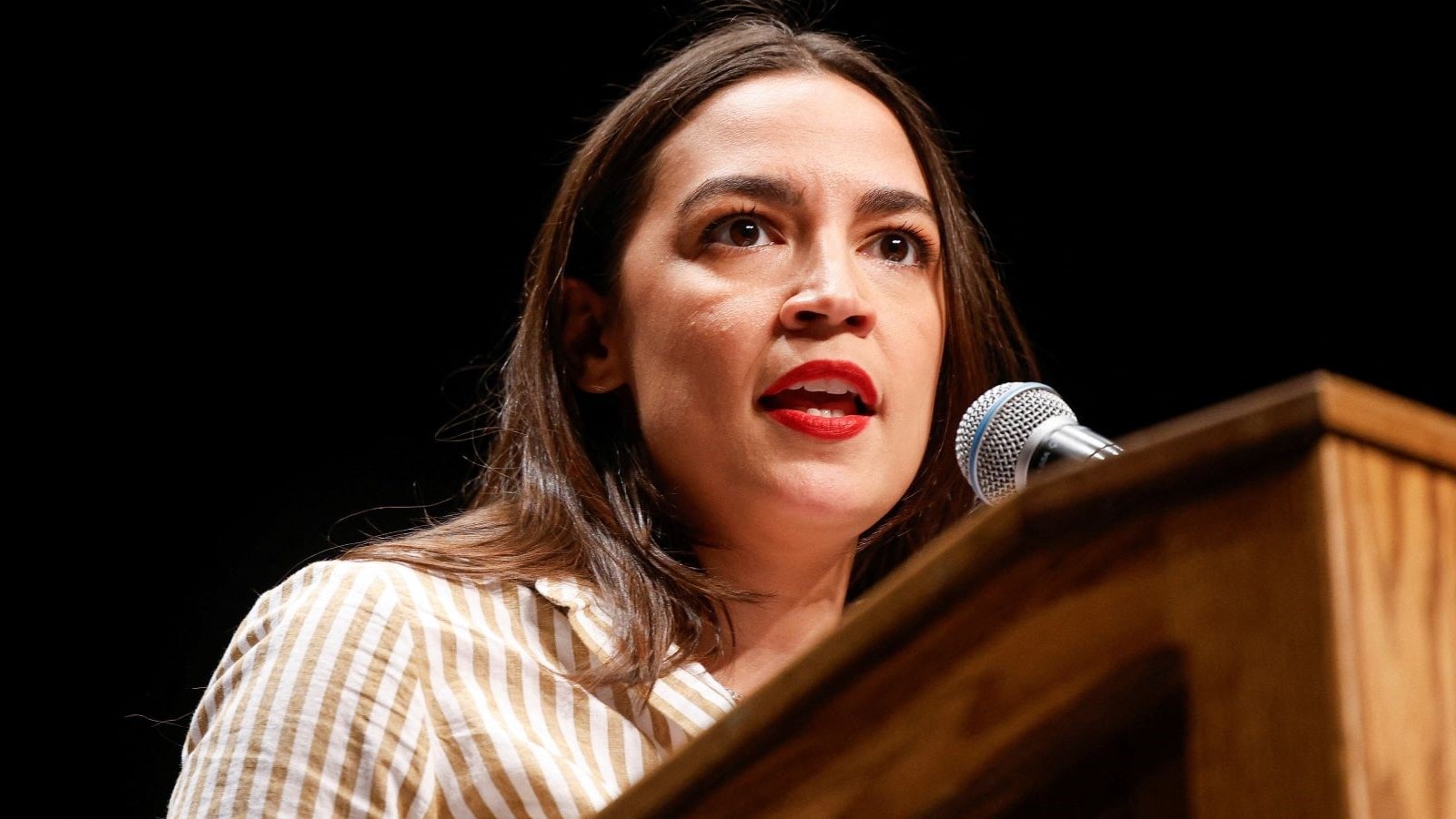
When Alexandria Ocasio-Cortez reflects on the early phases of this modern progressive wave, she points to an essential truth that successful organizers eventually discover: politics is an act of translation.
Think of a translator working at the United Nations. Their job is not to lecture the delegates on the etymology of classical Greek roots. Their job is to take a complex thought expressed in one cultural framework and render it crystal clear in another. If the listener does not understand, the fault lies with the speaker, not the listener.
For a long time, the progressive movement struggled with this inversion of responsibility. It operated on an implicit assumption: If you do not understand my terminology, you are not educated enough to care.
That attitude is lethal in a democracy.
Elections are won by addition, not subtraction. You cannot lecture people into your coalition. You have to invite them in by addressing their immediate, tangible pains. When a political message centers on the human experience—putting food on the table, keeping the heat on through a bitter winter, ensuring children have a safe school to attend—the ideological barriers melt away.
People do not vote for an economic model; they vote for dignity.
The Pivot Toward Translation
Political survival demands adaptation.
When politicians look back at the chaotic laboratory of the 2010s, they are recognizing that the movement had to grow up. The raw, unfiltered outrage that characterized early modern progressivism was a necessary fire; it cleared away decades of complacent political consensus. It forced national politicians to talk about billionaires, healthcare as a human right, and systemic corruption without whispering.
But fire is a terrible architect. Once the clearing is done, you need stone and mortar. You need language that builds rather than burns.
Observe how seasoned populist communicators operate across the political spectrum. They rarely use multi-syllabic academic constructs when a simple, visceral metaphor will do. They talk about hard work, fair play, stolen futures, and broken promises. These are universal emotional currencies. They do not require a syllabus to understand.
When political leaders shift from insider jargon to plain-spoken moral clarity, the entire dynamic of public debate changes. The defensive posture of the audience drops. The folded arms unfold. People realize they are not being evaluated; they are being heard.
This transition is not about watering down principles. It is about sharpening their edge. A spear is useless if the shaft is too thick to throw; language is useless if it is too dense to understand.
Consider the difference between telling someone that a policy perpetuates structural inequities versus showing them how a rigged corporate system extracts wealth from their neighborhood while local hospitals close their emergency rooms. Both statements point to the same systemic reality. Only one of them makes a person nod in furious agreement.
The Cost of the First Wave
History is rarely neat. Every great political awakening carries the weight of its own excesses.
The initial surge of contemporary progressive activism altered the American political landscape permanently. It dragged taboo subjects into the glaring light of prime-time television. It proved that millions of citizens hungered for structural change.
Yet, that same surge left collateral damage in its wake.
The insistence on linguistic perfection alienated working-class communities who agreed with the underlying economic critique but felt insulted by the delivery. It created an environment where one misplaced syllable could invalidate a lifetime of shared struggle. Critics weaponized this insularity with ruthless efficiency, painting the entire movement as a project of out-of-touch urban elites who cared more about dictionaries than dinner tables.
And that caricature stuck. Because when an ideology sounds like a lecture from an aloof professor, people naturally rebel against the teacher.
Wisdom is the scar tissue left behind after making mistakes in public.
Reflecting on the early, chaotic years of modern progressive messaging reveals a humbling realization. The words that feel revolutionary in a seminar room can sound condescending on a front porch. True political power does not reside in mastering an ever-shifting lexicon of ideological compliance. It resides in empathy. It resides in the ability to look someone in the eye and prove that their daily struggle matters more than your theoretical elegance.
The megaphone is only as powerful as the ear that receives it.
As political currents shift and new generations step into the arena, the ghost of that first frantic wave lingers as a cautionary tale. Words matter, yes. But they matter most when they open doors instead of slamming them shut.
The winter chill still clings to the windowpanes. The room remains crowded. The work continues. But the language, at long last, is learning how to breathe.