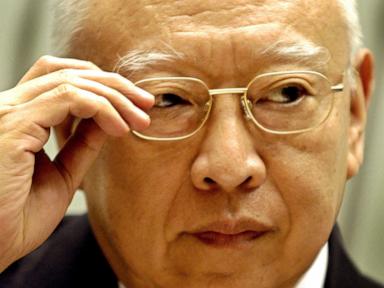
The standard obituary treats Tung Chee-hwa like a tragic captain who steered a magnificent ship directly into an iceberg. The lazy consensus is familiar by now. Shipping tycoon, handpicked by Beijing, thrust into the top job in July 1997 with zero political instincts, crushed by the weight of the Asian Financial Crisis, and forced out after half a million people marched in the streets against Article 23 in 2003.
It is a neat, comforting narrative. It places all the blame on one man's supposed incompetence and leaves the structural architecture of Hong Kong entirely unexamined.
It is also profoundly wrong.
Tung did not break Hong Kong. He simply inherited an impossible financial trap constructed by the British, armed with a governance model designed for corporate boardrooms rather than street-level politics, and tasked with executing a handover that was fundamentally an exercise in sovereignty transfer, not democratic evolution. When you evaluate Tung through the lens of institutional design rather than emotional public relations, a vastly different reality emerges. He was not a failed leader. He was the designated fall guy for an economic system built on a knife-edge.
The Myth of the Reluctant Tycoon
Every retrospective on Tung paints him as a hesitant patriarch who would rather have been managing his family's shipping fleet, Orient Overseas Container Line, than dealing with civil servants and protesters. The narrative goes that Jiang Zemin twisted his arm, dragging a reluctant businessman into the political arena where he was predictably chewed up by the turbulence of post-handover governance.
This framing ignores how power actually operated in the dying days of the British administration. Tung was not chosen at random. He was chosen precisely because he embodied the colonial-era governing philosophy: executive dominance backed by elite business interests, insulated from direct popular accountability.
When people complain about Tung's heavy-handed administrative style or his reliance on a cabinet of advisors rather than elected politicians, they forget that Chris Patten and his predecessors ran Hong Kong with the exact same elitist playbook. The only difference was that Patten possessed a British politician's gift for performative charm, while Tung possessed a shipping magnate's penchant for opaque, top-down directives. Patten could smile for the cameras while maintaining a system that concentrated immense wealth in the hands of a tiny property oligopoly. Tung inherited that exact system, but without the British passport safety net or the colonial budget surpluses.
Blaming Tung for lacking political charisma is like blaming a cargo ship captain for not knowing how to drift a sports car. He was never built for retail politics. But more importantly, the system he ran was never designed to accommodate it.
The Real Estate Cartel Was Not Tung's Invention
The cornerstone of the anti-Tung indictment is his housing policy, specifically the target of building 85,000 flats a year to crush the city's absurd property bubble. When the Asian Financial Crisis struck in 1997 and property values plunged by half, homeowners who had stretched themselves to the breaking point saw their equity evaporate. Tung was forced to quietly shelve the policy, earning the permanent ire of both the middle class who wanted cheaper housing and the property developers who feared structural deflation.
Critics frame this as policy incompetence. They argue that a better politician would have navigated the crisis without crashing the market.
This argument reveals a staggering ignorance of how Hong Kong's public finances actually work. The colonial government deliberately engineered a high-land-price policy to fund infrastructure without broad-based taxation. The consequence was an economy shackled to a land cartel—a handful of mega-conglomerates that controlled property development, retail, telecommunications, and transport.
Tung saw the trap. The 85,000-unit target was an aggressive, necessary attempt to break the stranglehold of the property oligarchs and make housing accessible to ordinary citizens. When the shock hit, the vested interests screamed bloody murder, the middle class panicked over their falling asset values, and the administration blinked.
The tragedy of Tung Chee-hwa is not that he tried to fix Hong Kong housing and failed. It is that he capitulated to the exact forces that made Hong Kong unaffordable in the first place. By abandoning structural land reform out of fear of a short-term market correction, he locked generations of citizens into a lifetime of debt. That was his real failure of nerve, yet his harshest critics today attack him for trying to build the flats in the first place.
Governance Without Leverage
Imagine a scenario where a corporate CEO is asked to run a hostile takeover target, but the board of directors retains the power to veto every staffing decision, the labor union holds a permanent veto over operational hours, and the previous owner left behind a hidden mountain of debt while taking all the goodwill with them.
That was Tung's daily reality.
The Basic Law created an executive-led government on paper, but left the actual machinery of state in the hands of the colonial-era civil service. These bureaucrats viewed the new Beijing-backed administration with a mixture of condescension and quiet resistance. Tung lacked an independent political party, lacked a mass base of support, and lacked a loyalist civil service trained in political defense. He was forced to rely on an appointed Executive Council composed of traditional elites who were entirely disconnected from the shifting sentiment of the street.
When the July 1st march of 2003 happened, drawing half a million people out to protest national security legislation under Article 23, it was framed as a referendum on Tung's personal unpopularity. In reality, it was the collision of a society waking up to its political identity after decades of colonial pacification, colliding with an administration that had no institutional tools to absorb or process mass dissent.
Tung tried to govern through quiet paternalism in an age of loud populism. He assumed that if he delivered stability and economic recovery, the public would tolerate a lack of democratic participation. He miscalculated the aspirations of a population that had tasted the free-wheeling political discourse of the late colonial transition and expected more, not less, say in their governance.
The Legacy of Technocratic Rule
When Tung stepped down in March 2005, citing health reasons—though Beijing's loss of confidence was the open secret—the establishment breathed a sigh of relief. They assumed a change at the top would restore equilibrium.
History proved them wrong. Every subsequent leader faced the exact same structural contradictions: an economy skewed toward property monopolies, a wealth gap that widened every year, and an unworkable political system that promised executive dominance while delivering legislative paralysis.
Tung's post-retirement role as a senior advisor in national politics revealed his true nature. He was always a transitional figure—a bridge between the British commercial elite and the new mainland sovereign order. He was a man out of time, trying to apply corporate management principles to a society that was rapidly politicizing.
Stop mourning the myth of the golden colonial era and stop pretending that Tung Chee-hwa was the singular architect of Hong Kong's modern malaise. He was a symptom of a deeper design flaw, a man who inherited an impossible mandate and lacked the political ruthlessness required to break the system from within.
The real lesson of the Tung era is not that business executives make bad politicians. It is that no amount of administrative tinkering can save a city built on a foundation of speculative real estate and political disenfranchisement. Until Hong Kong faces that uncomfortable truth, every debate about its past and future remains nothing more than nostalgic theater.