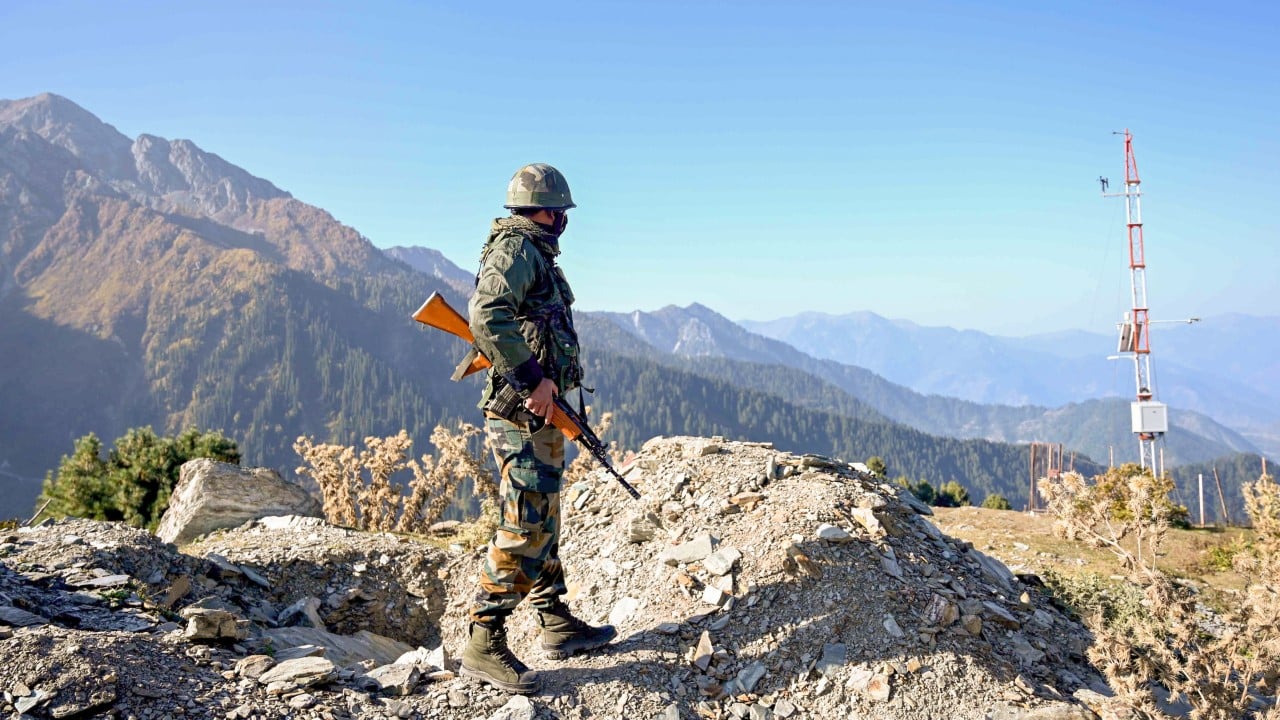
Information wins wars before they start. Or, in the case of the Himalayan frontier, it starts them.
When you look at how New Delhi tries to map Beijing's military moves, you find a troubling pattern. Intelligence gathering on China is notoriously difficult. It's opaque, heavily guarded, and deeply bureaucratic. But the real threat isn't just that New Delhi struggles to read Beijing's mind. The danger is that the frantic push for signals and human intelligence creates a high-stakes echo chamber. When you are starved for concrete data about an adversary's true intentions, you fill the gaps with your own worst fears. That is where miscalculation happens.
The Structural Blind Spot Along the Line of Actual Control
India's spy agencies face a brutal terrain handicap. High-altitude peaks, sub-zero winters, and vast remote expanses make traditional espionage a nightmare.
Satellites help, sure. Commercial imagery and military-grade orbital assets give analysts a pixelated view of road construction, troop buildups, and newly minted airbases across Tibet and Xinjiang. Yet, pixels don't tell you intent. They show you a truck, but they don't tell you if that truck carries blankets or artillery shells.
This creates a dangerous void. Analysts stare at satellite photos for hours, mapping every new shelter or fiber-optic cable. They start connecting dots that might not actually belong together. Without solid human assets deep inside the Chinese military command structure, New Delhi relies heavily on signals intelligence and circumstantial evidence.
That is guessing disguised as analysis. And guessing with nuclear-armed neighbors is a terrible strategy.
How Border Patrols Trigger False Alarms
Let's talk about the operational level. Tactical intelligence on the ground often comes from local patrols, reconnaissance units, and listening posts pushed up against the Line of Actual Control.
Troops are jumpy. They are cold, exhausted, and deployed in oxygen-thin air where every shadow looks like an advancing battalion. When a local commander reports unusual Chinese activity, that snippet gets rushed up the chain of command. In a crisis environment, nobody wants to be the general who ignored a warning sign.
So, what happens? Minor logistical rotations get blown out of proportion. A routine winter supply run gets coded as an offensive staging operation.
New Delhi reacts by moving its own assets forward to match the perceived threat. Beijing sees those counter-moves, panics or gets angry, and escalates in response. Suddenly, you have a full-blown standoff triggered entirely by an intelligence artifact—a phantom threat manufactured by anxious minds and blurry data.
The Echo Chamber of Strategic Paranoia
Think about how defense policy gets made. Intelligence reports feed directly into the offices of national security planners, military chiefs, and political leaders who are already primed to view Beijing through a lens of deep suspicion.
Who can blame them? The legacy of 1962 casts a very long shadow. The betrayal of trust back then still haunts military doctrine today.
Because of this historical trauma, worst-case planning becomes the default setting. If an intelligence brief says China might be planning a localized land grab in a disputed sector, leadership treats it as a certainty.
There is zero room for error, which ironically guarantees more errors. When you treat every routine exercise as a prelude to invasion, you back yourself into a corner where standing still feels like surrender. You end up launching preemptive tactical occupations of ridge lines just to secure high ground, which validates Beijing's fears that India is the aggressor. It's a vicious cycle driven by mutual distrust and bad reads.
The Limits of Technical Espionage
Signals intelligence isn't saving the day either. China's military communications are heavily encrypted, digitized, and siloed. Breaking into the inner sanctum of the Western Theater Command requires deep, sophisticated cyber penetration that remains exceptionally rare.
What leaks out are fragments. Out-of-context chatter. Electronic noise that sounds menacing if you want it to sound menacing.
Agencies sometimes weaponize these fragments to justify bigger budgets or aggressive postures. When intelligence becomes politicized or tied up in institutional self-preservation, objectivity goes out the window. You stop looking for the truth and start looking for confirmation of what you already believe.
Breaking the Cycle of Misinterpretation
Fixing this requires brutal honesty about what India's intelligence apparatus can and cannot achieve.
First, stop treating every piece of ambiguous data as an existential emergency. Establish better direct crisis-communication channels with Beijing that bypass the noisy intelligence filtering process entirely. If a commander sees something weird on a ridge, there should be a reliable way to verify it without mobilizing a division.
Second, invest in true regional expertise rather than generalist bureaucrats who rotate through intelligence desks every couple of years. Understanding a rival's strategic culture, internal political pressures, and doctrine takes decades of dedicated study. You cannot outsource deep institutional memory to algorithms.
The Himalayas are unforgiving. One wrong move based on a flawed intelligence assessment can ignite a conflict neither side actually wants. It is time to pull back from the edge, upgrade analytical discipline, and recognize that sometimes, the biggest threat is the story you tell yourself in the dark.