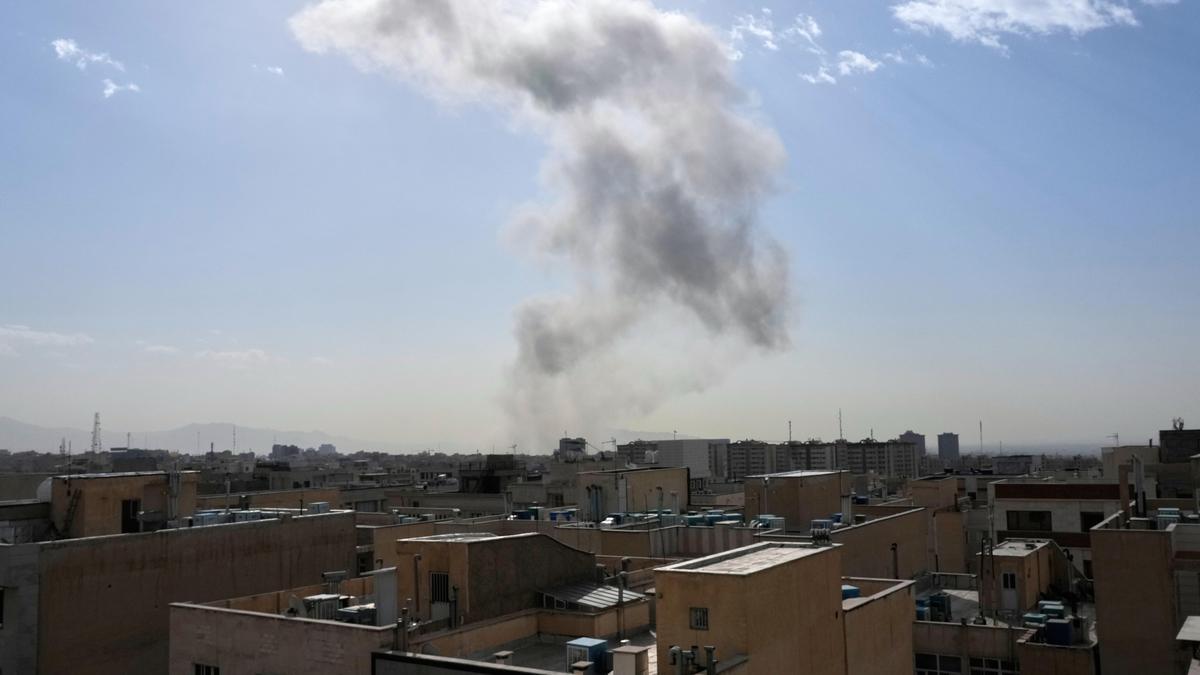
The resumption of Houthi offensive operations in the Red Sea corridor is not a sporadic outburst of regional friction but a calculated application of asymmetric maritime denial. To understand the current threat profile, one must view the Bab el Mandeb not as a transit point, but as a constrained kill web where the cost of offense is decoupled from the cost of defense. The Houthi command structure utilizes a specific "Asymmetric Persistence Model" to maintain disruption with minimal capital expenditure, forcing global shipping interests into a perpetual state of high-cost mitigation.
The Architecture of Tactical Escalation
The Houthi movement, formally Ansar Allah, operates through three distinct functional pillars that allow them to sustain maritime interdiction despite localized defensive successes by international task forces.
- Sensor Fusion and Target Acquisition: Contrary to the "rebel" descriptor, the Houthis utilize a sophisticated mix of land-based coastal radar, Automatic Identification System (AIS) spoofing, and visual reconnaissance from dhows. This creates a high-fidelity picture of the maritime corridor, allowing for the selective targeting of vessels based on perceived political or economic alignment.
- The Munition Ladder: The threat is stratified by cost and complexity. At the low end are uncrewed surface vessels (USVs) and one-way attack drones (OWAs). These serve as "chaff," designed to saturate the Aegis Combat System or other ship-borne defenses. At the high end are anti-ship ballistic missiles (ASBMs), which represent a significant leap in kinetic capability, requiring much more expensive interceptors (such as the SM-2 or SM-6) to neutralize.
- The Information Operations Loop: Every strike, regardless of kinetic success, is filmed and distributed to validate the group’s "regional enforcer" status. The goal is not always to sink a ship; it is to inflate the War Risk Insurance premiums to a point where the Suez Canal route becomes economically non-viable.
The Economic Attrition Function
The primary mechanism of Houthi strategy is the "Interceptor-to-Threat Cost Ratio." This mathematical reality dictates the longevity of the conflict. When a $2,000,000 interceptor missile is used to down a $20,000 drone, the defender is losing an economic war of attrition, even if every drone is successfully intercepted.
The Dynamics of Routing Displacement
When shipping companies like Maersk or Hapag-Lloyd divert vessels around the Cape of Good Hope, they trigger a cascade of structural inefficiencies:
- Fuel Consumption and Carbon Credits: An additional 10 to 14 days of transit increases fuel burn by approximately 30%. In a regulatory environment focused on carbon emissions, this also spikes the cost of compliance.
- Buffer Stock Erosion: The "Just-in-Time" supply chain model relies on predictable arrival windows. Constant rerouting creates "vessel bunching" at European ports, leading to berth congestion and equipment shortages (containers and chassis) in Asian manufacturing hubs.
- The Insurance Premium Spike: For those choosing to brave the Red Sea, "Kidnap and Ransom" (K&R) and "War Risk" premiums have risen by as much as 1,000% since the onset of hostilities. This is a direct tax on global trade that feeds into consumer inflation.
Material Support and Technical Sophistication
The resurgence of these attacks is underpinned by a robust supply chain originating from the Iranian Quds Force. This relationship is not merely ideological; it is a technical partnership. The Houthis have moved from "bolt-on" modifications of existing hardware to the domestic assembly of sophisticated systems like the Quds series cruise missiles and Sammad drones.
The deployment of ASBMs is particularly noteworthy. Historically, hitting a moving target with a ballistic missile was a capability reserved for Tier 1 militaries. The proliferation of these systems to a non-state actor changes the calculus of naval deployment. It forces destroyers to operate in "Point Defense" mode, staying close to commercial tankers and limiting their ability to perform wider regional security tasks.
Defensive Bottlenecks and Systemic Limits
International coalitions, such as Operation Prosperity Guardian, face a "Capacity vs. Coverage" dilemma. The Red Sea is too vast to provide a continuous "iron dome" over every commercial vessel.
- Magazine Depth: Naval vessels have a finite number of Vertical Launch System (VLS) cells. Once these are exhausted, the ship must leave the combat zone to reload, creating a window of vulnerability.
- Detection Latency: In the narrow waters of the Bab el Mandeb, the "Time of Flight" for an incoming missile is measured in seconds. This reduces the decision-making window for automated defense systems, increasing the probability of a "Leaker"—a missile that bypasses the defense net.
- Collateral Sovereignty: The Houthis utilize Yemen’s complex topography, launching from mobile platforms hidden in urban or mountainous areas. Striking these launchers requires high-precision intelligence and risks civilian casualties, which the Houthis then use to fuel their narrative.
The Logic of Selective Interdiction
The current Houthi strategy is more surgical than previous iterations. By signaling that only ships with specific national or commercial ties will be targeted, they attempt to fracture the international coalition. This creates a "Tiered Risk Environment" where some flags of convenience feel safer than others, undermining the principle of freedom of navigation for all.
The legal framework of the United Nations Convention on the Law of the Sea (UNCLOS) is effectively being challenged. When a non-state actor can dictate which vessels may pass through an international strait, the "Maritime Commons" ceases to exist, replaced by a "Permissive Transit Zone" managed by local militia.
Prototyping the Response Strategy
To counter the resumption of attacks, a shift from reactive interception to proactive network disruption is required. This involves:
- Financial Interdiction: Targeting the shadow banking networks that facilitate the purchase of dual-use components (electronics, fiberglass, and engines) used in drone production.
- Electronic Warfare (EW) Dominance: Shifting the focus from kinetic intercepts to "soft-kill" measures. Jamming the uplink between the drone and its operator or spoofing the GPS coordinates of the target vessel can be more cost-effective than firing missiles.
- The "Convoy 2.0" Model: Implementing a structured convoy system where high-value assets are clustered with heavy EW and kinetic protection, rather than attempting to patrol the entire sea lane.
The Houthi resumption of attacks is a signal of intent to remain a permanent veto power over global trade. The ability of the international community to sustain a presence in the Red Sea is currently being tested not by military might, but by the cold math of logistics and insurance.
Commercial entities must now treat the Red Sea as a "Contested Space" for the foreseeable future. Strategic planning should prioritize the diversification of "Middle Corridors"—rail and road links through Central Asia—and the build-up of inventory buffers to mitigate the 20% reduction in global container capacity caused by the Cape of Good Hope diversions. Expect the Houthi "Cost-Imposition Strategy" to expand in technical complexity, likely incorporating underwater uncrewed vehicles (UUVs) to target undersea fiber-optic cables, broadening the threat from maritime logistics to global data integrity.