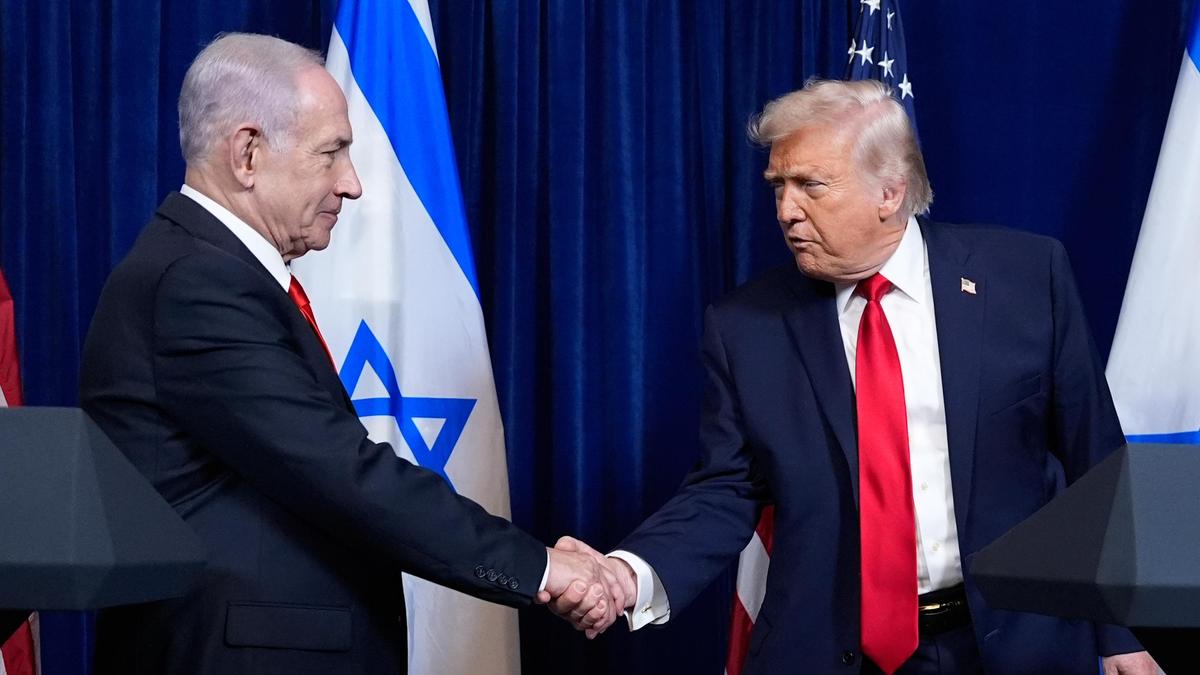
The silence in a command center isn't actually silent. It is a hum. It is the sound of cooling fans in massive server racks, the rhythmic clicking of keyboards, and the low, jagged breathing of men and women who haven't slept in thirty-six hours. In the early hours of a Saturday morning, that hum was the only thing keeping the air from shattering.
Benjamin Netanyahu sat amidst this digital glow, watching a screen that displayed a world most of us only see in grainy satellite thumbnails. For him, the dots on the map weren't just coordinates. They were a ticking clock. Don't miss our recent post on this related article.
When the order finally went out, it wasn't a roar. It was a sequence of codes. Dozens of Israeli fighter jets, supported by the invisible hand of American logistical and intelligence coordination, streaked across a sky that didn't belong to them. They were hunting ghosts that had become all too solid: the missile factories, the air defense batteries, and the production sites that fuel the long-range threats of the Iranian regime.
The world woke up to headlines about "surgical strikes" and "defensive maneuvers." But to understand why the engines of those F-15s were screaming over the desert, you have to look past the steel and the fuel. You have to look at the shadow of the existential. If you want more about the history here, Al Jazeera offers an in-depth summary.
The Weight of the Unthinkable
Imagine a father in Tel Aviv checking the locks on his windows, not because of a burglar, but because of a ballistic trajectory. Imagine a mother in Tehran hearing the low rumble of a distant impact and wondering if the sky is finally falling. This isn't a game of Risk played on a cardboard map. It is a desperate, high-stakes attempt to rewrite a future that, until last night, looked increasingly like a funeral.
For years, the rhetoric between Jerusalem and Tehran has been a slow-motion car crash. We watched it coming. We analyzed the angles. We calculated the force of the impact. But when the metal finally twists, the sound is different than the theory. Netanyahu’s message to the world was framed in the language of survival. He didn't speak of territory or oil. He spoke of an "existential threat."
That word—existential—is often overused in political speeches. It has become a garnish for standard policy. But in the context of a nation the size of New Jersey facing a regime that has openly choreographed its destruction, the word regains its teeth. It means the end of a story. It means a blank space where a people used to be.
The strikes were designed to erase that blank space. By targeting the facilities used to manufacture the very missiles that rained down on Israel earlier in the year, the mission sought to break the cycle of "eye for an eye" and replace it with a more permanent "no."
The Invisible Hand in the Cockpit
There is a persistent myth that Israel acts in a vacuum. The reality is far more entangled. The United States didn't just give a nod of approval from across the Atlantic; they were the silent partner in the room.
Think of it as a high-wire act where one person is walking the rope and another is holding the tension. The U.S. provided the "D" in the diplomacy—the defense systems, the redirected carrier strike groups, and the intelligence feeds that allowed Israeli pilots to navigate a maze of Iranian radars. It was a coordinated symphony of Western military might, aimed at a single conductor in Tehran.
But why now? Why risk a regional firestorm that could swallow the global economy and send oil prices into a vertical climb?
The answer lies in a grim mathematical reality. If you allow a factory to keep building the tools of your demise, you aren't choosing peace; you are simply choosing a later date for the war. The "existential threat" Netanyahu referenced wasn't a single missile. It was the industrial capacity to produce thousands of them. It was the realization that the window for a non-catastrophic solution was slamming shut.
The View from the Ground
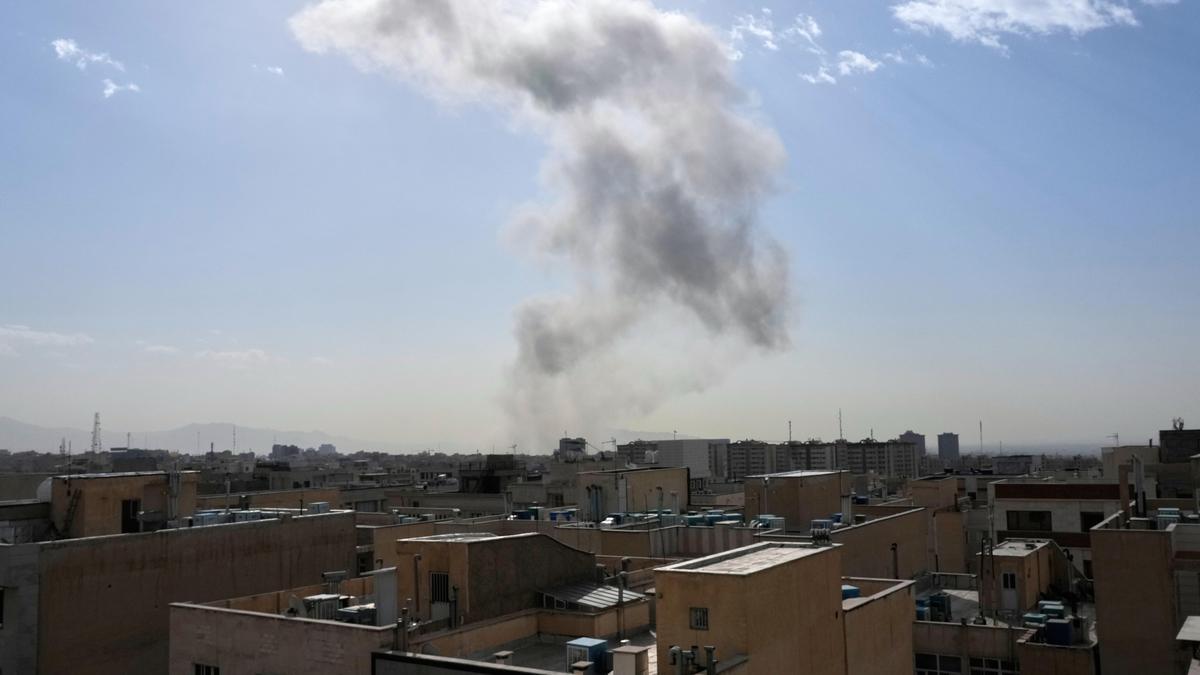
While the jets were in the air, the people on the ground lived in a different reality. In Tehran, the explosions weren't political statements. They were flashes on the horizon that shook the tea in the cups and sent children scurrying under beds. The Iranian government quickly moved to downplay the damage, claiming their "heroic" defenses had neutralized the threat.
This is the theater of war. One side shows the footage of the hits; the other shows footage of the misses. But the truth is written in the smoke.
The strikes focused on "Parchin" and "Khojir"—names that mean nothing to the average person but everything to the engineers of destruction. These are the cradles of Iran's missile program. By hitting them, Israel wasn't just breaking a tool. They were breaking the factory that makes the tools.
The Iranian regime’s response was a mix of bravado and cautious restraint. They know that to escalate further is to risk the very survival of the Islamic Republic. They are in a corner that they themselves painted, and the paint is still wet.
The Cost of the Shadow
When the last of the jets touched down on Israeli runways, the sun was starting to crest over the Mediterranean. The pilots climbed out of their cockpits, their faces lined with the fatigue that only comes from staring into the abyss for hours on end.
What did they achieve? Netanyahu’s narrative says they "removed the existential threat." In reality, they bought time. They pushed the clock back a few years, perhaps a decade. They sent a message that the sky isn't as high as it seems and that the shadow can be pierced.
But the cost of that shadow remains. It is measured in the billions of dollars spent on hardware that only exists to be destroyed. It is measured in the sleepless nights of parents in Tehran and Jerusalem. It is measured in the fragility of a global peace that hangs by the thread of a single pilot’s mistake.
The strikes of last night weren't a finale. They were a chapter. A chapter written in fire and steel, but one that is ultimately about the people who live in the margins of the maps.
As the smoke clears, the hum in the command centers doesn't stop. It just changes pitch. The world waits, not for the next strike, but for the realization that the "existential threat" is not just a missile or a factory. It is the belief that this is the only way the story can end.
The sun rises on a Middle East that looks exactly the same as it did yesterday, except for the jagged holes in the roofs of a few buildings and the cold, hard knowledge that the unthinkable is now a matter of record.