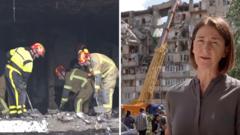
Another Russian attack has left a gaping hole in a Kyiv residential building, shattering the quiet of a local neighborhood and forcing families to flee their homes in the middle of the night. This is not an isolated incident. It is part of a deliberate, ongoing campaign targeting civilian infrastructure across Ukraine.
When you see the footage of a blackened, hollowed-out high-rise, it is easy to get desensitized. The news cycle moves fast. But for the people living inside those walls, life changed in a split second. Debris rained down on parked cars. Windows blew inward, turning glass shards into lethal projectiles. Emergency workers scrambled through the smoke to pull survivors from the wreckage.
What Happened on the Ground
Air defense systems intercepted multiple targets over the capital, but falling debris and direct impacts still pose a massive threat. The damage to the Kyiv residential building shows the sheer destructive power of these weapons. A massive section of the upper floors simply vanished, exposing shredded insulation and broken furniture to the open air.
Local emergency services arrived within minutes. They set up temporary shelters and provided medical care to residents suffering from shock and physical injuries.
- Casualties: Multiple residents were treated for lacerations and smoke inhalation.
- Displacement: Dozens of families lost everything and need immediate housing.
- Structural Integrity: Engineers are evaluating whether the remaining parts of the building are safe or face imminent collapse.
The Reality of Modern Air Defense
Living under constant threat alters daily life completely. Kyiv possesses some of the most advanced air defense networks in the world, including Patriot systems and NASAMS. They save thousands of lives. Yet, no system offers a perfect shield.
When an intercept happens directly above a densely populated city, tons of burning metal must fall somewhere. That is exactly what causes many of these structural disasters. It is a grim mathematical reality. Without the interceptions, the devastation would be exponentially worse, but the current situation remains incredibly perilous for ordinary citizens.
How Communities Rebuild Amid Chaos
Step outside after an attack, and you will see something remarkable. Neighbors do not just wait for municipal workers. They grab brooms, shovels, and plywood. The immediate response is entirely community-driven.
Volunteer networks organize food, warm clothing, and psychological support within hours of a strike. International aid helps, but the local logistics networks keep the city functioning. They patch up what they can and keep moving forward.
If you want to support relief efforts directly on the ground, consider donating to verified Ukrainian organizations. Groups like United24 and local humanitarian funds route resources directly to emergency services and displaced families who need immediate shelter and supplies.