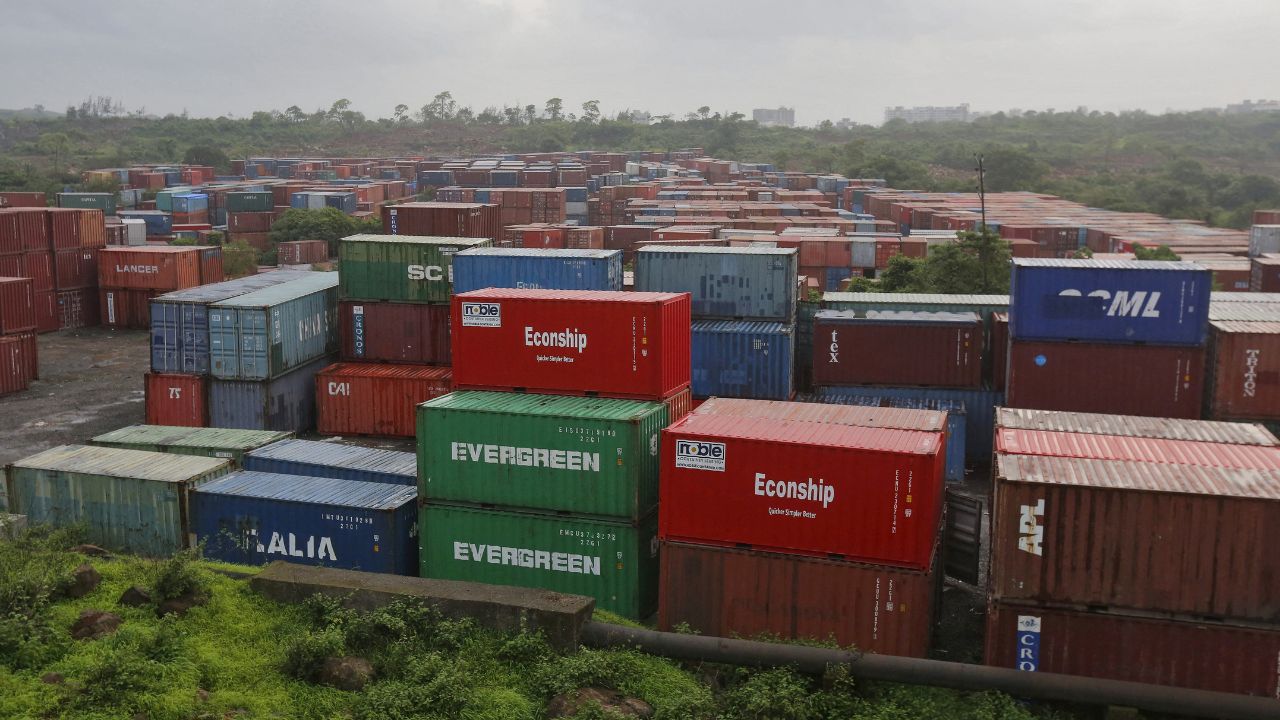
Global supply chains are currently navigating a forced transition from efficiency-optimized models to resilience-based architectures. The West Asian maritime crisis—primarily centered on the Red Sea and the Bab al-Mandab Strait—has shifted the risk profile of cargo transit from a manageable operational variable to a systemic threat. To mitigate the cascading effects of vessel diversions and escalating freight costs, the Indian Ministry of Ports, Shipping and Waterways has deployed a Standard Operating Procedure (SOP) for major ports. This framework is not merely a bureaucratic checklist; it is a structural intervention designed to decouple domestic port throughput from international geopolitical volatility.
The efficacy of this response depends on the synchronization of three critical operational levers: Liquidity of Berth Space, Intermodal Velocity, and Cost-Absorption Mechanisms. Failure to align these levers results in port congestion, which compounds the existing delays caused by the 6,000-kilometer detour around the Cape of Good Hope.
The Triple Constraint of Port Disruptions
When a primary transit artery like the Suez Canal becomes high-risk, the impact on a port is not a linear delay but a geometric expansion of logistical friction. The SOP addresses this through a deconstruction of the port’s "Cost Function," which traditionally prioritizes maximum berth utilization. In a crisis, the priority must pivot to buffer capacity.
1. Velocity Management and the "Last Mile" Bottleneck
The diversion of ships around Africa adds 10 to 15 days to transit times. This creates a "pulse" effect where ports experience periods of inactivity followed by a massive, simultaneous arrival of vessels. Without a structured SOP, this leads to vessel berthing delays (VBD).
The government’s directive focuses on accelerating the evacuation of cargo from the port premises. This is achieved by:
- Prioritizing Rail-Side Handover: Shifting the cargo burden from road to rail reduces the gate-in/gate-out congestion.
- Extended Free-Time Allowances: By adjusting the window for which cargo can sit at the terminal without incurring charges, the SOP provides a financial cushion for importers struggling with delayed documentation or financing caused by the transit lag.
2. Information Asymmetry and Predictive Berthing
A significant portion of maritime disruption stems from a lack of real-time data integration between vessel operators and terminal managers. The SOP mandates a heightened level of communication between the Indian Navy, the Coast Guard, and port authorities.
This transparency allows for "Dynamic Berthing Allocation." Instead of a first-come, first-served model, ports can prioritize vessels based on the criticality of the cargo (e.g., perishables, energy supplies, or time-sensitive manufacturing components). This ensures that while the average delay might increase, the economic impact of that delay is minimized.
The Economics of Surcharges and Rent-Seeking
In any disruption, the primary risk to the shipper is "War Risk Surcharges" and "Peak Season Surcharges" (PSS). These are often applied non-uniformly by shipping lines to recoup the costs of fuel and vessel hire for longer routes.
The SOP seeks to stabilize the domestic portion of these costs. By directing major ports to review or freeze port-related charges, the government is attempting to create a "neutral cost zone." However, the limitation of this strategy is that port charges often constitute less than 10% of the total landed cost of a container. The real pressure lies in the ocean freight rates, which are dictated by global market forces and vessel availability.
The structural prose of the SOP suggests a move toward Transparent Tariff Discovery. By forcing ports to provide clear, upfront cost breakdowns during the crisis, the government prevents terminal operators from engaging in opportunistic pricing during periods of high congestion.
Logistical Rerouting and the Cape of Good Hope Variable
The decision to bypass the Red Sea is a binary trade-off between security and capital efficiency. The Cape of Good Hope route increases fuel consumption by approximately 40% for a standard Ultra Large Container Vessel (ULCV).
This creates a secondary crisis: The Empty Container Imbalance.
Because ships are taking longer to return to Asian ports, the availability of empty containers for Indian exporters is tightening. The SOP addresses this by incentivizing the repositioning of empty containers. Ports are encouraged to provide preferential berthing or discounted handling for vessels carrying a high percentage of empty TEUs (Twenty-foot Equivalent Units). This ensures that the export engine does not stall simply because the physical metal boxes are trapped on the wrong side of the ocean.
Operational Resilience vs. Just-In-Time Orthodoxy
The West Asia crisis serves as a terminal diagnosis for "Just-In-Time" (JIT) logistics in high-volatility corridors. The SOP is an admission that ports must now operate with "Just-In-Case" (JIC) redundancies.
Infrastructure Hardening
The directive includes provisions for enhanced security monitoring and emergency response drills. This is not just about physical safety but about maintaining the Insurance Profile of Indian ports. If a port is perceived as high-risk, insurance premiums for vessels calling at that port rise, effectively taxing every ton of cargo that moves through the facility.
Inter-Port Coordination
The SOP breaks the siloed nature of port management. In a standard environment, Mumbai (Jawaharlal Nehru Port Trust) and Mundra compete for volume. In a crisis environment, the SOP facilitates cargo diversion. If one terminal is at 95% utilization, the framework allows for the seamless redirection of vessels to underutilized regional hubs without the standard administrative friction. This creates a "Virtual Mega-Port" effect, where the collective capacity of the coastline is used to absorb the shock.
Structural Limitations of the SOP
While the SOP is a necessary tactical intervention, it cannot solve the fundamental geographic reality of the crisis.
The first limitation is the Inelasticity of Infrastructure. A port cannot "build" its way out of a crisis that is happening in real-time. The berths and cranes that exist today are all that will be available for the duration of the conflict.
The second limitation is Carrier Autonomy. The Indian government can regulate its ports, but it cannot dictate the route choices of global shipping alliances like 2M or Ocean Alliance. If these carriers decide to skip "blank" certain port calls in India to recover their schedules, the SOP’s internal efficiencies become moot.
Strategic Execution for Shippers and Port Operators
To capitalize on the government’s SOP, stakeholders must move beyond passive compliance and adopt a proactive "Disruption Playbook."
The first priority is the Diversification of Gateway Ports. Relying on a single point of entry creates a single point of failure. Shippers should utilize the SOP’s inter-port coordination clauses to distribute their cargo across both East and West coast hubs, even if the inland transit cost is slightly higher.
The second priority is the Digitalization of the Bill of Lading. Documentation delays are the "silent killer" of port efficiency. By moving to blockchain-verified or encrypted digital documentation, shippers can ensure that cargo is cleared the moment it hits the quay, taking full advantage of the SOP's accelerated evacuation protocols.
The final strategic move involves Inventory Decoupling. Manufacturers must re-evaluate their buffer stock levels based on a "Cape of Good Hope" transit time rather than a "Suez Canal" transit time. The SOP provides the window of time needed to clear this extra inventory, but it is the responsibility of the firm to finance and manage that surplus.
The maritime sector is no longer in a period of "temporary disruption"; it has entered a permanent state of "agile operations." The ports that survive and thrive are those that view the SOP not as a set of rules, but as the baseline for a new, hardened logistical architecture.
Determine the exact ratio of your "Safety Stock" to "Transit Time" and increase your holding period by 25% to account for the current West Asian volatility, while simultaneously auditing your primary terminal's adherence to the government's free-time extensions to reclaim lost margin.