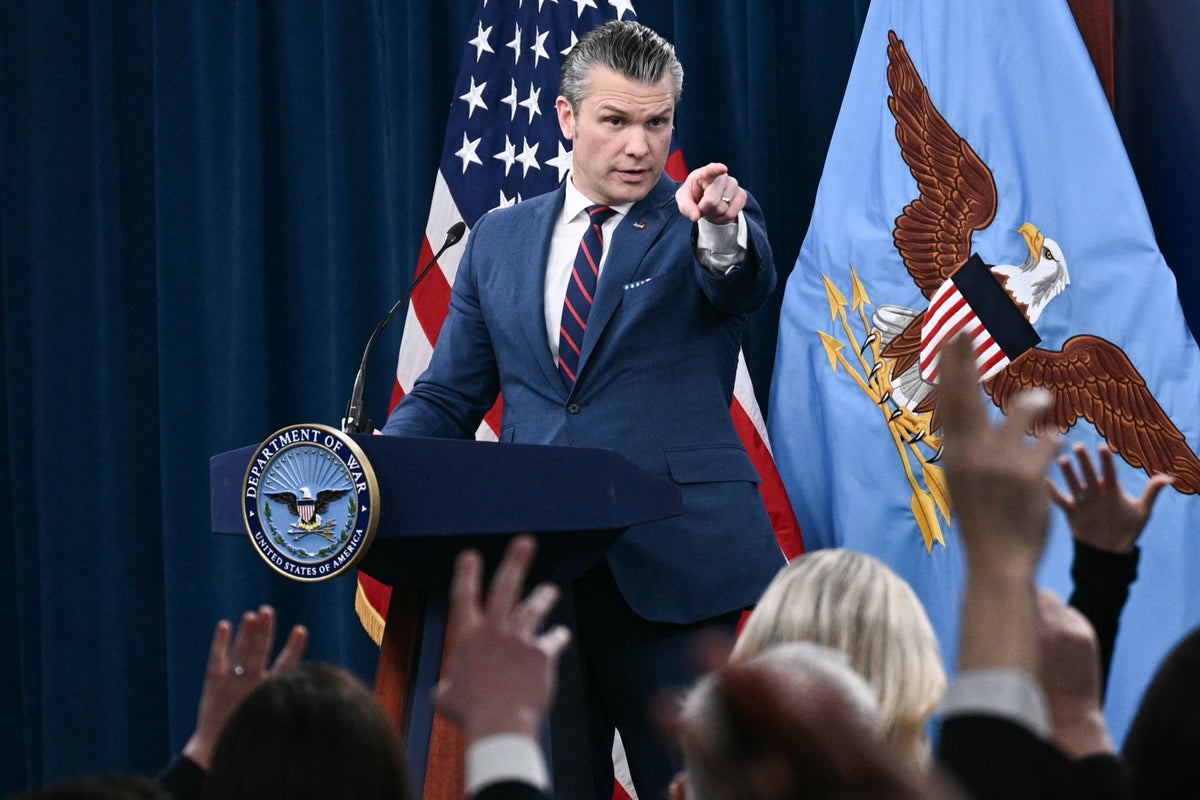
Pete Hegseth isn't just a former TV host anymore. As he steps into a role that influences the most powerful military on the planet, his past comments on Iran aren't just "tough talk" for a morning show audience. They're a window into a worldview that simplifies one of the most complex geopolitical puzzles into a series of binary choices. If you've watched his recent speeches or followed his commentary on Middle Eastern intervention, you've seen the pattern. It’s a mix of bravado and a startling lack of concern for what happens the day after the bombs drop.
The core of the issue isn't that Hegseth wants a strong America. Everyone wants that. The problem is how he defines strength. In his view, diplomacy is often synonymous with weakness, and de-escalation is just a fancy word for losing. This binary lens makes for great television segments, but it makes for terrifying foreign policy. When you're dealing with a regional power like Iran, "winning" isn't as simple as hitting a few targets and going home for dinner.
The Mirage of a Clean Strike
One of the most concerning aspects of Hegseth’s rhetoric is the idea that the United States can "reset" the Iranian clock with a surgical strike. He’s talked about targeting Iranian infrastructure, including their nuclear program and leadership assets, as if these actions exist in a vacuum. It’s a clean-room version of war that doesn't exist.
History tells a different story. Every time a Western power thinks they can just "knock out" a capability in the Middle East without triggering a massive regional firestorm, they’re proven wrong. Hegseth’s approach ignores the "asymmetric" reality of Iranian power. Iran doesn't need to sink a US carrier to win. They just need to set the global oil market on fire, activate proxy cells in three different countries, and turn the Strait of Hormuz into a graveyard for tankers.
Hegseth’s speeches often gloss over these consequences. He speaks with the confidence of someone who hasn't had to sit in the Situation Room and weigh the lives of thousands of service members against a 20% spike in global energy prices. It’s unserious because it treats war like a cinematic climax rather than a messy, unpredictable slog.
Why the Unserious Label Actually Matters
Calling a potential defense leader "unserious" sounds like a playground insult, but in the context of Iran, it’s a specific critique of his strategic depth. Hegseth has frequently leaned into the "crusader" imagery, framing the conflict between the US and Iran in almost theological or civilizational terms. This isn't just a stylistic choice. It changes the goalposts of the conflict.
If you believe you’re in a holy war or a clash of civilizations, you don't negotiate. You don't look for off-ramps. You seek total victory. But in the modern world, "total victory" over a nation of 85 million people with a sophisticated military is a fantasy that leads to decades-long occupations. We’ve seen this movie before. We saw it in Iraq. We saw it in Afghanistan. Hegseth seems to have watched those same movies and decided the problem wasn't the premise, but that we didn't hit hard enough.
The Nuclear Paradox
Hegseth has been a vocal critic of the Joint Comprehensive Plan of Action (JCPOA), often referred to as the Iran Nuclear Deal. He isn't alone in that, but his alternative is rarely more than "maximum pressure" backed by the threat of total destruction.
- He argues that Iran is an existential threat that cannot be reasoned with.
- He suggests that military action is the only language the regime understands.
- He ignores the intelligence assessments that suggest a strike might actually accelerate Iran’s desire for a nuclear deterrent to prevent future attacks.
This is the "terrifying" part. When you combine the belief that an enemy is fundamentally irrational with the desire to use rational military force against them, you create a feedback loop where the only outcome is escalation. It's a strategy built on hope—hoping the regime collapses, hoping the people rise up, hoping the rest of the world just stands by and watches.
The Disconnect From Military Reality
There’s a massive gap between the "warrior culture" Hegseth promotes and the logistical reality of a war with Iran. Iran’s geography is a nightmare for an invading or even a blockading force. It's twice the size of Iraq and covered in rugged, mountainous terrain.
General Mark Milley and other high-ranking officials have spent years gaming out what a hot war with Iran looks like. The results are never "clean." They involve thousands of US casualties within the first few weeks and a total destabilization of the global economy. Hegseth’s rhetoric often bypasses these briefings in favor of moral clarity. But moral clarity doesn't protect a destroyer from a swarm of Iranian suicide drones.
His speeches suggest a belief that American "will" is the only missing ingredient. It’s the idea that if we just weren't so "woke" or "hesitant," we could reshape the Middle East in our image. That’s not just an opinion; it’s a rejection of the hard-learned lessons of the last twenty years of American intervention.
The Proxy Problem Hegseth Ignores
Iran’s greatest strength isn't its aging air force or its conventional navy. It’s the "Axis of Resistance"—a network of proxies including Hezbollah in Lebanon, various militias in Iraq and Syria, and the Houthis in Yemen.
If the US follows the Hegseth doctrine and strikes Tehran, the response won't just come from Tehran. It’ll come from every direction.
- Hezbollah could rain tens of thousands of rockets down on Israel.
- Iraqi militias could target US bases with renewed intensity.
- Shipping in the Red Sea could be completely halted.
Hegseth’s commentary rarely addresses how to manage these secondary fronts. He speaks as if the US can choose to fight only the parts of the war it likes. That's not how Iran plays the game. They play for keeps, and they play dirty. Treating them like a traditional military power that will surrender after a few "shock and awe" strikes is a fundamental misreading of the adversary.
Rhetoric as a Recruitment Tool
Words have consequences. When a top American official uses inflammatory, civilizational rhetoric, it serves as the best recruitment tool the Iranian Revolutionary Guard Corps (IRGC) could ever ask for. It validates their narrative that the West is out to destroy Islam or the Iranian state.
Hegseth’s "tough" talk actually makes the job of our diplomats and even our covert operators harder. It closes doors. It makes moderate voices within Iran—though few and far between—look like traitors for even suggesting a dialogue. By painting the entire nation with a single brush of "evil," he leaves them with no choice but to fight.
Moving Past the Talking Points
Understanding the threat of a Hegseth-led approach requires looking past the flags and the patriotic music. It requires asking the "what if" questions that he avoids.
- What if a strike doesn't stop the nuclear program but moves it deeper underground?
- What if the Iranian people, despite hating their government, rally around the flag once American bombs start falling?
- What is the exit strategy?
If the answer to these questions is "we'll figure it out" or "they'll fold," then the strategy is built on sand. We need a defense policy that recognizes the Iranian threat without being blinded by a desire for a cinematic confrontation.
To stay informed on this, start looking at the actual troop movements and CentCom (U.S. Central Command) briefings rather than the televised highlights. Look at the reports from the International Atomic Energy Agency (IAEA) on Iranian enrichment levels. Real security is found in the boring, technical details of monitoring and containment, not in the fiery speeches of a man who seems to view the world as a stage for his personal brand of heroism. Watch the Senate Armed Services Committee hearings closely. Pay attention to how many career military officers start expressing "concerns" about the chain of command’s new direction. That’s where the real story lives.