The coffee in the mess hall doesn’t taste like coffee. It tastes like burnt rubber and anticipation. In the early hours at Prince Sultan Air Base, the silence of the Saudi desert isn't peaceful; it’s heavy. It presses against your eardrums, a physical weight that reminds every soldier, technician, and medic that they are sitting on a bullseye in a very large, very flat sandbox.
When the sirens finally scream, they don’t sound like the movies. They are jagged. They tear through the pre-dawn stillness, stripping away the thin veneer of a "routine deployment."
Then comes the light.
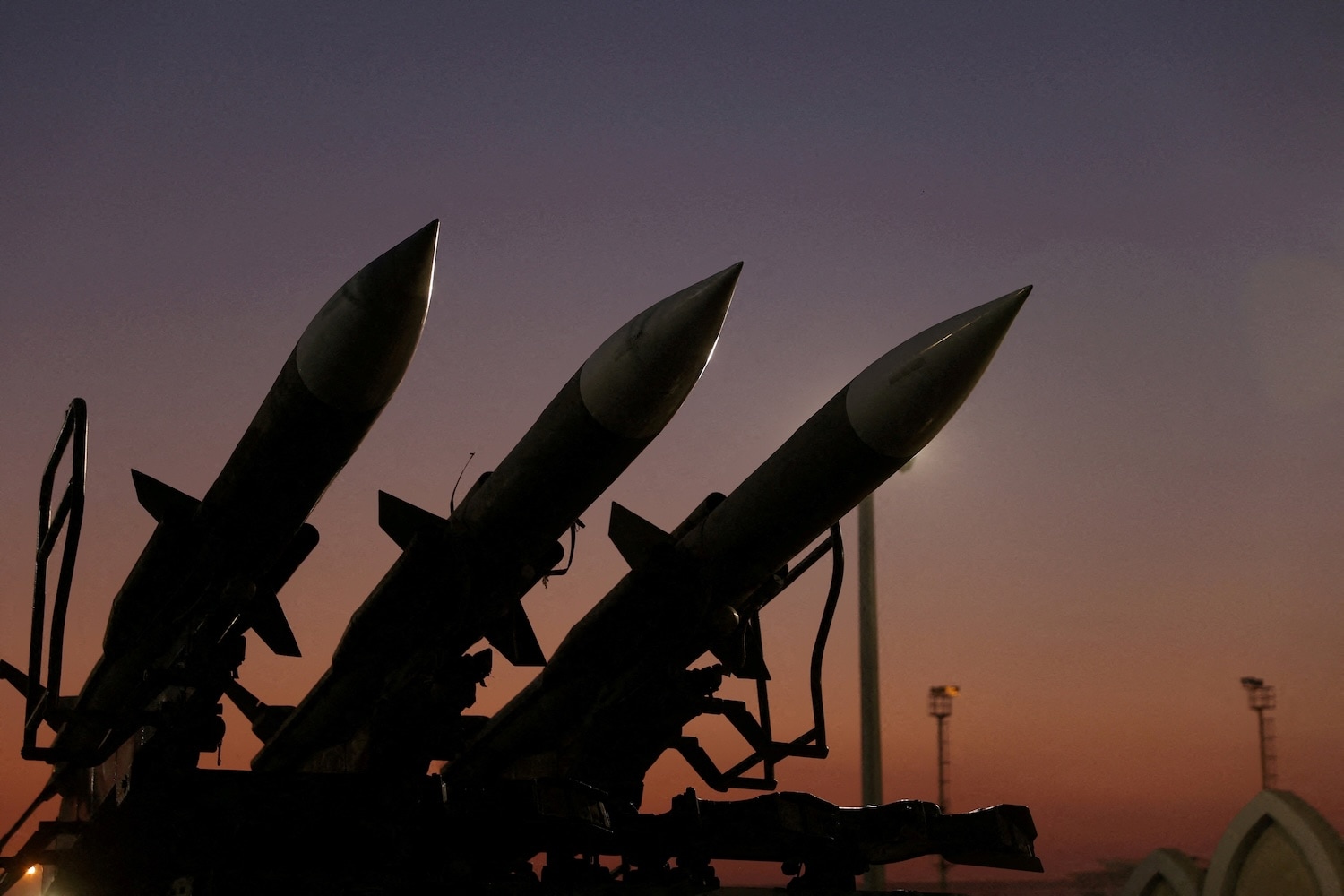
It isn't the soft amber of a desert sunrise. It is a harsh, artificial white—the flare of an incoming suicide drone or the arc of a ballistic missile. For the men and women stationed here, the geometry of war has changed. It’s no longer about front lines or trenches. It’s about the sudden, violent intersection of a cheap piece of Iranian-made circuitry and a multimillion-dollar barracks.
The Physics of a Fractured Peace
War is often discussed in the abstract language of "strategic interests" and "regional escalations." Policymakers in Washington and Tehran move pieces across a map like it's a game of Risk. But on the ground, war is the smell of ozone and the way a concrete barrier vibrates when a warhead finds its mark.
The recent strike on the U.S. presence in Saudi Arabia wasn't just a news ticker item. It was a kinetic event that sent shrapnel through more than just metal. It sent it through the lives of people who were, moments before, writing emails home or cleaning their rifles.
When a missile hits, the air itself becomes an enemy. The overpressure—the invisible wall of force—can liquefy internal organs without leaving a single scratch on the skin. You don't "hear" the explosion so much as you feel it in your bone marrow.
At least three American service members now carry that feeling in their bodies. They aren't "casualties" in a ledger. They are Specialists and Sergeants who will spend the next several months in a sterile hospital room, staring at a ceiling, wondering why the sky fell on them.
The Invisible Architect
To understand why this happened, we have to look past the smoke.
For years, the Middle East has operated under a shadow play. Iran doesn't always pull the trigger directly; they provide the gun, the bullets, and the GPS coordinates to a shifting network of proxies. It’s a strategy of plausible deniability that has become increasingly implausible. By funneling precision-guided technology to groups across the region, Tehran has turned the Arabian Peninsula into a shooting gallery.
The technology isn't "cutting-edge" in the way a Silicon Valley startup might use the word. It’s better described as "deadly-efficient." These are "lawnmower" drones—noisy, slow-moving, and terrifyingly accurate. They are designed to overwhelm sophisticated air defense systems through sheer persistence.
Imagine a $5 million Patriot missile battery trying to swat a $20,000 drone out of the sky. The math is brutal. It’s a lopsided economic war where the defender spends a fortune to stop a hobbyist’s budget from causing a massacre.
The Human Cost of Calibration
Every time a strike like this occurs, the world waits for the "proportional response."
We talk about escalation ladders as if they were made of wood and steel. They aren't. They are made of nerves. On one side, you have leaders trying to signal strength without triggering a full-scale conflagration. On the other, you have soldiers who are the literal skin in the game.
Consider a hypothetical medic—let's call her Sarah.
When the dust settled at the air base, Sarah wasn't thinking about the geopolitical implications of the Strait of Hormuz. She was kneeling in the dirt, her hands slippery with the blood of a friend she’d had dinner with two hours prior. Her world had shrunk to the size of a tourniquet and the rhythm of a shallow breath.
For Sarah, the "Iranian threat" isn't a white paper from a think tank. It’s the permanent ringing in her ears and the way she flinches now when a heavy door slams. This is the hidden tax of global hegemony. We maintain bases to ensure "stability," but that stability is bought with the sanity and safety of the kids we send to guard the perimeter.
Why It Won't Just Stop
The strike in Saudi Arabia is a symptom of a much deeper rot.
The regional cold war between Riyadh and Tehran has thawed into a series of hot flashes. Saudi Arabia, once seemingly untouchable behind its vast wealth and American hardware, has found itself vulnerable. The desert is no longer a barrier; it's a highway for unmanned aerial vehicles.
But why now?
Geopolitics is a game of timing. When tensions rise in Gaza or Lebanon, the ripples are felt in the Saudi desert. Every actor in the region uses these strikes as a thermostat, turning the heat up or down to see how much the other side can stomach.
The problem is that thermostats eventually break.
If you push a "proportional" strike one inch too far, you don't get a signal; you get a war. The injured soldiers in Saudi Arabia are the warning lights on the dashboard of a vehicle that is rapidly losing its brakes. They are the physical manifestation of a gamble that hasn't paid off.
The Silence After the Blast
After the medevac helicopters leave and the debris is cleared, a different kind of tension sets in.
The base goes back to "normal," but normal is a ghost. You see it in the way people walk—a little faster, eyes tilted slightly more toward the horizon. You see it in the letters home, which become shorter, more guarded. How do you tell your mother that you’re fine while you’re looking at a crater where the gym used to be?
The military calls it "resilience." In reality, it’s a form of high-functioning exhaustion.
The world will move on to the next headline. The pundits will argue about the efficacy of the THAAD missile system or the nuances of the nuclear deal. They will use large, cold words to describe small, hot tragedies.
But for the three soldiers wounded in the sand, the story doesn't end when the news cycle does. Their war is just beginning—the war of physical therapy, of traumatic brain injury clinics, and of the quiet, nagging question of why they were there in the first place.
They are the ones who bear the weight of the "strategic landscape." They are the ones who bleed in the gaps between diplomatic cables.
As the sun sets over the dunes, the shadows grow long and sharp, reaching out like fingers across the tarmac. The base is quiet again. But it’s the kind of quiet that feels like a breath held too long, waiting for the sky to break open once more.
Somewhere in a darkened room, a screen flickers with a new set of coordinates. A finger hovers over a button. A drone, no larger than a kitchen table, sits on a launch rail, its engine coughing to life with a sound like a lawnmower in a suburban backyard.
The desert is waiting. It always is.
The next siren isn't a matter of if, but when. And when it sounds, it won't be asking about foreign policy. It will be asking who is ready to pay the price for a peace that feels more like a ceasefire every single day.