The camera lens acts as a filter, but in Tehran, it often functions as a wall.
When international journalists land at Imam Khomeini International Airport, they are greeted by a city that knows exactly how it wants to be filmed. There is a precise choreography to the public face of the Islamic Republic. Banners hang at calculated angles. Black-clad crowds gather at predetermined intersections. Slogans bounce off the concrete apartment blocks with a rhythmic, thunderous cadence.
This is the theatre of statehood. It is a massive, meticulously designed production meant to broadcast a singular message of absolute unity to a watching world.
But theater requires an audience, and more importantly, it requires a backstage.
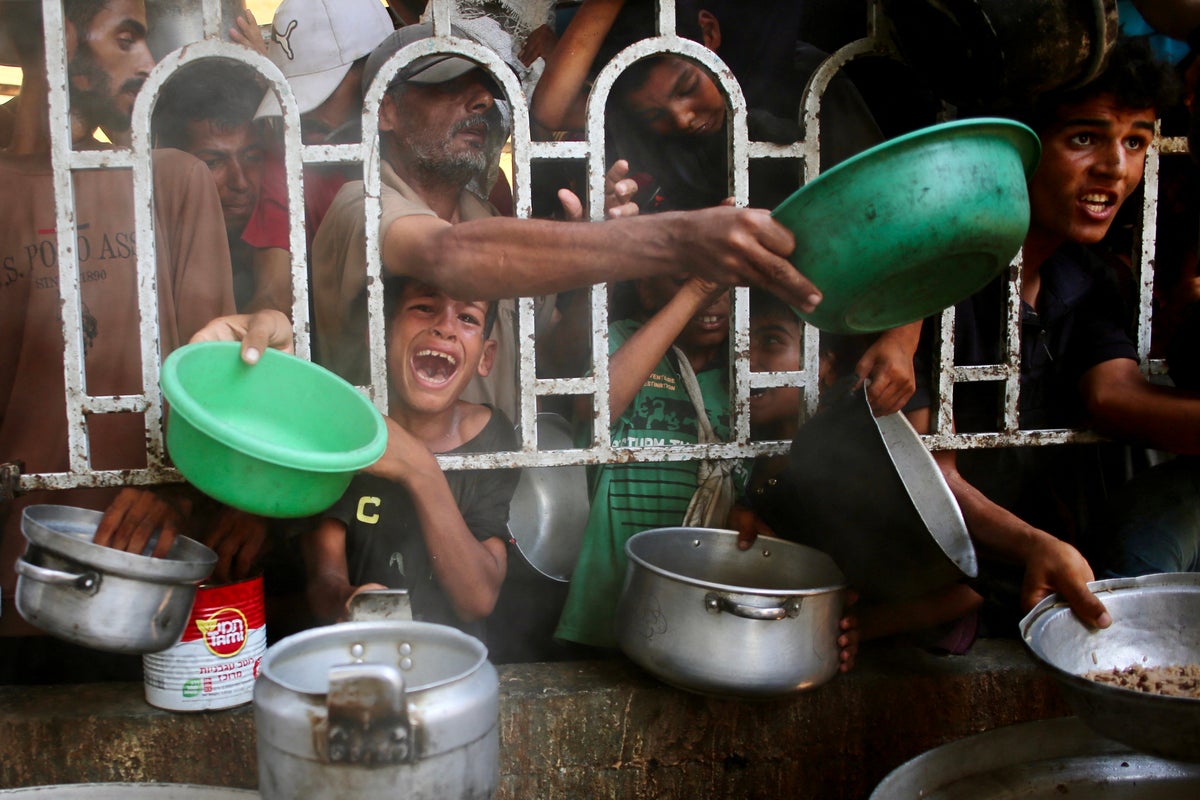
Step off the designated press bus, walk past the cordoned-off avenues where the state television cameras are mounted on cranes, and the audio changes completely. The deafening roar of organized chanting fades into the mundane, heavy drone of gridlocked traffic and the low, anxious murmurs of people standing in line for bread.
To understand the reality of a nation caught between defiance and despair, one must look away from where the authorities are pointing their fingers. You have to look at the shadows.
The Architecture of the Visual
Every major geopolitical crossroads in Iran is marked by these orchestrated displays. Whether it is a state funeral, an anniversary of the revolution, or a high-stakes election, the script remains remarkably consistent. Buses roll in from rural provinces, carrying thousands of citizens who have been offered free meals, a day off work, or simple civic coercion to fill the frames of foreign broadcasters.
For a reporter standing on a balcony overlooking Valiasr Street, the sheer scale of the gathering can be overwhelming. The visual data screams consensus.
Consider the mechanics of this optical illusion. A crowd of fifty thousand people can look like an entire nation when compressed through a telephoto lens. The state media managers understand framing better than most film directors. They guide foreign correspondents to specific platforms where the background is perfectly filled with burning flags or giant murals of martyrs.
It is an overwhelming sensory assault designed to leave no room for doubt.
But doubt is the defining characteristic of modern Iranian life.
Metaphorically, the entire city operates like a dual-core processor. On the surface layer, there is the public compliance necessary to navigate a bureaucratic, deeply religious autocracy. Beneath that layer, completely hidden from the official cameras, runs an entirely separate operating system fueled by satellite dishes, VPNs, and whispered conversations in private kitchens.
The Cost of the Performance
The distance between these two worlds is widening every day. To ground this abstract political theater in reality, let us look through the eyes of a resident we will call Farhad. He is a forty-two-year-old mechanical engineer living in a modest apartment in western Tehran.
Farhad does not attend the rallies. He watches them on his television screen, the very same images that are being beamed to London, Washington, and Paris.
"They are filming a movie," Farhad says, his voice dropping as he glances toward the open window. "We are just the background extras who refused to show up for work that day."
For Farhad and his family, the true story of Tehran is not found in the grand political declarations shouted from podiums. It is found in the price of beef. It is found in the pharmacy bills for his mother’s diabetes medication, which have tripled in the last twelve months due to international sanctions and domestic economic mismanagement.
Statistics bear out Farhad’s quiet exhaustion. Inflation has hovered stubbornly high for years, eroding the purchasing power of the middle class until it has practically vanished. The national currency, the rial, fluctuates wildly, turning every trip to the grocery store into a stressful exercise in financial triage.
When the state spends millions of dollars organizing massive public spectacles to project strength abroad, people like Farhad do not see strength. They see a profound misallocation of resources. They see their own daily struggles ignored in favor of a global public relations campaign.
The Unseen Rebellion
The defiance that truly matters in Iran does not happen on the main stages. It happens in millimeter-sized increments.
It is the young woman who lets her headscarf slide just a fraction of an inch further back on her head as she walks past a morality police van. It is the taxi driver who plays forbidden pop music from Los Angeles until he sees a uniform at the next intersection. It is the student who buys banned books from a vendor operating out of the trunk of an old Paykan car parked in a dark alley near Tehran University.
These are not grand, revolutionary acts that make the evening news in the West. They are small, exhausting, daily assertions of human autonomy.
Foreign observers often make the mistake of misinterpreting the silence of the Iranian majority as consent. When hundreds of thousands of people do not rise up in open rebellion every day, commentators assume the regime’s spectacle of total control is absolute.
This view gets the human element completely backward.
Living under a constant state of surveillance and economic pressure induces a profound, bone-deep fatigue. People are trying to survive. They are trying to raise children, pay rent, and find moments of joy in a society where joy is heavily regulated. Rebellion is not a permanent state of being; it is a luxury of energy that many simply cannot afford on an empty stomach.
Yet, the tension remains. It sits in the air like static electricity before a summer storm.
The View from the Balcony
When international correspondents report on these highly managed events, they face an ethical tightrope. They must report what they see—the massive crowds, the fierce rhetoric, the geopolitical posturing—while simultaneously signaling to the audience that what they are seeing is a carefully curated exhibit.
It is a frustrating, deeply challenging position for any journalist. You are handed a script and told to read it, knowing that the real story is happening in the dressing rooms and the alleyways behind the theater.
The state wants the world to see a monolithic entity. They want a narrative of a country completely united behind its leadership, fiercely hostile to the outside world, and utterly unyielding. It is a projection of power designed to deter adversaries and rally allies.
But a nation is never a monolith.
Iran is a complex, young, highly educated society trapped inside an aging, rigid political structure. More than sixty percent of the population is under the age of thirty. They are hyper-connected to the global culture through the internet, despite the government’s best efforts to filter and block their access. They know exactly what life looks like outside the borders of the Islamic Republic, and they want a piece of it.
The Final Chord
As the sun sets over the Alborz Mountains, painting the Tehran skyline in shades of dusty orange and purple, the state-orchestrated rally finally draws to a close. The buses line up to take the participants back to their villages. The workers begin tearing down the massive banners and sweeping up the discarded signs.
The foreign television crews pack their tripods and head back to their hotels to edit their packages for the nightly news.
On the screen, the segment will look spectacular. It will feature oceans of people, roaring chants, and a palpable sense of historical gravity. The anchors will analyze the images, trying to decode what they mean for regional stability and international diplomacy.
But on the streets below the media platforms, the real Tehran emerges from the shadows.
The traffic jams return. The ordinary citizens step back out into the open air, reclaimed from the state’s choreography. A young couple walks hand-in-hand down a side street, their fingers barely touching, moving quickly past a wall covered in aging revolutionary murals. They do not look at the art. They do not care about the spectacle. They are looking at each other, trying to carve out a life in the quiet spaces the state forgot to monitor.