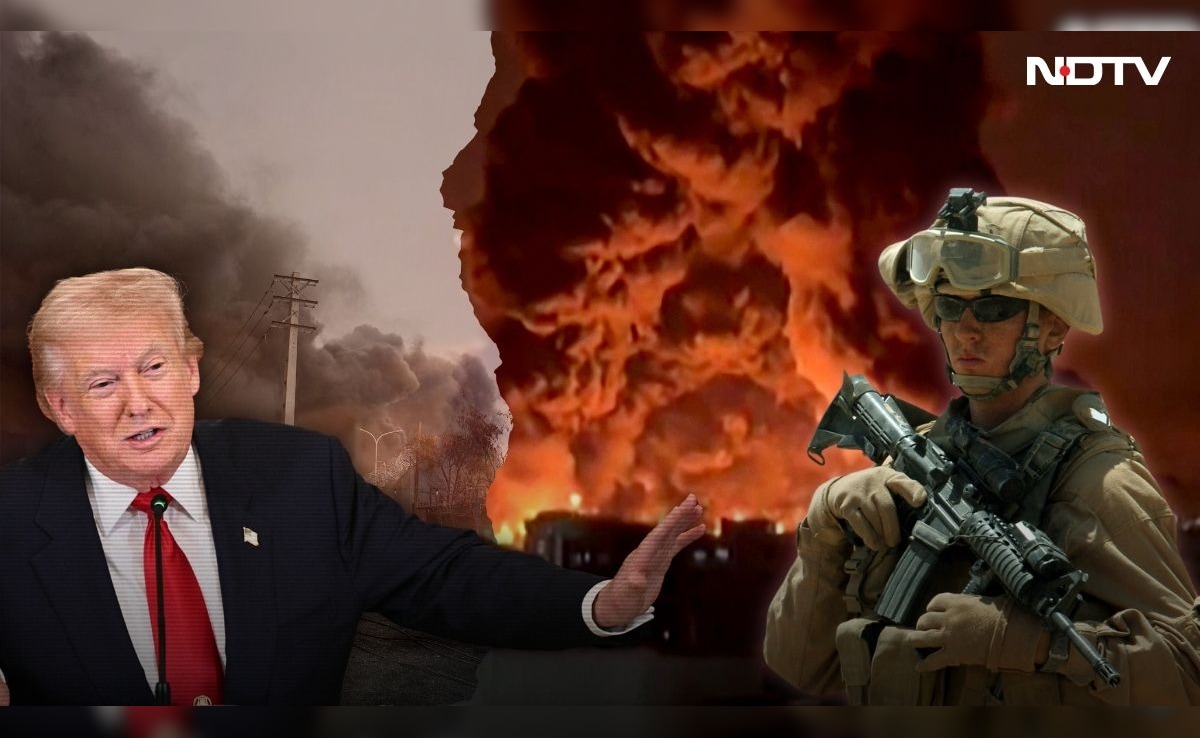
The political commentariat is pearl-clutching again. They see a report about Donald Trump questioning his staff regarding Corey Lewandowski’s involvement in Kristi Noem’s $200 million South Dakota ad campaign and they smell "disarray." They think they’ve found a "leak" that exposes a fractured inner circle.
They are looking at the scoreboard while the game is being played in the locker room.
The media’s "lazy consensus" is that Trump is losing control of his proxies or that Lewandowski is a rogue agent. The reality? This isn't a sign of a campaign in crisis. It is a textbook example of Competitive Friction Management. If you’ve ever sat in a C-suite where billions are on the line, you know that harmony is the enemy of results.
The Myth of the Unified Front
In traditional corporate structures, "alignment" is the holy grail. Consultants charge $500 an hour to tell you that everyone needs to be on the same page. In high-stakes politics—and in the Trump orbit specifically—alignment is just another word for stagnation.
When Trump "grills" aides about a $200 million spend, he isn't looking for a PowerPoint presentation on ROI. He is stress-testing his lieutenants. By pitting the old guard against the Lewandowski-style loyalists, he ensures that no single faction becomes powerful enough to gatekeep information.
I’ve seen Fortune 500 CEOs use this exact tactic. They deliberately plant a "disruptor" in a department just to see who fights back and who folds. If your team is too comfortable, they aren't working; they're coasting.
Why $200 Million is the Wrong Number to Watch
The headlines scream about the $200 million price tag of the South Dakota "Freedom Works Here" campaign. The critics point to it as an example of cronyism or wasted capital. They are asking: "Was the money spent efficiently?"
The better question: "What did that money buy in terms of brand dominance?"
In a saturated media environment, efficiency is a secondary metric. Dominance is the primary one. Whether or not every cent of that $200 million moved the needle on South Dakota’s labor shortage is irrelevant to the political calculus. What matters is that it kept Kristi Noem—and by extension, her association with the MAGA brand—front and center during a critical primary cycle.
The Lewandowski Effect: Feature, Not a Bug
Corey Lewandowski is the ultimate lightning rod. To the institutionalists, he represents a breach of protocol. To the strategist, he is a "human chaos engine."
When Lewandowski enters a room, the "professional" political class tenses up. They start watching their backs. They stop leaking to their favorite reporters because they’re too busy trying to figure out if Corey is going to replace them. This creates a vacuum of gossip and a surge in actual work.
The report that Trump is "grilling" aides about him is likely a deliberate signal. It tells the establishment wing of the GOP: "I see what you’re doing, and I have someone on the bench who doesn't care about your rules."
The "People Also Ask" Trap
If you look at the common questions surrounding this story, you see the same flawed premises:
- "Is Corey Lewandowski still in Trump's inner circle?"
This question assumes the "inner circle" is a static place with a velvet rope. It isn't. It’s a revolving door designed to keep everyone off-balance. - "Did Kristi Noem mismanage state funds?"
Brutally honest answer: In the world of high-level optics, "mismanagement" is a subjective term used by losers to explain why they didn't get the contract. If the ads ran and people talked about them, the mission was accomplished. - "Why is Trump worried about South Dakota ads?"
He isn't. He's worried about precedent. If Noem can run a massive campaign without his explicit sign-off on every detail, it sets a standard for other governors. He isn't grilling aides because he cares about the South Dakota budget; he's grilling them to remind them who the auditor-in-chief is.
The Mathematics of Political Influence
Let’s look at the actual mechanics of a $200 million ad buy. In a state like South Dakota, that level of spend is astronomical.
$$\text{Saturation} = \frac{\text{Total Ad Spend}}{\text{Media Market Size}}$$
When the market size is small, the saturation becomes absolute. You aren't just buying ads; you are buying the entire cultural conversation of the region. Critics call this "wasteful." I call it "territorial marking."
If you spend $200 million in California, you’re a footnote. You spend it in the Midwest, and you own the airwaves. This isn't an "ad campaign"—it’s a psychological operation designed to signal total control over a specific geographic base.
The Danger of Your Own Consensus
The downside to this contrarian approach? It’s exhausting.
Running a team through "managed chaos" requires a leader who never sleeps and who has an infinite appetite for conflict. Most leaders can't handle it. They prefer the "seamless" (to use a banned word) operation of a standard corporate hierarchy. But standard hierarchies produce standard results.
If you want to disrupt an entire political system, you cannot use the tools of that system. You have to use the friction.
Stop Asking if They Like Each Other
The most "lazy" take in political journalism is focusing on whether Trump and his aides are "clashing."
Of course they are clashing. They are supposed to clash.
The moment a political operation becomes a happy family is the moment it becomes vulnerable. Friction creates heat, and heat creates energy. The "grilling" isn't a sign of a breakdown; it’s the sound of the engine running at 8,000 RPM.
Stop looking for harmony in a movement built on disruption.
Fire the consultants who tell you to "smooth things over."
Hire the people who make your best employees nervous.
The $200 million isn't the story. The "grilling" isn't the story. The story is that while everyone else is playing checkers, the Trump orbit is playing a game where the rules change every time you think you’ve figured them out.
Don't fix the chaos. Weaponize it.