The UK economy is currently navigating a high-velocity supply-side shock triggered by the escalation of the Iran-US conflict. While headlines focus on the volatility of Brent crude, the true economic impact is a multi-vector transmission through energy markets, maritime logistics, and monetary policy repricing. The sudden closure of the Strait of Hormuz has essentially invalidated previous 2026 inflation forecasts, shifting the Bank of England’s posture from normalization to defensive tightening.
The Three Pillars of Macro-Transmission
The impact on UK households is not a singular event but a function of three distinct transmission channels. Each operates on a different timeline and carries varying degrees of structural risk.
- Direct Energy Pass-Through (T+1 to T+14 Days): This is the immediate reaction of liquid fuel markets. Brent crude, which surged to $119.50 per barrel before retracing to approximately $90, impacts UK forecourts with a lag of 7 to 14 days. The primary variables here are the global benchmark price and the GBP/USD exchange rate, as oil is priced in dollars. A weaker pound compounds the cost of imports.
- Lagged Utility Adjustments (T+3 to T+6 Months): Domestic energy bills are buffered by the Ofgem price cap. While the April 2026 cap was set at £1,641—a 7% decrease—the surge in wholesale gas prices (up 46% following the conflict outbreak) creates a "deferred liability" for consumers. Current volatility will be mathematically integrated into the July and October 2026 cap calculations.
- Monetary and Credit Contraction (Immediate to Ongoing): The most significant systemic shift is the repricing of the "risk-free" rate. Markets have pivoted from expecting a 100% chance of a March interest rate cut to a 70% probability of an eventual rate increase. This has caused immediate upward movement in 2-year and 5-year swap rates, directly raising the cost of fixed-rate mortgages.
The Strait of Hormuz Bottleneck: A Logistics Breakdown
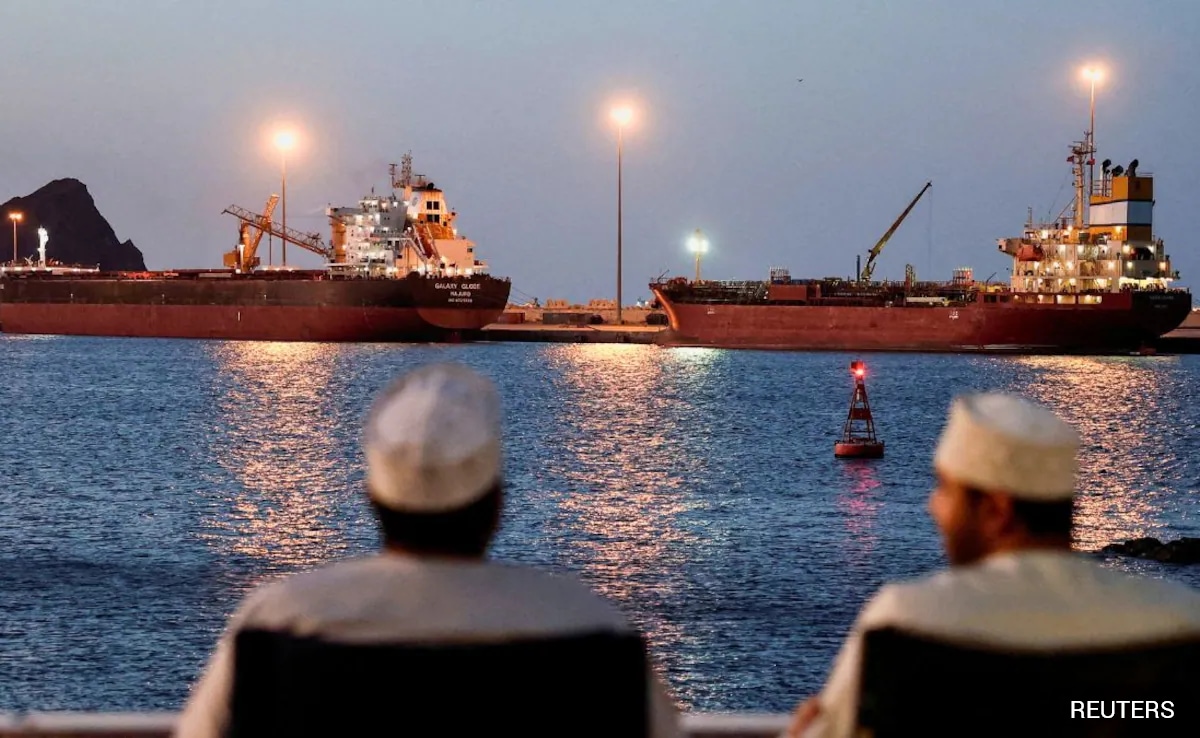
The Strait of Hormuz is the world's most critical maritime chokepoint, facilitating the transit of approximately 20 million barrels per day (mb/d) of crude and 20% of global Liquefied Natural Gas (LNG) trade.
The disruption of this artery introduces three specific cost escalators into the UK supply chain:
- Insurance Risk Premia: Maritime war risk premiums have tripled. For a standard tanker voyage, this can add millions to the operational cost, which is ultimately amortized across the price of the cargo.
- Fertilizer and Food Elasticity: Roughly 13% of global chemical fertilizers pass through the Strait. Natural gas is the primary feedstock for nitrogen-based fertilizers (Urea). The 30% surge in wholesale gas prices triggers a direct increase in agricultural input costs. Given the UK's reliance on seasonal imports and energy-intensive domestic farming, food inflation—which had moderated to 3% in early 2026—is projected to re-accelerate by 1.0 to 1.5 percentage points.
- The Qatar LNG Dependency: Unlike the US, which is a net exporter, the UK remains vulnerable to spot market competition for LNG. While only 7% of European gas inflows transit the Strait, the withdrawal of Qatari volumes from the global pool forces a "bidding war" for Norwegian and US supplies, driving the marginal price higher for all participants.
Structural Vulnerabilities in the UK Energy Mix
The current crisis highlights a critical disconnect in the UK's energy transition. Despite wind overtaking gas as the primary source of electricity generation in 2024, the "marginal pricing" model ensures that gas still dictates the final wholesale price of electricity.
The Ofgem Price Cap Decomposition
To understand why bills will rise despite government intervention, we must look at the cost components of the £1,641 April 2026 cap:
- Wholesale Costs (£652): Expected to increase significantly in the next reporting period due to the 46% gas price spike.
- Network Costs (£463): Rising by £66 to fund RIIO-3 infrastructure upgrades.
- Policy Costs (£106): Reduced by £130 due to moving the Renewables Obligation to general taxation, providing a temporary but fragile cushion.
The second-order effect of higher gas prices is the "debt allowance." As more households fall into fuel poverty—already estimated at over six million—suppliers are permitted to recoup bad debt through a levy on solvent households, currently adding nearly £50 to the annual bill.
Credit Markets and the Mortgage Pivot
The Iran-US conflict has effectively terminated the era of "easy" mortgage refinancing that was expected for 2026. The transition from falling inflation (3% in January) to an anticipated inflationary shock (up to 4% by mid-year) has triggered a sell-off in UK gilts.
- Swap Rate Sensitivity: Fixed-rate mortgages are priced based on the future expectations of interest rates (swaps). When the probability of a Bank of England rate cut drops, swap rates rise.
- Lender Behavior: Major institutions like HSBC and Nationwide have already implemented "selected increases" of 0.15% to 0.20% on fixed-rate products within 72 hours of the conflict's escalation.
For a borrower exiting a 5-year fix secured in 2021 at 1.5%, the expected jump to a 4.8% or 5.0% rate represents a massive contraction in discretionary income. This "mortgage shock" acts as a secondary tax on the UK middle class, further dampening consumer spending in non-essential sectors like travel and luxury retail.
Strategic Outlook: The "Sticky Inflation" Scenario
The conflict's duration is the primary variable in determining whether this is a transitory spike or a structural reset of the UK cost of living. If the Strait of Hormuz remains contested or if Iranian infrastructure is targeted, Brent crude is modeled to exceed $100 per barrel sustainably.
The immediate strategic play for the UK government involves a pivot toward "Social Tariffs" to prevent a total collapse in consumer confidence among low-income tiers. For the private sector, the focus shifts to "Supply Chain Hardening"—reducing reliance on just-in-time logistics from the Middle East and accelerating the electrification of industrial heat.
The Bank of England is now trapped in a classic "Stagflationary" pincer: rising costs necessitate higher rates to protect the currency, but higher rates threaten to tip a fragile economy into recession. Expect a "Higher for Longer" interest rate environment to persist through at least Q4 2026.
Would you like me to analyze the specific impact of these energy price hikes on the UK manufacturing sector's global competitiveness?