The evening air in Paris smells of roasting chestnuts, diesel exhaust, and history. If you stand on the steps of the Sacré-Cœur basilica as the sun goes down, the city spreads out before you in a blanket of amber lights. For centuries, this view symbolized the definitive peak of Western stability. But lately, the conversations echoing across these stone steps have taken on a sharper, more anxious edge.
People are looking at the streets below and wondering what, exactly, they are witnessing.
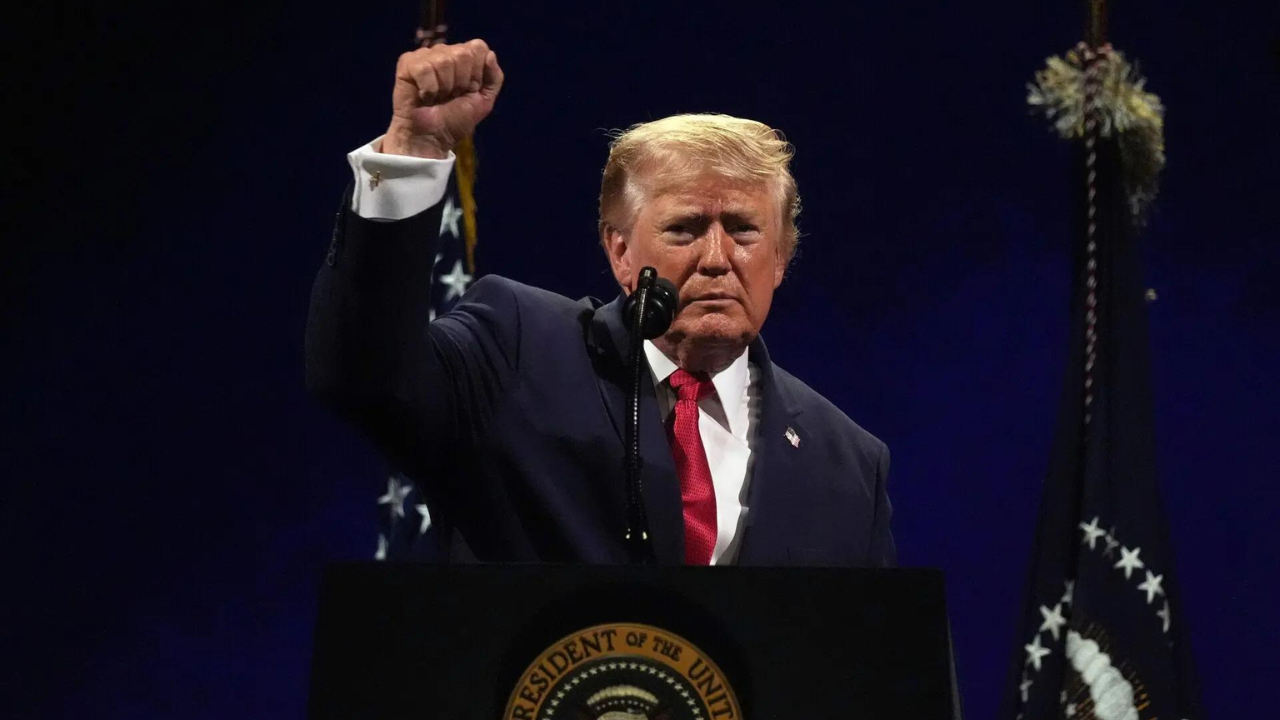
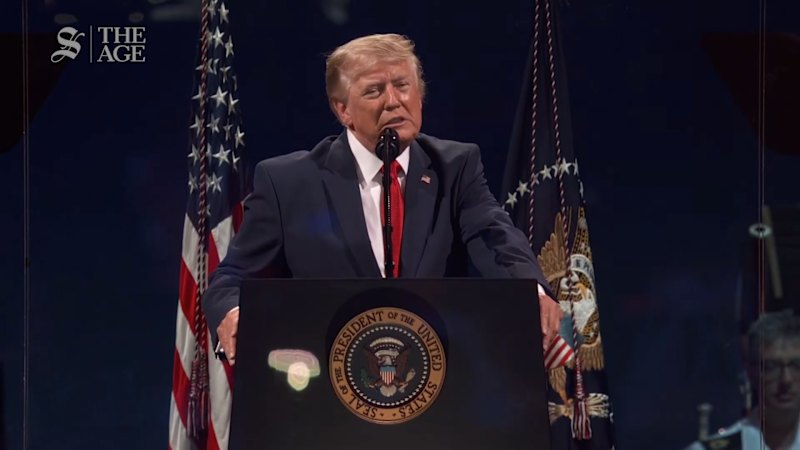
During a campaign rally, Donald Trump reignited a fierce global debate by declaring that Europe is transforming into a "Third World country" due to its immigration policies. It is a phrase designed to shock. It is a rhetorical sledgehammer. To many ears, it sounds like an exaggeration wrapped in political theater. To others, it feels like a blunt diagnosis of an uncomfortable reality. Beyond the grand political stages and the cable news shouting matches, the real story is unfolding quietly, day by day, in the neighborhoods, train stations, and supermarkets of the Old World.
Consider a hypothetical citizen named Thomas. He is a third-generation baker in a mid-sized town outside Frankfurt. Thomas does not hate outsiders. He prides himself on his fairness. Yet, over the last decade, the rhythm of his daily life has shifted in ways he cannot quite articulate without fear of being labeled. The local community center, once a hub for regional festivals, is now a temporary housing facility. The languages spoken at the grocery store have multiplied, while the shared unspoken rules of civic life—the quiet hours, the meticulous recycling, the predictable neighborhood trust—seem to be fraying.
Thomas feels like a stranger in the town his grandfather helped rebuild. His experience is not unique, and his anxiety is not manufactured out of thin air. It is the human friction of rapid, unprecedented demographic change.
When political figures use terms like "Third World," they tap into a specific, historical anxiety. The phrase itself is an outdated relic of the Cold War, originally meant to define nations aligned with neither the Western bloc nor the Soviet union. Over time, however, the linguistic shorthand evolved. Today, it conjures vivid, distressing images of infrastructure collapse, institutional corruption, economic despair, and a loss of public safety.
Is Europe truly sliding toward that reality?
The data paints a complicated, fractured picture. The influx of millions of migrants over the past decade, driven by conflict in the Middle East and economic hardship across Africa, has undeniably strained the social fabric of European nations. In Sweden, a country long celebrated as the gold standard of progressive social welfare, the government has struggled with a dramatic rise in gang violence and explosives offenses in suburban areas. Public statistics offices have openly tracked the correlation between these rising crime rates and the difficulties of integrating large, segregated populations.
Hospitals are facing longer wait times. Schools are overwhelmed by the challenge of teaching classrooms where a dozen different languages are spoken, but none of them are the native tongue of the host country. These are not imaginary grievances. They are tangible, measurable burdens borne by ordinary working-class citizens who rely on these public institutions every single day.
But the real problem lies elsewhere, rooted deeper than mere numbers on a spreadsheet. The core crisis is one of identity and state capacity. A functional nation relies on a delicate, unwritten contract between the government and its people. The citizens pay high taxes, follow the law, and maintain the peace. In return, the state guarantees safety, order, and a recognizable cultural continuity.
When borders are crossed without authorization on a massive scale, that contract cracks.
Imagine a house with an open-door policy. If a few guests arrive unexpectedly, the household adapts, shares the table, and enjoys the exchange. But if hundreds of people walk through the front door simultaneously, the plumbing fails, the food runs out, and the original inhabitants find themselves sleeping on the floor of their own living room. Resentment becomes inevitable. The host ceases to be a host and becomes a bystander in their own home.
This structural overload explains the dramatic political shifts sweeping across the continent. From Italy to the Netherlands, and from France to Germany, voters are turning toward nationalist and populist parties in numbers that would have been unthinkable twenty years ago. The political establishment spent years dismissing public concerns about integration and cultural erosion as mere intolerance. That dismissal proved to be a catastrophic mistake. By refusing to acknowledge the practical challenges of assimilation, traditional leaders created a vacuum.
Donald Trump's commentary merely mirrors the rhetoric that millions of Europeans are already using at their own dinner tables.
The debate is rarely about the immigrants themselves, who are simply making a rational choice to seek a safer, more prosperous life for their families. Anyone trapped in a failing state or a war zone would do the exact same thing. The true failure lies with the European leadership that assumed wealth and historical prestige were permanent shields against instability. They forgot that civilization is a fragile construct, requiring active maintenance, clear boundaries, and a shared set of values to survive.
Step away from the political podiums and look at the actual border zones. In the Mediterranean, coast guards face the grueling daily task of intercepting overcrowded, unseaworthy vessels sent into the waves by cynical human traffickers. On land, border fences rise again in places where the Berlin Wall once fell, a stark physical admission that the borderless dream of the Schengen Area is under existential threat. The physical geography of Europe is changing to reflect its internal panic.
The transformation is not uniform. A walk through central Munich or Zurich still reveals pristine streets, functioning trains, and a high quality of life. The decay is localized, concentrated in the sprawling outer suburbs of major capitals and the neglected post-industrial towns where the working class feels abandoned by the ruling elite. It is a tale of two Europes: one that remains wealthy and sheltered, and another that feels the direct impact of a system under immense strain.
What happens next will decide the trajectory of the Western world. If European nations cannot find a way to reassert control over their borders and enforce a strict, values-based model of integration, the erosion will continue. The institutions that defined modern Europe—the generous welfare states, the safe public squares, the high level of social trust—cannot survive an infinite influx of people who do not share the foundational principles of the society they are entering.
The sun has fully set over Paris now. The lights of the Eiffel Tower flash in the distance, a brilliant beacon of human achievement. Down in the shadows of the metro stations and the crowded northern suburbs, the reality is far more fragile. The continent is not doomed, but it is deeply fractured, caught between the memory of what it used to be and the uncertain, chaotic reality of what it is becoming.