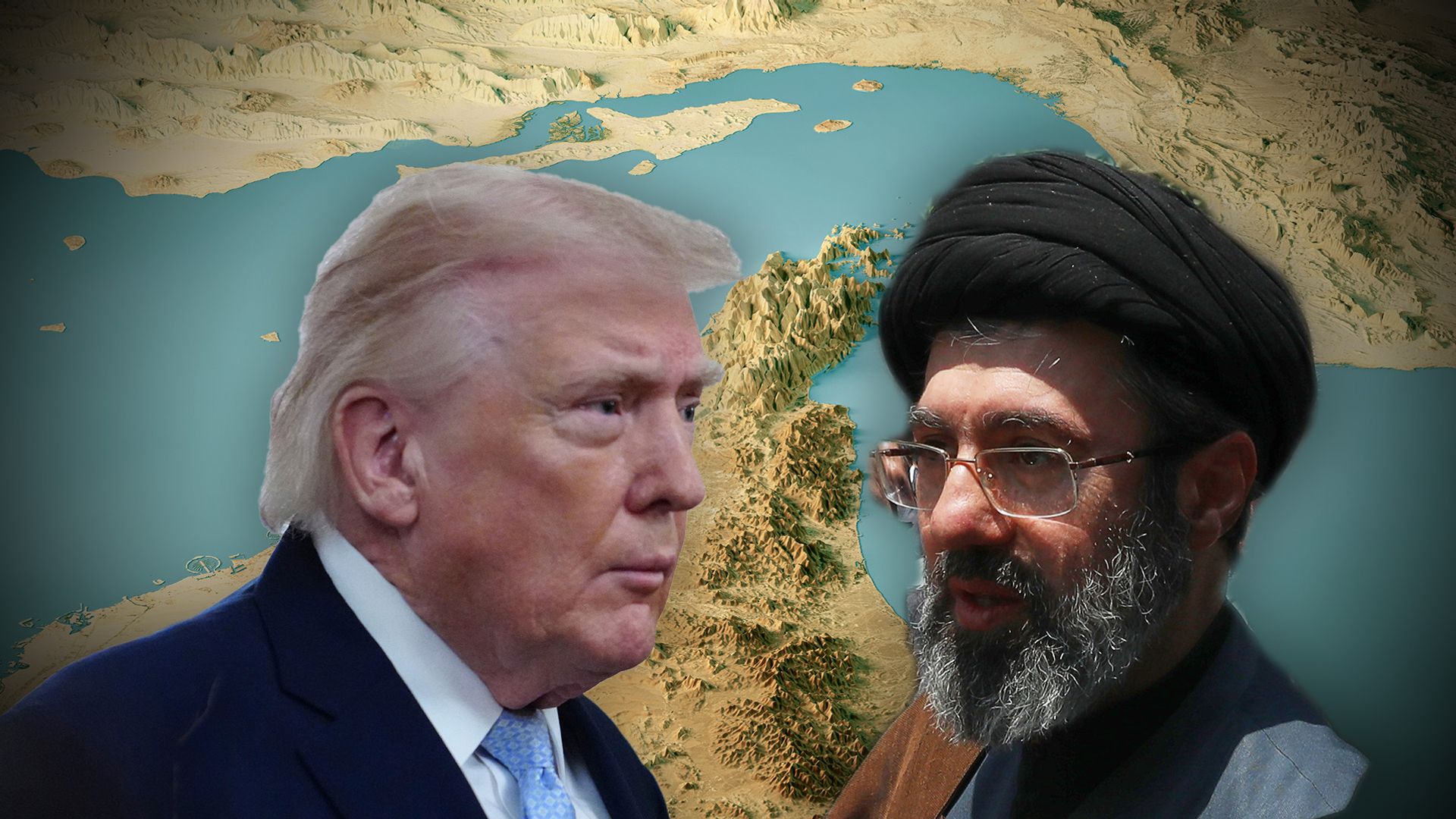
The smoke over Tehran hasn’t cleared, but the White House is already selling a "comprehensive resolution." On March 23, 2026, President Trump announced that the United States and Iran had reached "major points of agreement" to end a three-week war that has decimated the Iranian leadership and sent global energy markets into a tailspin. From the Oval Office, the narrative is one of a diplomatic masterstroke—a 15-point peace plan delivered via Pakistan that promises to trade sanctions relief for the total dismantling of Iran’s nuclear infrastructure and the reopening of the Strait of Hormuz.
The reality on the ground is far messier. While Washington touts "productive conversations," Iranian state media is busy caricaturing the American president as a "disgraced liar." Tehran’s official line is a flat denial: no negotiations, direct or indirect, have taken place. Yet, behind the public posturing, the machinery of backchannel diplomacy is grinding forward in Islamabad and Cairo. This isn't a peace process in the traditional sense. It is a high-stakes stall tactic being used by both sides as they calculate their next move in a conflict that has already claimed the life of Supreme Leader Ali Khamenei.
The 15 Point Ultimatum
What Trump calls a "peace plan," the remnants of the Iranian regime view as a demand for unconditional surrender. The framework, leaked in fragments through regional intermediaries, is maximalist. It doesn't just ask for a return to the old nuclear deal; it demands the physical removal of all enriched uranium from Iranian soil and a permanent end to Tehran's "Axis of Resistance" proxy network.
For the United States, the plan serves a dual purpose. First, it offers a "golden bridge" for a regime currently led by Mojtaba Khamenei—the late leader's son—to exit a losing war before the IRGC’s conventional capabilities are completely erased. Second, it provides the U.S. military the necessary time to reposition assets. Even as Press Secretary Karoline Leavitt speaks of diplomacy, the Pentagon is moving thousands of additional troops into the region to ensure the Strait of Hormuz remains open to "non-hostile" vessels.
The Pakistani Connection
With Qatar sidelined after sustaining Iranian missile strikes on its Al-Udeid airbase last June, Pakistan has emerged as the indispensable middleman. Prime Minister Shehbaz Sharif has offered Islamabad as a neutral ground, and the U.S. 15-point proposal was physically transmitted to Tehran via Pakistani diplomats.
This shift in the diplomatic center of gravity is significant. Unlike the Omani or Qatari mediators of the past, Pakistan shares a direct border with Iran and has its own complicated security stakes in the outcome. By involving Islamabad, Washington is putting a neighbor in the room—one that Iran cannot easily ignore or attack without risking a much broader regional conflagration.
A Regime in Transition
The assassination of Ali Khamenei on February 28 didn't trigger the immediate collapse many in the West expected. Instead, it accelerated a move toward a "garrison state." The appointment of Mojtaba Khamenei as the new Supreme Leader on March 9 signals that the Islamic Revolutionary Guard Corps (IRGC) is now the true arbiter of power.
The IRGC is currently playing a double game.
- Publicly: They mock the U.S. diplomatic push, with military spokesmen like Ebrahim Zolfaghari warning that "stability is guaranteed by the strong hand of our armed forces," not American promises.
- Privately: They are exhausted. The U.S.-Israeli air campaign has reportedly destroyed over 130 naval vessels and nearly 200 ballistic missile launchers. The regime needs a ceasefire to regroup and suppress the massive internal protests that have plagued Iranian cities since January.
The conflicting signals coming out of Tehran—denials of talks alongside "counter-proposals" involving war reparations—reflect a leadership split. The "pragmatists" like Abbas Araghchi are looking for a way to save the state, while the IRGC hardliners are terrified that any concession will be seen as a terminal sign of weakness.
The Energy Emergency
The primary driver for the American side isn't just nuclear non-proliferation; it’s the global economy. The closure of the Strait of Hormuz has forced countries like the Philippines to declare national energy emergencies. Electricity prices in Europe and Asia are hitting astronomical levels.
Trump’s claim of a "major agreement" on oil and gas was a calculated move to calm the markets. It worked—briefly—causing oil prices to dip as investors bet on a de-escalation. But as long as Iran continues to threaten vital infrastructure in neighboring countries and Israel expands its "buffer zone" in Lebanon, those gains are fragile.
The "peace talks" are currently functioning as a pressure valve. Washington uses them to keep the coalition together and the markets stable, while Tehran uses them to prevent the next wave of strikes on its remaining energy infrastructure. Neither side is actually ready to sign a document that the other would find acceptable.
The Failure of "Maximum Pressure"
We have seen this choreography before. In April 2025, talks in Muscat were described as "constructive" right before they collapsed into the June "Twelve-Day War." The fundamental problem remains: Washington wants a total transformation of the Iranian state, while the Iranian leadership is fighting for its very survival.
The current 15-point plan avoids the gray areas that made previous deals possible. By demanding the "total dismantling" of enrichment, the U.S. has left the Iranians with no "face-saving" exit. In the eyes of the IRGC, the choice is between a slow death through a lopsided peace or a violent one on the battlefield. As of late March 2026, they are still choosing the battlefield.
Check the movement of the USS Abraham Lincoln and the USS Gerald R. Ford. If those carrier strike groups begin to pull back, the "productive conversations" might finally be real. If they continue to hold position near the Gulf of Oman, the 15-point plan is just the prologue to the next phase of the war.